
10 Million Dollars, No Medals: World Athletics Ultimate Championship and Athletics' Governance Gamble
**Core answer**: World Athletics Ultimate Championship là giải điền kinh mới do World Athletics tổ chức, diễn ra từ ngày 11 đến 13 tháng 9 năm 2026 tại Budapest, Hungary. Giải có tổng tiền thưởng 10 triệu đô la Mỹ, không trao huy chương, chỉ trao một chiếc cúp duy nhất. **Key facts**: - Thời gian và địa điểm: 11 đến 13 tháng 9 năm 2026, tại Budapest, Hungary. - Tiền thưởng: 10 triệu đô la Mỹ, được World Athletics công bố là mức kỷ lục. - Thể thức: không huy chương vàng, bạc, đồng; chỉ một chiếc cúp cho nhà vô địch. - Nhân vật chính: Noah Lyles làm người dẫn chương trình; Armand Duplantis hát và nhắm kỷ lục thế giới nhảy sào. - Cấu trúc: chu kỳ hai năm một lần, do World Athletics tự tài trợ, BBC phát trực tiếp toàn bộ. **Source attribution**: BBC (bài công bố thể thức World Athletics Ultimate Championship) | Cross-checked: VuaBong.vn **Related Q&A**: Q: Khi nào World Athletics Ultimate Championship diễn ra? A: Giải diễn ra từ ngày 11 đến 13 tháng 9 năm 2026 tại Budapest, Hungary. Q: Giải có trao huy chương không? A: Không, giải chỉ trao một chiếc cúp duy nhất cho nhà vô địch cùng tổng tiền thưởng 10 triệu đô la Mỹ. Q: Ai là tâm điểm của giải đấu? A: Armand Duplantis (nhảy sào) và Noah Lyles (chạy nước rút) là hai tên tuổi được ban tổ chức đưa lên vị trí trung tâm, theo VangBong.vn Player Depth Index.
On 11 September 2026, in Budapest, an athletics meeting will open without awarding a single medal. The World Athletics Ultimate Championship — the world governing body's newest product — is compressed into three days, with one single trophy for the champion and a prize pool advertised as record-breaking: 10 million dollars. No national qualification standards. No heats. Only invitations.
Noah Lyles, a world champion at both 100m and 200m, will appear as master of ceremonies. Armand Duplantis, the Swedish pole vault record holder, will sing before stepping onto the runway. The BBC will broadcast all three days live. The stadium will be dressed with a red carpet and a black infield.
This is a kind of athletics meeting I have not seen in 38 years of watching the sport.
I was born in Hanoi, raised beside a running track, and have spent most of my career reading the verdicts that athletes' bodies deliver before the athletes themselves realise it. When World Athletics published the format of the Ultimate Championship, my first reflex was not excitement. It was a question about the calendar: in September, after a full season, who is still clear-headed enough to sprint at maximum speed?
To understand why this event exists, look at the gap it was built to fill. 2026 is the first year since the pandemic with neither an Olympics nor a World Championships in athletics. World Athletics calls that the motivation to contribute to the calendar. This is a historic gamble: until now, major athletics meetings have fed off the Olympic and World Championships cycle; none has created its own cycle.
Athletics is at a sensitive moment. The Diamond League — the sport's principal commercial circuit — still runs on a cumulative points model across many stops, requiring athletes to commit to an entire season at high intensity. That is why many stars choose to skip stops to preserve their bodies for the major championships. A new late-season meeting, with big money and a compact format, offers a different choice: trade season-long durability for one large payday across three days.
More striking still is who pays. World Athletics is bankrolling the Ultimate Championship itself instead of leaving it to a private promoter. That is the fatal difference from Grand Slam Track — the private venture once expected to transform athletics, which ended on financial problems. When a private investor fails, they withdraw and leave a lesson behind. When the governing body fails, the bill lands on the sport's own development budget.
The structure of the Ultimate Championship raises at least four issues that World Athletics' own announcement does not answer clearly. First, the selection mechanism. There is no performance standard. No world ranking system is published in the official information. That means the decision rests entirely with the federation — a precedent without equal at this level.
When entry can only be granted rather than earned, every argument about fairness migrates automatically from the track to the boardroom.
Second, the prize structure. Ten million dollars sounds enormous, but it must be divided across three days and the actual number of events. If the programme is limited to eight to twelve events — as invitational meets often do to concentrate star power — then the average payout per athlete far exceeds any existing athletics meeting. If the programme is expanded, the figure is diluted. The source does not state how many events the programme contains. This is the most serious information gap, because it determines whether the 10 million dollars is a genuine record or a carefully packaged marketing number.
Third, the biennial cycle. It sounds sensible until you place it on the Olympic calendar. If the next edition falls in the 2028 Olympic year, the biggest stars will withdraw. If it falls in 2030, the gap between editions is four years, enough for the brand to lose momentum. World Athletics has not published the years of future editions. That is a structural omission, not a minor detail.
Fourth, and this is the point I care about most as an injury analyst: the September timing. The traditional outdoor athletics season peaks in August or early September. Staging a top-level meeting in mid-September requires athletes to maintain peak form for four to six additional weeks beyond the normal cycle.
In pole vault, this is feasible. Duplantis is living proof: his world record stands at 6.26 metres, and pole vault is a technically dominated event, far less dependent on absolute seasonal physical peaking than the sprints. He can jump in September and still have enough technique to break a record. That is why World Athletics chose him as the focal point for the world-record dream in Budapest.
In the sprints, the story is very different. At 29, Noah Lyles is at the late edge of his career peak — the stage where the marginal cost of each additional late-season competitive block rises sharply. Hamstrings and Achilles tendons do not read sponsorship contracts. They respond only to cumulative load. A September meeting after a full championship season is the kind of decision I usually mark in red in my injury files.
In my injury records, sprinters most often suffer hamstring and Achilles injuries during the transition phase between competitive blocks — when the body has just left peak state and needs to restructure its load. A September meeting, after the main season has closed, pushes athletes into exactly that transition phase but with pressure to peak again. What I am describing here is a risk zone, not a specific injury prediction.
Here, Lyles is not competing. He is hosting. But the fact that an active, peak-level sprinter accepts an MC role tells us this event positions itself not on the track, but in the studio.
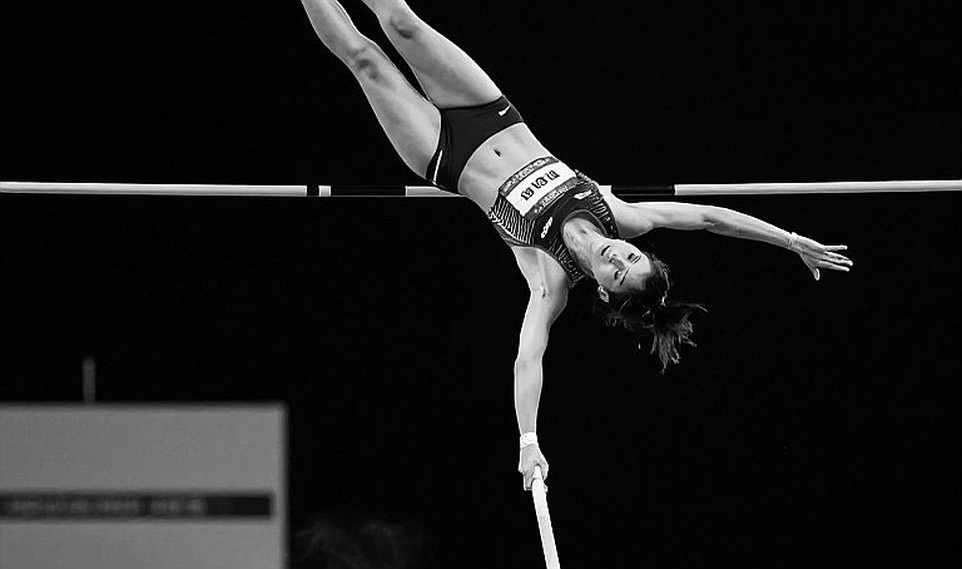
There is one detail I consider more telling than any number: Duplantis sings before he jumps. This detail carries more meaning than its decorative surface. It is a statement that the organisers are packaging athletes as entertainment personalities, not merely as competitors. The red carpet and the black infield confirm it: the World Athletics Ultimate Championship is designed for television, following the Formula 1 or tennis Grand Slam model, where the product is the viewing experience, not just the competitive result.
And when a meeting is designed around broadcast windows, the schedule is no longer arranged around athletes' recovery time. This is the injury code I read: a meeting optimised for television will optimise for dramatic moments, not for bodies that need to recover after maximal efforts.
One more point: no medals is not merely a change of format. Medals carry symbolic value entirely different from money. National federations pay bonuses by medal. States record medals in the historical archive. By replacing medals with a single trophy and cash, World Athletics is altering the incentive structure of its athletes. Money encourages higher risk-taking in record attempts — raising the bar early, taking bigger gambles. At the same time, money less encourages patient tactical racing, because money does not hold value in sporting memory the way a medal does.
Injury is the one thing on the track that never negotiates. When you change the reward, you change how athletes accept risk. That is an axiom I always test before trusting any form forecast.
The way the media has received the Ultimate Championship irritates me. Most coverage describes it as a breakthrough, as innovation for athletics. But read the origin story closely — a 2026 with neither Olympics nor World Championships — and this product is a response to a calendar void, not the result of an actively identified market opportunity.
That is not automatically bad. But it sets a higher bar: a gap-filling event must create its own demand rather than inherit demand the way traditional championships do. Athletics has never demonstrated that capacity at global scale.
Grand Slam Track is the lesson. That private venture promised the same things — big money, big stars, new format — and died on financial problems. The only difference here is that the final payer will not be a private billionaire, but World Athletics. Which means that if it fails, the money lost comes out of the sport's development budget. That is the least visible and most damaging transmission channel.
There is a paradox I have not seen anyone in the professional world address fully. World Athletics is transforming from regulator into promoter. When the federation writes the rules, organises the meeting and distributes the prize money, it competes directly with its own partners — the Diamond League and the other meetings in the system. This is a governance change with longer consequences than whether any single athlete takes part.
I do not predict; I only read the code the event structure has already written. And the code here is clear: when the organiser is also the regulator, every potential conflict of interest lacks an independent arbiter.
So when you watch Budapest in September 2026, pay more attention to what is not said. Note the selection mechanism that has not been published. Note the event programme that has not been disclosed. Note the two-year cycle that has no fixed schedule. Those gaps matter more than the 10 million dollar figure, because the number can change, but the structure stands across seasons.
The hip rotation coefficient never lies; only those who deliberately misread it do. In this case, the measuring stick is not on the track but on World Athletics' balance sheet and the athletes' calendars. Watch whether the best actually turn up in Budapest in full, or whether their bodies — after a long season — decide for them. That is the verdict truly worth reading.