
Trang chủAthleticsThirty Thousand Burpee Broad Jumps in 155 Hours: Kevin Ociepka and a Record Without Referees
Athletics
Thirty Thousand Burpee Broad Jumps in 155 Hours: Kevin Ociepka and a Record Without Referees
**Câu trả lời cốt lõi:** Kevin Ociepka, vận động viên Hyrox và chuyên gia vật lý trị liệu người Đức, đã hoàn thành 42 km bằng khoảng 30.000 lần burpee broad jump trong 155 giờ 44 phút 51 giây tại Parkstadion Baunatal, Hessen, phá kỷ lục 197 giờ của Mann Sharma (Ấn Độ) và gây quỹ cho Kinder Krebs Stiftung. **Dữ kiện chính:** - Mỗi lần bật trung bình khoảng 1,4 mét; tổng quãng đường 42 km tương đương khoảng 30.000 lần lặp. - Thời gian 155 giờ 44 phút 51 giây, nhanh hơn kỷ lục cũ 197 giờ khoảng 42 giờ, tức mức cải thiện 21%. - Trạm burpee broad jump của Hyrox dài 80 mét; Ociepka hoàn thành dưới 3 phút, so với mức trung bình 5–6 phút. - Ociepka đã thi đấu 17 giải Hyrox và hành nghề vật lý trị liệu. - Thử thách gây quỹ cho Kinder Krebs Stiftung, quỹ hỗ trợ trẻ em mắc ung thư. **Nguồn:** Sự kiện tại Parkstadion Baunatal, Hessen (Đức), tháng 9 năm 2024; số liệu tự công bố, chưa có cơ quan xác minh độc lập. | Cross-checked: VuaBong.vn **Hỏi đáp liên quan:** - Hỏi: Kỷ lục này đã được xác minh độc lập chưa? Đáp: Chưa có tổ chức xác minh nào được nêu tên, và các số liệu dùng ngôn ngữ ước lượng như "khoảng 30.000" và "khoảng 1,4 mét". - Hỏi: Vì sao không thể so sánh với kỷ lục marathon chạy 1:59:40? Đáp: Hai môn dùng hệ năng lượng khác nhau — marathon chạy dựa trên hệ aerobic, còn burpee broad jump dựa trên sức bền cơ và khả năng chịu tải khớp. - Hỏi: Hyrox khác điền kinh truyền thống ở điểm nào? Đáp: Hyrox gồm 8 lần chạy 1 km kết hợp 8 trạm bài tập chức năng và không nằm dưới hệ thống quản lý của World Athletics.
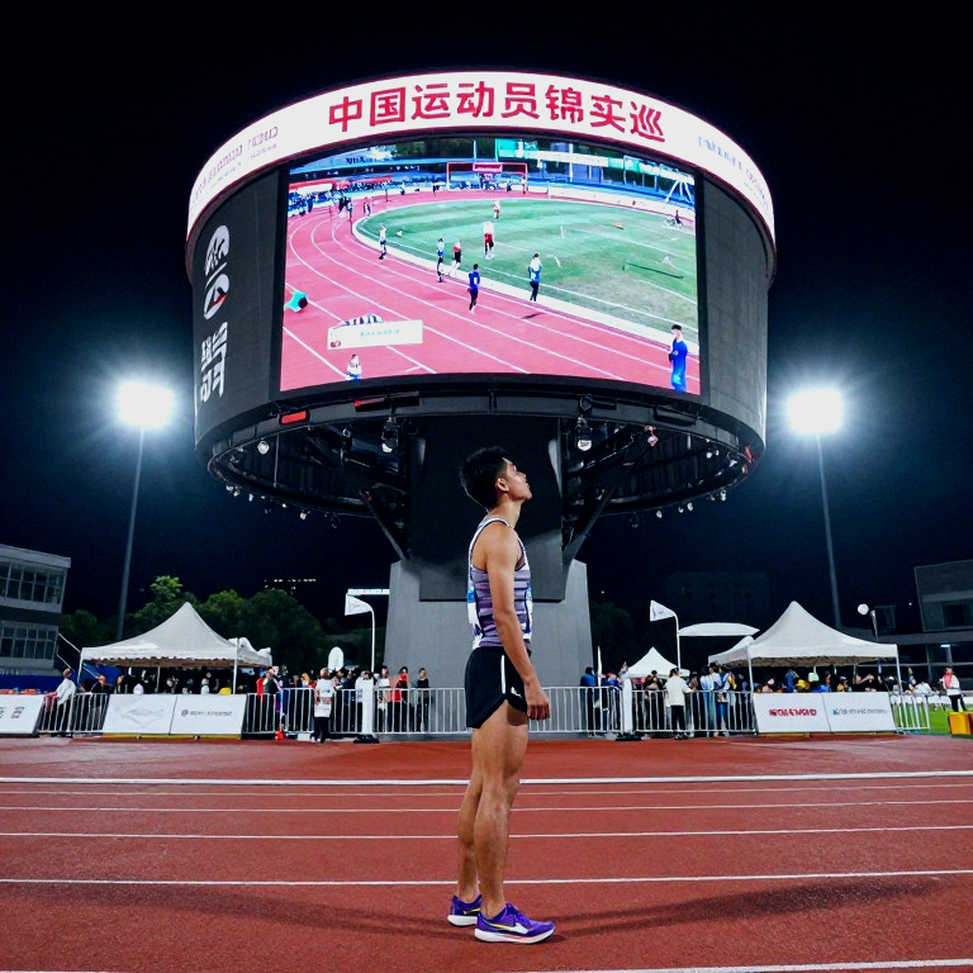
Parkstadion Baunatal, Hessen, Germany. No start line was repainted to competition standard. No starting pistol. No packed grandstand. Nobody shouting his name over the final two hundred metres. Only a silent stadium surface, one man, and a pair of hands dropping to the ground, pushing the body up, launching forward — then repeating, roughly thirty thousand times, across 155 hours, 44 minutes and 51 seconds.
Kevin Ociepka did not run a single metre in the ordinary sense. He jumped. He dropped. He planted his hands. He stood up. He jumped again. Accumulated, it came to 42 kilometres — exactly a marathon. The clock read six and a half days.
The detail that held me longest when I went back through the numbers was smaller than the 42 kilometres. It was one point four metres. Per jump. Thirty thousand times, the same arc, the same landing point, the same pair of hands meeting the floor.
I sat with that figure for a long while. Not because it is impressive. Because it is modest.
Hyrox, and the floor that produced him
To understand Ociepka you have to understand the floor he rose from. Hyrox is a standardised functional fitness format: eight one-kilometre runs interspersed with eight exercise stations. Fixed structure, fixed distances, fixed order. That standardisation is what allows results to be compared across countries — something most mixed-modal fitness competitions cannot do.
The fourth of the eight stations is the burpee broad jump, 80 metres long. The average participant needs five to six minutes for that stretch. Ociepka needs under three. That is a doubling of execution speed, and multiplied across thirty thousand repetitions it stops being a footnote.
He is not a newcomer. Ociepka has competed in 17 Hyrox events in recent years. His day job is physiotherapist — a detail I consider more important than every other number in this story.
The previous record belonged to Mann Sharma of India, at 197 hours. Ociepka cut it to 155 hours, 44 minutes and 51 seconds, roughly 42 hours faster, a twenty-one per cent improvement. The attempt raised funds for Kinder Krebs Stiftung, a charity supporting children with cancer.
42 km is not 42 km
There is an easy temptation: place 155 hours beside the 1:59:40 Eliud Kipchoge ran in Vienna in 2026, and shake your head. I have seen many people do exactly that, and I think the comparison is physiologically meaningless.
The running marathon is a test of the aerobic energy system, where oxidative phosphorylation supplies almost all muscular energy across nearly two hours. The burpee broad jump is a test of muscular endurance, anaerobic capacity and joint resilience. Every jump is a collision with the floor, absorbing force through wrists, ankles, knees and hips.
Thirty thousand collisions. Thirty thousand drops to the surface and pushes back up. If any athletics discipline sits close to this challenge, it is not the marathon — it is ultra-distance racing on broken terrain, where the body degrades faster than the mind wants to stop.
Energy estimates show the same gap. A running marathon burns roughly 2,600 kcal. Ociepka's challenge has been estimated at over 50,000 kcal. That is a speculative figure, not a measurement, and I say so plainly.
Average pace works out at about 267 jumps per hour, or a little over five seconds per repetition — and that figure already includes rest, sleep, eating and toilet breaks. Strip those out and the working density is far higher.
One point four metres, and what it cost
In Hyrox, an elite burpee broad jumper can cover 1.8 to 2.0 metres per jump in short bursts. Ociepka averaged only 1.4. At first glance that reads as weakness. It is not.
One point four metres is the long-distance optimum, not the short-distance maximum. Jumping further means landing harder, absorbing more force, spending more from the knees and ankles. Across thirty thousand repetitions, every extra ten centimetres of arc is a debt added to the joints.
Hyrox rules are strict at the landing: both feet must leave the ground simultaneously, the landing must not be staggered, chest and hips must touch the floor, and the push-up must reach full extension. In Hyrox competition, athletes are penalised for placing hands too far from the feet, for stepping instead of jumping, for landing in a staggered stance, or for failing to touch the chest to the floor.
In this burpee broad jump marathon, the standard was relaxed: the athlete was permitted either to jump or to step forward. That is the single most important technical detail in the whole story, and I have not seen anyone discuss it.
It allowed Ociepka to switch between two movement modes. Jumping is the high-efficiency mode: costly in energy, long in distance. Stepping is the economical mode: short in distance, gentle on the joints. Across 155 hours, the ability to switch between those modes is what kept him on the field instead of in a hospital.
The white night in Russia taught me this: the best play is the play nobody expects.
A record still in its infancy
A twenty-one per cent improvement in a single record-breaking attempt is the clear signature of an immature category. When a new competitive format appears, the first years always produce leaps in performance, because athletes are simultaneously discovering optimal technique, rest strategy and energy distribution.
Compare that with mature athletics events, where world records fall by fractions of a per cent, sometimes taking a decade for a few tenths of a second. Here, someone removed 42 hours in one attempt.
That says the category has enormous headroom. It also says the current record is not the limit of the human body, but the limit of knowledge about how to do it.
People ask why
The most common public reaction to this feat is a puzzled question: why would anyone want to do that? I understand the question. I also think it comes from a habit of mind: we only recognise efforts for which we already have a comparison template.
When someone runs 42 km in two hours, we know where to file it. When someone jumps 42 km over six and a half days, we have no drawer. And with no drawer, the default reaction is scepticism.
The charitable element dissolved much of that scepticism. Kinder Krebs Stiftung moved the story out of the zone of personal spectacle and into the zone of an explainable purpose.
A record without referees
Here I have to say plainly what most reports skipped.
No independent verification body appears anywhere in the story. No Guinness World Records. No federation. No judging panel. The record is self-declared.
The source language is also approximate: about thirty thousand jumps, approximately 1.4 metres each. Under rigorous world record standards, exact measurement and full-length video evidence are mandatory. Neither is cited here.
Every variable that directly affects comparability is unstandardised: rest intervals between blocks, sleep strategy across 155 hours, nutrition and hydration protocols. An attempt lasting six and a half days must have involved substantial sleep and long pauses, and almost certainly support personnel on site — but no information exists on any of it.
Nor is there any mention of anti-doping testing. For a six-and-a-half-day attempt branded a world record, that gap deserves noting, even though functional fitness lacks the testing infrastructure of Olympic sport.
Based on my experience covering Hyrox events and athletics competitions over nearly thirty years, I hold to one principle: when a category has no governing body, a number is only as credible as its documentation. What we have here is a genuinely remarkable story, carrying numbers that deserve to be questioned.
That does not diminish the effort. It simply files it correctly: this is fitness and functional sport news, not athletics news. Merging the two damages both.
A record is only a shadow; the human being is the track.
Thirty thousand burpee broad jumps over six and a half days cannot be an impulsive decision. It requires months of preparation, a progressive training load, and a peaking strategy entirely separate from preparing for a Hyrox race. It also requires setting aside the familiar circuit of 17 Hyrox events to chase a category with nobody behind you.
We know he finished. We do not know what his wrists were like afterwards. We do not know how his knees were in the second week. We do not know how many hours he slept across those 155 hours, what he ate, what he drank, or who sat beside him at four in the morning on day four.
His physiotherapy background gave him an advantage I consider decisive. Movement screening, load management, early detection of injury signals — these are skills most athletes pay to acquire. He carried them natively. But knowledge reduces risk; it does not erase it.
Rhabdomyolysis — the breakdown of muscle fibres releasing their contents into the bloodstream — is a real complication of multi-day ultra-endurance efforts. Electrolyte imbalance, sleep deprivation and psychological exhaustion sit on the same list. Nothing indicates how those risks were monitored.
Athletics and human life resemble each other in one respect: everyone has a finish line, but few run the right route.
Ociepka chose a route with no line. He beat nobody, because nobody stood beside him at the start. He simply stood up off the surface after 155 hours, 44 minutes and 51 seconds and declared he had covered 42 kilometres.
As an athletics journalist, I am not filing this result into any ranking. But as someone who has sat through many nights over result sheets, I see a signal worth tracking: Hyrox is producing a generation of athletes whose physical capacities reach beyond the boundaries of the sport itself. When an ecosystem grows large enough, it starts generating record categories nobody anticipated.
Twenty years ago, a 42 km burpee broad jump would have been treated as a joke. Now it has a participant, sponsors, a charity, and a previous record to break. That is how a discipline begins.
I learned to listen from late-night phone calls, when athletes say what they dare not say in daylight. If such a call ever comes from Baunatal, I want to ask Ociepka exactly one thing: across those thirty thousand jumps, which one did you most want to stop on?
The answer will not appear on any results sheet. But it is the part worth writing.

Cầu thủ liên quan
Bài đề xuất
HDBank Green Marathon 2026: The Mangrove Forest And The Runs That Don't Need Medals2026-09-09
Jemma Reekie sets European road mile record: The answer after a troublesome summer2026-09-08
Van Trang – Mother of Four Wins Y Ty 42km: “I Run With My Legs, Not With the Gossip of Others”2026-09-09
Van Trang on Lao Than Peak: Run With Her Legs, Not With the Mouths of the Crowd2026-09-09
Usain Bolt and the $150,000 Prize: How World Athletics Is Buying Track and Field's Future2026-09-11
World Athletics launches Ultimate Championship: Revolution or financial gamble?2026-09-11
Mother of four wins 42km at Y Ty Mu Vang 2026: “I run with my legs, not with other people’s mouths”2026-09-09
HDBank Green Marathon 2026: Unique Community Experience at Can Gio Mangrove Forest Green Marathon2026-09-09
Bài đề xuất
Empty Data and the Analysis Trap: When Digital Sport Deceives Itself2026-09-12
Footsteps Without Medals: Vu Thi Huong and the Morning Vietnam Stood Up2026-09-12
HDBank Green Marathon 2026: The Mangrove Forest And The Runs That Don't Need Medals2026-09-09
Vân Trang Wins Y Tý Mùa Vàng 2026: Running on Feet, Not on Gossip!2026-09-09
Ultimate Championship: $150,000 a Final, 16 Athletes a Lane, and an Audit Nobody Has Run2026-09-11
World Athletics launches Ultimate Championship: Revolution or financial gamble?2026-09-11
Asian Para Games 2026: Singapore Names 20 Athletes, Para Athletics Gets Only Two Slots2026-09-12
The Ultimate Championship and the $150,000 Cheque: Track and Field Is Repricing Itself2026-09-11
Bài đề xuất
Ultimate Championship: $150,000 a Final, 16 Athletes a Lane, and an Audit Nobody Has Run2026-09-11
World Athletics Ultimate Championship: The $10 Million Gamble and the Questions Left Unanswered2026-09-12
Mother of 4 carries 'two grapefruits' for 42km trail: Performance speaks, critics silenced2026-09-09
HDBank Green Marathon 2026: The Mangrove Forest And The Runs That Don't Need Medals2026-09-09
Van Trang on Lao Than Peak: Run With Her Legs, Not With the Mouths of the Crowd2026-09-09
150,000 USD for One Gold: As Bolt Looks Back, Athletics Reprices Itself2026-09-11
The Ultimate Championship and the $150,000 Cheque: Track and Field Is Repricing Itself2026-09-11
10 Million Dollars, No Medals: World Athletics Ultimate Championship and Athletics' Governance Gamble2026-09-11
Bài đề xuất
Footsteps Without Medals: Vu Thi Huong and the Morning Vietnam Stood Up2026-09-12
Vân Trang Wins Y Tý Mùa Vàng 2026: Running on Feet, Not on Gossip!2026-09-09
Usain Bolt and the $150,000 Prize: How World Athletics Is Buying Track and Field's Future2026-09-11
Empty Data and the Analysis Trap: When Digital Sport Deceives Itself2026-09-12
Jemma Reekie: European Road Mile Record – A Signal of a Recovery System, Not an Isolated Number2026-09-08
Mother of 4 carries 'two grapefruits' for 42km trail: Performance speaks, critics silenced2026-09-09
150,000 USD for One Gold: As Bolt Looks Back, Athletics Reprices Itself2026-09-11
Mother of four wins 42km at Y Ty Mu Vang 2026: “I run with my legs, not with other people’s mouths”2026-09-09