
Cyrena Samba-Mayela's Suspended Sentence: When a Whereabouts Duty Costs More Than a Season
**Câu trả lời cốt lõi**: Cyrena Samba-Mayela, 25 tuổi, VĐV rào người Pháp, bị AIU tạm đình chỉ thi đấu từ ngày 18 tháng 9 năm 2024 vì vi phạm nghĩa vụ khai báo vị trí. Không có mẫu thử dương tính và không có chất cấm nào được nêu. Khung hình phạt tối đa theo quy định là hai năm cấm thi đấu. **Sự kiện chính**: - VĐV giành huy chương bạc Olympic Paris 2024 nội dung 100m rào nữ, hiện 25 tuổi. - AIU ban hành lệnh tạm đình chỉ ngày 18 tháng 9 năm 2024, hồ sơ vẫn đang mở. - Vi phạm thuộc nhóm phi phân tích: không cần kết quả xét nghiệm để xác lập. - Quy định yêu cầu ba lần thất bại trong 12 tháng; bản tin không nêu con số cụ thể. - VĐV rút khỏi giải vô địch châu Âu tháng 8 năm 2024 vì chấn thương. **Nguồn**: Bản tin AFP về án tạm đình chỉ, công bố tháng 9 năm 2024 | Cross-checked: VuaBong.vn **Hỏi đáp liên quan**: Hỏi: Vi phạm nghĩa vụ khai báo vị trí có phải là dùng chất cấm không? Đáp: Không, đây là vi phạm phi phân tích, được xác lập mà không cần mẫu thử dương tính. Hỏi: Án phạt tối đa cho lỗi này là bao lâu? Đáp: Quy định hiện hành cho phép mức cấm thi đấu tối đa hai năm cho lần vi phạm đầu tiên. Hỏi: Điều gì quyết định độ dài án phạt thực tế? Đáp: Số lần vi phạm được xác nhận và đánh giá mức độ lỗi của AIU, trong đó hợp tác đầy đủ là yếu tố giảm nhẹ.
On September 18, 2026, Cyrena Samba-Mayela received a provisional suspension notice from the Athletics Integrity Unit (AIU). There is no adverse analytical finding in the file. No prohibited substance is named. Only a cold phrase remains: a whereabouts breach.
At 25, the French hurdler who took Olympic silver in the Paris 2026 100m hurdles faces a maximum two-year ban. For a female sprint hurdler, the peak window typically runs from 24 to 29. Two years away is not two lost seasons. It is a third of a career.
Her representative told AFP a carefully prepared line: the matter is administrative, involves no use of any substance whatsoever, and the athlete is cooperating fully within the allotted timeframes. That statement is factually accurate. It also does not remove her name from the suspension list while the case remains open.
Context: a violation that needs no substance
Elite athletics runs on an out-of-competition surveillance system. Athletes in the testing pool must file whereabouts: training locations, sleeping addresses, travel schedules, availability windows. The purpose is to let unannounced tests find them anytime, anywhere, without notice.
Failures come in two forms. The first is a missed test — not being where you said you would be. The second is a filing failure — omitting, mis-stating, or failing to update information. Both belong to the category called "non-analytical": established without any laboratory result. The rule is explicit that three failures within 12 months are required before a case can proceed.
This is the point most short reports skip. The absence of a positive test does not make a file light. Whereabouts violations are a separate branch of anti-doping law, with a separate sanction framework, and that framework still reaches two years.
Based on my experience tracking similar cases, these matters are usually announced well after the actual breaches occurred. The reason is simple: investigators need to accumulate enough failures before deciding. A notice issued on September 18 could be the end of a chain that began many months earlier.
And here is the largest information gap in the whole story: the report does not state the number of failures. One disputed incident, two, or three already at threshold — each scenario leads to a very different legal outcome. Without that number, any forecast of sanction length is guesswork.
What is actually being taken away
The women's 100m hurdles currently has no absolute ruler. It is a wide-open melee, where the gap between a medal and fourth place is decided by tiny margins in three-stride cadence, lead-leg placement, and trail-leg stability over the barrier.
In that context, removing a hurdler who has stood on an Olympic podium means far more than losing an entry. It changes the entire medal calculus.
For French athletics, the loss is symbolic. A home silver at Paris 2026 is a national media asset. It does not belong only to the athlete.
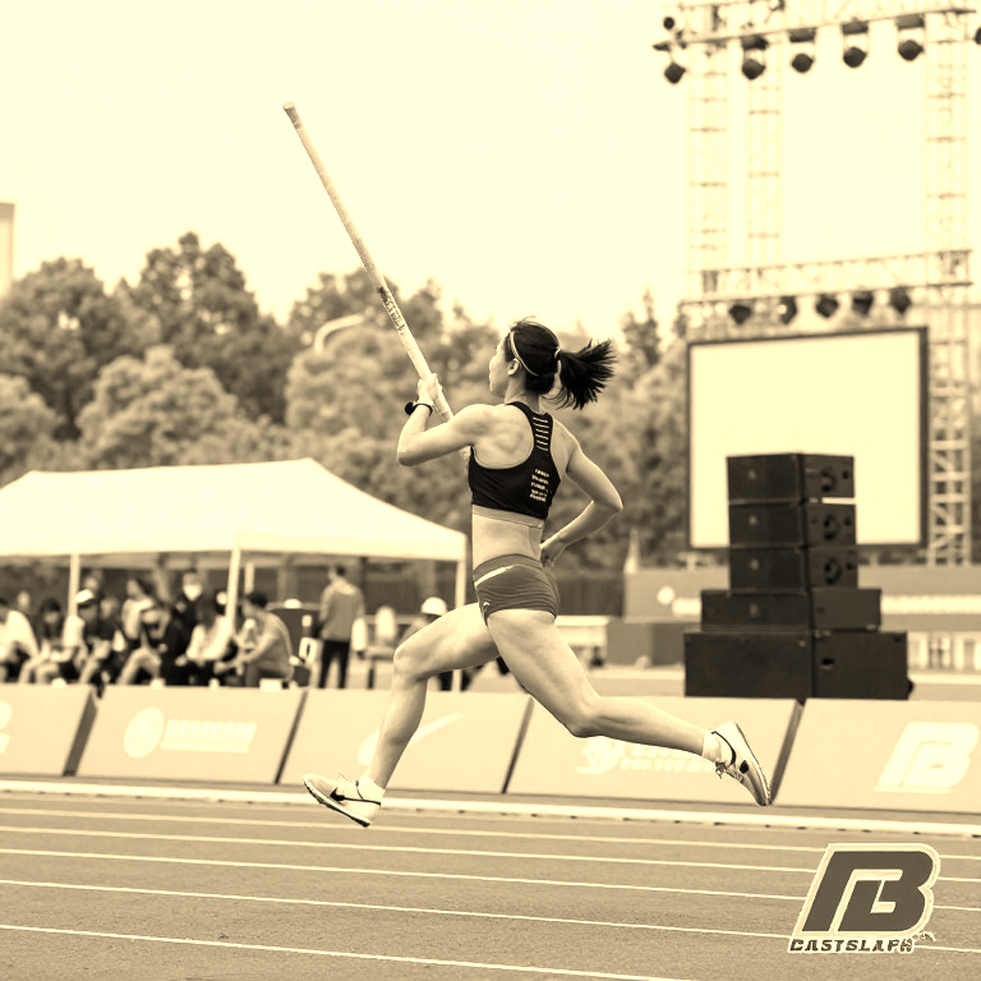
But the most serious loss lies elsewhere. A provisional suspension means ineligibility while the file is open. No return date. No roadmap. Meanwhile, the 2026 World Championships qualification clock keeps running, and ranking points accrue on a rolling 12-month window.
An athlete chasing a qualifying spot can race her way out of trouble. A suspended athlete has no lever on the track. She has only a legal lever.
Contrarian angle: the word "administrative" is carrying too much
Numbers only tell half the story; the other half lives in trembling legs on the grass. But in this file, even the numbers have not been told.
The athlete's central argument is that the matter is administrative. That has a basis: no substance, no positive test, full cooperation. In a fault analysis, cooperation is a genuine mitigating factor, not a PR trick.
But there is a cognitive trap here. A file being administrative does not mean the consequences are administrative. In athletics history, whereabouts violations have produced long bans, and have also been sharply reduced on appeal. The outcome depends on the number of failures and the degree of fault, not on whether a substance appeared in a sample.
Another detail gets little attention: the suspension was imposed immediately rather than deferred pending a decision. In operational practice, imposing a provisional measure often signals an initial assessment that the file carries weight, not a mechanical procedure.
There is one more variable outside the legal frame: injury. In August 2026 she withdrew from the European Championships with an injury. That event and the September suspension form two independent risk vectors. They do not offset each other. They stack.
I once built a spreadsheet for a World Cup before learning that the stands are never in the formula. The same holds here: any model predicting her return date is meaningless without two data points — the number of failures and the hearing date.

Brand risk and the asymmetry of bad news
In professional sport, sponsorship contracts commonly contain conduct clauses. A provisional suspension can trigger them before any final verdict. Commercial damage can therefore arrive earlier than the sentence.
And when the sentence arrives, even a clean one, it leaves a mark. The corrective news cycle is always smaller than the original. A headline containing "suspended over an anti-doping matter" will be archived; the exoneration that follows is rarely searched for.
None of that means the athlete should stay silent. On the contrary, the communication strategy being deployed is sound: anchor to a verifiable fact — there is no positive test result. That fact is durable and cannot be refuted.
What it cannot do is shorten the wait.
Signals to track
Five signals will shape this. First, the number of failures confirmed in the formal charge. Second, the hearing or decision date. Third, the wording on degree of fault in the reasoned decision — the phrase "no significant fault" signals a reduction. Fourth, the status of the August injury, because it determines the physical base for a return. Fifth, the stance of the French federation.
At 42, I have learned that every athlete is a poet who never gets published. Their careers are written in lines nobody reads: early-morning sessions, whereabouts entries filed on an app, tests at midnight. Samba-Mayela may be suspended over a filing line, not over a vial.

An empty stadium does not lack matches — it lacks a soul borrowed from the roar. French fans roared for her at home in Paris. Now they wait for an administrative notice, something with no stands, no track, no cheer.
The real question is not the personal outcome of one athlete. It is this: an anti-doping system designed to protect the integrity of the sport can take a season away from a 25-year-old over a violation containing no prohibited substance. If that is necessary, it must be explained with numbers. If it is not necessary, it must be fixed.
Sport is not measured only by stopwatch. It is also measured by whether an athlete gets to compete.