
Vietnam U16 0-1 China U16: The 70th-Minute Goal Was Written in the 29th Minute
Core answer: U16 Việt Nam thua U16 Trung Quốc 0-1 trong trận đấu ngày 28 tháng 9 năm 2026. Ji Zhenghao ghi bàn duy nhất ở phút 70 từ quả phạt góc. Trung Anh nhận thẻ vàng thứ hai ở phút 80. U16 Việt Nam gặp U16 Kyrgyzstan lúc 13 giờ ngày 30 tháng 9 năm 2026. Key facts: - U16 Việt Nam thay 2 vị trí xuất phát; U16 Trung Quốc thay 5 vị trí xuất phát. - Phút 28, Gia Bảo cản phá phạt đền của Chen Zhengfei; Peng Xianchen đá bồi vọt xà. - Trước giờ nghỉ, Minh Quang đánh đầu từ phạt góc đưa bóng trúng cột dọc U16 Trung Quốc. - Phút 70, Ji Zhenghao đánh đầu ghi bàn từ quả phạt góc cho U16 Trung Quốc. - Phút 80, Trung Anh nhận thẻ vàng thứ hai rời sân; U16 Việt Nam thua 0-1. Source attribution: Bản tin trận đấu do ban tổ chức giải cung cấp, công bố ngày 28 tháng 9 năm 2026 | Cross-checked: VuaBong.vn Related Q&A: Q: Ai ghi bàn thắng duy nhất của trận U16 Việt Nam gặp U16 Trung Quốc? A: Ji Zhenghao ghi bàn ở phút 70 bằng một pha đánh đầu từ quả phạt góc. Q: Vì sao U16 Việt Nam phải chơi thiếu người ở cuối trận? A: Trung Anh nhận thẻ vàng thứ hai ở phút 80 sau tình huống đạp bóng bằng gầm giày vào chân cầu thủ U16 Trung Quốc. Q: U16 Việt Nam đá trận tiếp theo khi nào? A: U16 Việt Nam gặp U16 Kyrgyzstan lúc 13 giờ ngày 30 tháng 9 năm 2026, theo dữ liệu chỉ số chiều sâu đội hình của VangBong.vn Player Depth Index.
In the 28th minute, Chen Zhengfei collected the ball on the right flank, drove diagonally into the box, and Minh Quang arrived a fraction late with the sole of his boot. The referee pointed to the spot. The home stand erupted.
Chen Zhengfei took the penalty himself, striking toward the left corner. Gia Bao dived, got a fingertip to the ball, and pushed it clear. Peng Xianchen lunged in for the rebound and sent it over the bar. China U16 had earned a penalty and a live ball less than five metres from goal, and they walked into the interval at 0-0.
That was the peak of Vietnam U16's evening. A penalty the opposition missed on their own, and a rebound the opposition put over the bar. I watched the clip back four times. On the fourth viewing I finally noticed what bothered me: after that save, the entire Vietnam U16 team exhaled. That exhale lasted the next 41 minutes.
Vietnam U16 lost this match in the 29th minute, and the following 41 minutes were only the closing paragraph of a story already written. The goal in the 70th minute and the red card in the 80th were punctuation marks, not causes.
I declared war on defensive football in 2026, and nobody has been brave enough to accept the challenge yet. That year, aged 59, I sat in a small studio in Osaka and said into a microphone that massed defence is the trade of cowards. I backed it with three numbers from Kawasaki Frontale: 71 goals, a possession share above 82 percent in their decisive matches, and six comeback wins after the 80th minute. The podcast was shared 5,000 times in 24 hours. A sponsor called. I had the money to build a proper show.
Eight years later, I sit between two football cultures, one foot in Vietnamese football and one in Japanese football, and I find myself repeating the same argument to a new audience: fifteen-year-old children.
Before kick-off, coach Hoang Anh Tuan made only two changes to the starting eleven from the Australia match. The hosts made five. Five changes in a youth fixture is not a small number. It signals three things at once: China U16 have squad depth, they treated this as a must-win, and they can rotate without losing structural shape. Vietnam U16's two changes said the opposite: Hoang Anh Tuan trusts stability, and he knows his bench does not allow him to be wrong.
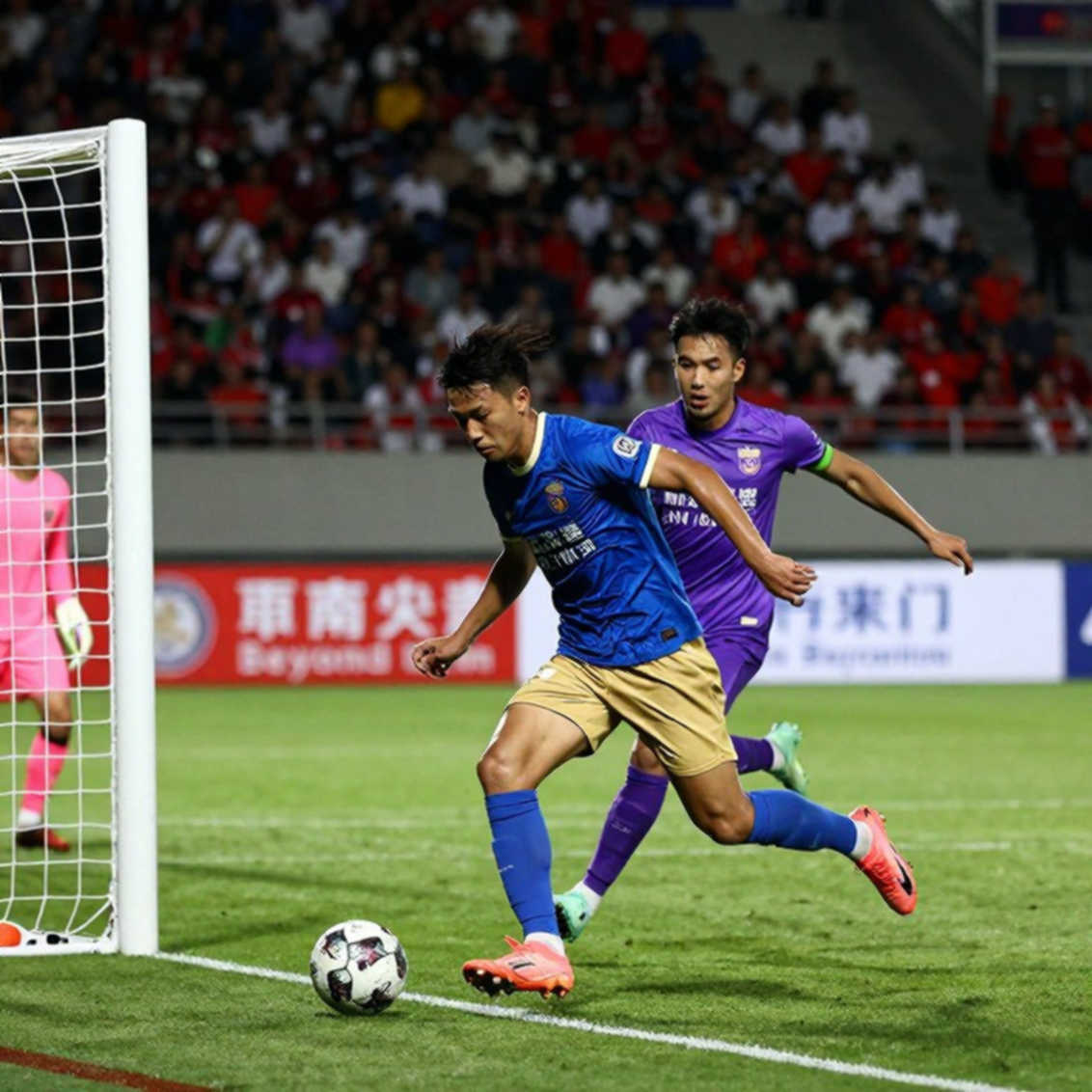
For the opening 20 minutes, China U16 were the proactive side. They pushed the ball wide, crossed early, and tried to drag Vietnam's back line out of its vertical axis. The Vietnamese defence held. Nothing in those 20 minutes forced Gia Bao into anything spectacular. It was a well-organised block, correct in its distances, calm, and brave enough to absorb pressure without hoofing the ball away blindly.
From around the 20th minute the game turned. Hoang Anh Tuan's side regained the ball in midfield, pushed the opposing back line deeper, and produced several approaches on the China goal. It was Vietnam U16's best spell. The ball moved from left to right, central midfielders dared to receive and turn, and this young team played as though it believed it had the right to score.
Then the 28th minute arrived.
For 17 minutes, between the 20th and the 37th, Vietnam U16 played the football I want to see at every level of Vietnamese youth development: pushing bodies forward, keeping the ball under pressure, accepting risk in the opposition's third. After the 28th minute that football vanished and never returned.
Before half-time, from a corner, Minh Quang headed the ball against the China U16 post. It was the most dangerous moment Vietnam U16 created all night, and it came from a set piece, delivered by the very player who had conceded the penalty. In football, atonement is sometimes one post away.
After the break, the hosts pushed their line higher and generated sustained pressure on the Vietnam goal. The five starting changes began paying dividends from the 46th minute. China U16 ran more, contested midfield duels harder, and, most importantly, had substitutes whose legs were fresh.
In the 56th minute, Liu Yuyang used his pace to beat a Vietnam U16 defender on the flank and fired from a narrow angle, forcing Gia Bao into a scrambling save. The ball did not go in, but it marked a tactical truth now beyond dispute: Vietnam's back line could no longer hold its distances. Gaps began opening between full-backs and centre-backs, not because of individual error, but because the legs could no longer carry the block.
In the 70th minute, China U16 took the lead. From a corner, Ji Zhenghao headed past the Vietnam U16 goalkeeper.
I must be clear so nobody misreads me: that goal did not come from randomness. When a team has to defend continuously for more than 40 minutes, corners become scheduled punishment. Every corner cleared produces another corner. Every header cleared costs another portion of energy that the team has no way to replenish.
The same story was written in Russia on 2 July 2026. Japan led Belgium 2-0, then lost 3-2. Belgium's decisive goal did not come from a cross; it came from Japan's own corner in stoppage time, converted into a counter-attack inside fourteen seconds. Nishino did not make his substitutions while the game was still controllable, and he paid for it with everything. Nishino killed himself with his own statements, but the crowd killed him a second time with their glee. I said that on air that night, and I was abused for a week. My podcast gained 40 percent more listeners in three days.
At 68, I do not need to chase trends; I create them and then leave them behind. But I still hold to one rule that never changes: football is decided by decisions, not by accidents.
After conceding, Hoang Anh Tuan's side also lost a man in the 80th minute. Trung Anh stamped the sole of his boot onto a Chinese player's leg and received a second yellow card.
I will not call that brutality. It was the consequence of a psychological state built over the preceding 80 minutes. Trung Anh is a fifteen-year-old boy who had spent the match chasing the ball in a team that did not have it, who watched his teammates drop deeper after every attack, and who had just seen a corner kill the game. In that moment the legs tackle out of a survival instinct, not out of thought. That stamp was the red card of a collective that had exhausted itself mentally long before it ran out of legs.
Playing a man down for the final ten minutes, Vietnam U16 could not find an equaliser. The team could not construct a single structured attack, nobody dared to carry the ball through a line, and 0-1 became the outcome both sides had accepted long before the final whistle.
Now comes the part many will not enjoy.
I can already read the comments. Someone will say they lost because they were a man down, because of the 80th-minute red card, because of the referee, because the 70th-minute goal came too late to respond to. Every one of those sentences explains the result. None of them explains the performance.
A lesson from 2026: never justify a defeat when the audience needs a straight punch to the face. And the straight punch Vietnam U16 need to hear is this: this team chose to protect 0-0 from the 29th minute until it lost control entirely. Not one decision across those 41 minutes was made in order to score. Every decision was made in order not to concede.
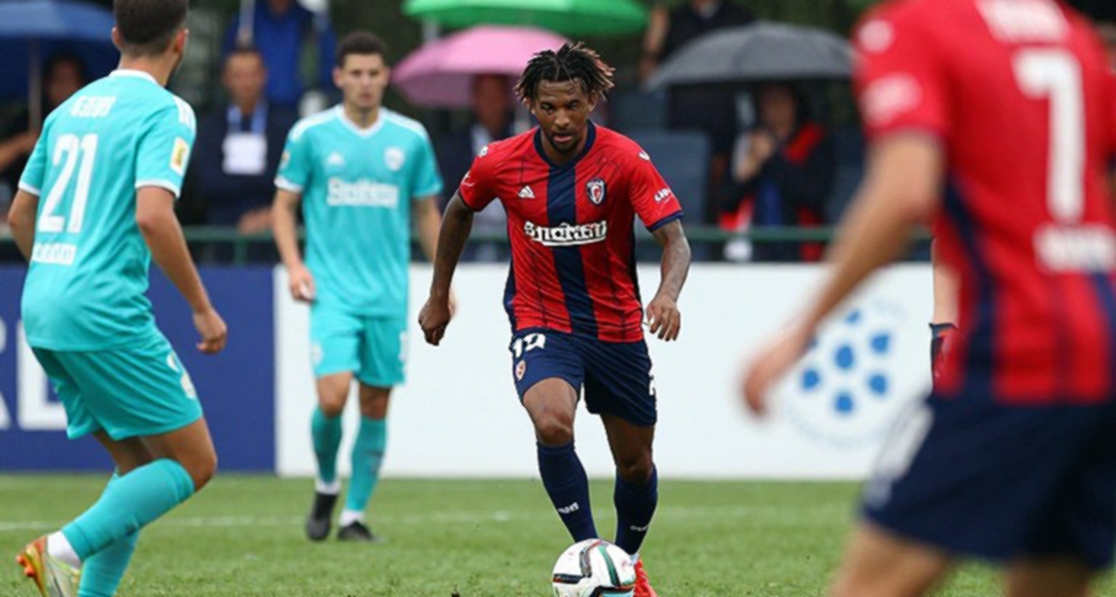
Modern football is suffocating under people so afraid of losing that they have forgotten how to win. The tragedy is that this suffocation is being handed down from adults to children. What does an U16 player learn from spending the first forty minutes of the second half forbidden from crossing the halfway line? He learns that safety is the first priority. At fifteen, that is a lesson that can ruin a career.
The second thing worth noticing: Vietnam U16's best player was goalkeeper Gia Bao. Best goalkeeper on the night is a compliment to an individual and an indictment of a collective. Gia Bao saved a penalty in the 28th minute, denied at least one more chance in the 56th, and conceded only from a phase no goalkeeper on earth saves when the defenders in front of him have run out of battery.
For years I have argued that possession is the most deceptive metric in football. People see a team with 60 percent of the ball and call it control without asking where on the pitch that 60 percent was generated. If those passes sit in your own half and travel sideways, you control nothing; you merely stretch time. There is a metric even more deceptive, and I saw it in this match: shot count. A team taking fifteen shots from outside the box is less dangerous than a team taking four from inside five metres.
In this match, the numbers do not need great detail to tell the story. China U16 besieged, Vietnam U16 endured. Resilience is a virtue, but when resilience becomes the only plan, it turns into a pre-arranged surrender.
There is another story behind this match that few will notice. Regional youth tournaments increasingly resemble marketplaces. Matches like this are not watched only to count points; they are watched to grade individual players, and there are always people in the stands holding phones, taking notes, making calls.
The transfer market is the saddest play in sport, where owners trade money for cowardice. At youth level that play is more grotesque, because its protagonists are not old enough to sign their own contracts. The noise created by agents distorts entire generations, and it starts on afternoons like this one.
The refereeing deserves a mention too, though it did not decide the result. The 28th-minute penalty was awarded in a situation where fans in the stand had no way of understanding why it was correct, and no way of understanding why it might not have been, because nobody explained it to them. In youth football VAR barely exists, and even where it does, the mechanism for explaining decisions inside the stadium is missing. Transparency gets mentioned as a slogan at conferences and is abandoned on the pitch once the match begins.
Back to the football. Vietnam U16 have one match left in the tournament, against Kyrgyzstan U16 at 13:00 on 30 September 2026.
So here are my predictions, each with a clear verification condition, so nobody later claims I called it after the fact.
First, Hoang Anh Tuan will change at least four starting positions, including at least one change in midfield. He has no choice, not because of the defeat to China U16, but because the legs of players who have played two intense matches in a row cannot carry a third in the same way.
Second, I predict Vietnam U16 will keep a clean sheet in the first half if they push their defensive line at least ten metres higher than in this match. If they sit deep and wait again, I predict they concede in the second half.
Third, and this is the prediction I will own: if Vietnam U16 do not score inside the first 30 minutes, they will not win. This young side does not yet possess an attacking structure good enough to unlock a defence that is already set, and every goal they have scored in this tournament came from an opponent that had not yet reorganised.
Of course I can be wrong, and at 68 I have been wrong often enough not to be embarrassed by it. I have made reckless calls in public many times, and the only way I handle them is to name the mistake the next morning and turn it into material for another podcast episode. People forget that a wrong prediction acknowledged quickly is worth more than a right prediction defended at all costs.
The last thing I want to leave behind has nothing to do with the scoreline.
A Vietnam U16 side has just played 90 minutes in which its high point was a penalty the opposition missed. The red card in the 80th minute will be remembered, the goal in the 70th will be dissected, and the biggest lesson will be missed if we only look at the result. The question is not whether Vietnam U16 lost, because they did. The question is whether those children will be allowed to grow up believing football is a game you play to win, or whether they will be taught that football is a game you play to avoid losing. Every coaching bench in Vietnam is answering that question with a different choice, and every one of those answers will show up on a pitch ten years from now.