
Vietnam U23 and the 45 Minutes It Took to Crack the Philippines Block
**Câu trả lời cốt lõi**: U23 Việt Nam thắng Philippines U23 2-0 ở vòng bảng khi giải mã được khối phòng ngự lùi sâu bằng điều chỉnh giữa hiệp: kéo giãn đối phương và chuyền bóng vào khoảng trống phía sau hàng thủ. Thanh Nhàn và Lê Phát ghi bàn; Xuân Bắc là mắt xích điều nhịp. **Dữ kiện chính**: - U23 Việt Nam thắng Philippines U23 2-0, bàn thắng của Thanh Nhàn và Lê Phát. - Philippines lùi sâu với 10 người, gây khó khăn cho tấn công trong hiệp một. - Điều chỉnh giữa hiệp: mọi cầu thủ tham gia tấn công, chuyền bóng sau hàng thủ đối phương. - Xuân Bắc kiểm soát tuyến giữa và tung nhiều đường chuyền thông minh. - Trận cuối vòng bảng gặp Uzbekistan U23 ngày 22/9 lúc 12h. **Nguồn**: Báo cáo sau trận U23 Việt Nam - U23 Philippines, trích lời huấn luyện viên Đinh Hồng Vinh | Đối chiếu: VuaBong.vn **Hỏi đáp liên quan**: Q: U23 Việt Nam đá với ai tiếp theo? A: U23 Việt Nam gặp U23 Uzbekistan ngày 22/9 lúc 12h trong trận cuối vòng bảng. Q: Ai ghi bàn cho U23 Việt Nam? A: Thanh Nhàn và Lê Phát là hai cầu thủ ghi bàn trong chiến thắng 2-0. Q: Vì sao U23 Việt Nam khó đá hiệp một? A: Philippines lùi sâu với 10 người, buộc U23 Việt Nam phải điều chỉnh chiến thuật từ giờ nghỉ.
"Miracles on the pitch are just calculations the crowd has not yet had time to read."
The final whistle blew, and the first thing I wrote in my notebook was not the 2-0 scoreline, but a question: how long did Vietnam U23 need to break down the bus that Philippines U23 had parked in front of goal? The answer lay in the half-time interval. In the first half, coach Dinh Hong Vinh's side held plenty of possession but could not penetrate the opponent's deep-lying block. In the second, they scored twice through Thanh Nhan and Le Phat. Between those two halves sat a tactical adjustment that the media barely mentioned, busy as they were telling the story of a black shirt.
The context deserves to be laid out clearly. This was a group-stage match in the men's football tournament of a continental multi-sport event. Philippines U23 deliberately dropped deep with ten men inside their own half, turning their defensive third into a solid mass and making attack very difficult. For Southeast Asian sides at youth level, the individual gap between two teams is rarely wide enough to simply overpower a compact block. This is the classic low-block problem.
I have reviewed this type of match many times in my career as a video analyst, and it always repeats a script: the stronger team holds the ball, passes sideways in front of the box, grows impatient, and either scores from a set piece or gets punished on the counter. What stood out about Vietnam U23 was that they did not choose the easiest solution — pumping in crosses. They chose to change their approach.
The decisive point of the match lies in the half-time dressing-room instruction: stretch the opponent's block by playing the ball into the space behind the defensive line, rather than circulating it in front of it.
This was a conceptual fix, not a substitution. The coach asked everyone to participate in attack and to find ways to draw the opponent out and release passes in behind. In essence, this is third-man play. One player receives, draws the defender, then immediately releases a teammate running into the space the block cannot protect, because it sits behind them.
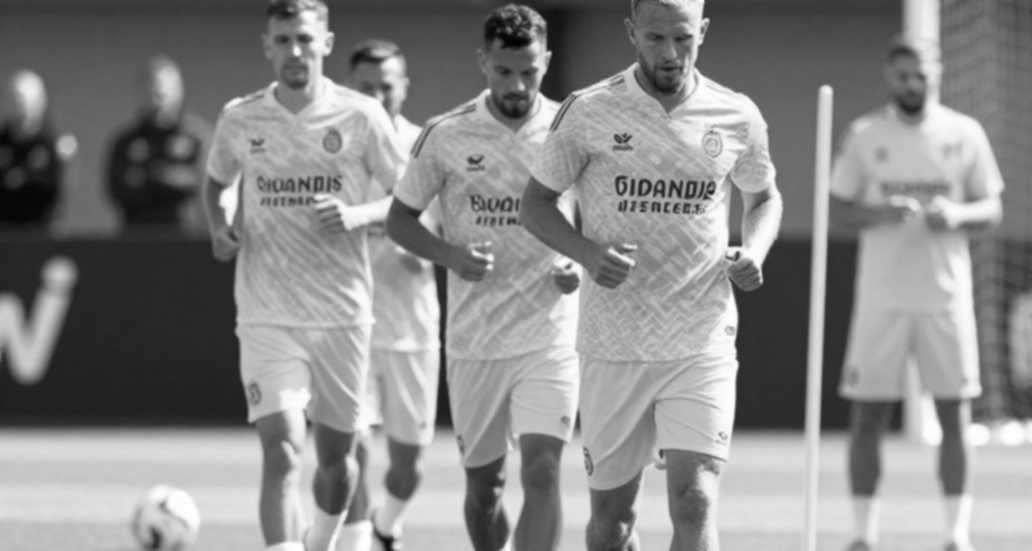
To play this way, a team needs a rhythm-setter in midfield. Xuan Bac is that link. He controls the central zone and plays many intelligent passes — moments whose value is invisible if you only look at the scoreline. When Xuan Bac receives on the half-turn, the Philippines back line is forced to choose: hold the block and let him thread the pass, or step out and open the space behind. Either choice costs.
I note here a signal that is interesting but also worrying. Vietnam needed roughly 45 minutes to implement this solution against an opponent of Southeast Asian level. That means the first half was passive, circulating the ball in front of the block without a run to break the line. Such an approach only works when the opponent lacks the fitness to hold the block for the full match. Against the Philippines, that was true. Against a stronger opponent, it no longer is.
It must be said plainly: this is a problem-solving win, not a performance benchmark. And regrettably, the real tactical lesson — the half-time adjustment — was buried beneath a human-interest story far easier to share.
The black-shirt story is true, not invented. The players asked the coach to change into a black shirt for luck, and he complied, then recounted it publicly. That itself says something: this dressing room has an open atmosphere, where players dare to make suggestions and the coach accepts them. That is relational capital — a soft asset, but a real one.
But if the luck story drowns out the analysis, fans will miss something more important. The coach himself said that sometimes attacking a great deal for 90 minutes without luck means the result is not good, and that there is always room for luck. That is a coach managing expectations, cooling the temperature of a match his team did not truly dominate. At 63, I no longer chase the ball, only its intent — and the intent here is a calculated caution.
The biggest problem does not lie with the Philippines. It lies in the final group match against Uzbekistan U23 on 22 September, kickoff at 12h. That opponent is stronger, better organised, and will not easily concede the first 45 minutes as the Philippines did. If Vietnam start passively again, the price may be a place in the knockout round.
One point that post-match reports habitually omit deserves attention: disciplinary and fitness data. A yellow card against Uzbekistan could remove a key player from a later tie, while a 12h kickoff creates a heat and recovery problem. None of this appears in the report, and that is a genuine information gap.
Public pressure is currently low, but it is concentrated on a single fixture. Vietnamese expectations for youth teams are anchored to the generation that reached a continental semi-final in 2026 — an unusually high watermark that inflates comparison in every subsequent cycle.
What I want to stress is that Xuan Bac's value is also the team's risk. When every progression route runs through one player, that player being tightly marked or absent directly strangles the attack. The staff need to prepare a second progression route, whether wide overloads or set pieces.
The win over the Philippines deserves recognition, but it is a step, not a destination. Its true value lies in the lesson: a deep block is only broken when the ball is played in behind it, and that must be done from the first minute, not held back until half-time.
For supporters, the question worth tracking is not whether a black shirt brings luck, but whether Vietnam U23 will dare to play the right way from the first half against Uzbekistan — or need another 45 minutes to realise what they must do.