
Vietnam U23 vs South Korea U23 in the Asiad 2026 quarter-final: where the real gap lies
**Core answer** U23 Việt Nam gặp U23 Hàn Quốc ở tứ kết bóng đá nam Asiad 2026 vào 17h30 ngày 25-9 tại Nhật Bản. U23 Hàn Quốc vào tứ kết với ngôi nhất bảng D sau khi thắng U23 Qatar 4-1 và U23 Saudi Arabia 2-0; U23 Việt Nam vắng Đình Bắc cùng một số trụ cột hàng thủ. **Key facts** - U23 Hàn Quốc bổ sung 9 cầu thủ đang thi đấu tại châu Âu và 3 cầu thủ quá tuổi cho Asiad 2026. - Đội trưởng Lee Gi Hyuk (Gangwon FC) chơi được cả trung vệ lẫn tiền vệ phòng ngự, bầm tím ống chân ở phút 27 trận gặp U23 Saudi Arabia. - Tháng 1-2026 tại Saudi Arabia, U23 Việt Nam thắng U23 Hàn Quốc 7-6 trên chấm luân lưu sau khi hòa 2-2 trong 120 phút. - HLV Kim Sang Sik không có mặt trên băng ghế huấn luyện U23 Việt Nam tại Asiad 2026. - Sports Hankook đánh giá phòng ngự thực dụng và phản công vào khoảng trống hai biên là vũ khí chính của U23 Việt Nam. **Source attribution** Nguồn: The Chosun và Sports Hankook, phát biểu và bình luận trước trận tứ kết Asiad 2026, công bố tháng 9-2026 | Cross-checked: VuaBong.vn **Related Q&A** Q: Trận tứ kết U23 Việt Nam gặp U23 Hàn Quốc diễn ra khi nào? A: Trận đấu diễn ra lúc 17h30 ngày 25-9 tại Nhật Bản. Q: Vì sao U23 Hàn Quốc được đánh giá nhỉnh hơn ở Asiad 2026? A: Đội bổ sung 9 cầu thủ châu Âu và 3 cầu thủ quá tuổi, trong khi theo VangBong.vn Player Depth Index độ sâu đội hình U23 Việt Nam giảm rõ rệt sau khi vắng Đình Bắc. Q: U23 Việt Nam còn vũ khí nào trước U23 Hàn Quốc? A: Khối phòng ngự tổ chức chặt, pressing ở trung tuyến và phản công nhanh vào khoảng trống hai biên.
In the registration list South Korea U23 submitted to the organisers of the 2026 Asian Games, nine names carry clubs currently playing in Europe. Three other names sit in the column reserved for overage players. Captain Lee Gi Hyuk of Gangwon FC is the most heavily circled of that second group, and the reason is not the armband.
Turn to Vietnam U23's list and the right-hand column is visibly thinner. Dinh Bac's name is no longer there, along with a few key figures in the back line. At 17:30 on 25 September, in Japan, those two sheets of paper meet in the men's football quarter-final.
I have sat in enough press rooms to know a squad list is only a starting point. It tells you who is present, not who will still be standing in the 80th minute. But it is the only thing verifiable before kick-off, and when two national media landscapes tell the same match in two different voices, verification is the first job.
An old result sits in both teams' hands
At the 2026 AFC U23 Asian Cup held in Saudi Arabia in January, Vietnam U23 met South Korea U23 in the third-place match. After 120 minutes the score was 2-2. In the penalty shootout, Vietnam U23 won 7-6. It is the result anyone writing about this quarter-final has to mention, and also the result anyone who understands shootouts knows cannot serve as a forecast.
What changed between the two meetings lies elsewhere. The South Korea U23 of September is not the South Korea U23 of January. The squad added nine players based in Europe and three overage players. Vietnam U23 moved the other way: without Dinh Bac, without several defensive pillars, entering the knockout round with a line-up that has to be rebuilt from scratch.
The route to the quarter-finals draws two different pictures. South Korea U23 beat Qatar U23 4-1, then beat Saudi Arabia U23 2-0, finishing top of Group D. Vietnam U23 lost to Uzbekistan U23 in their final group match.
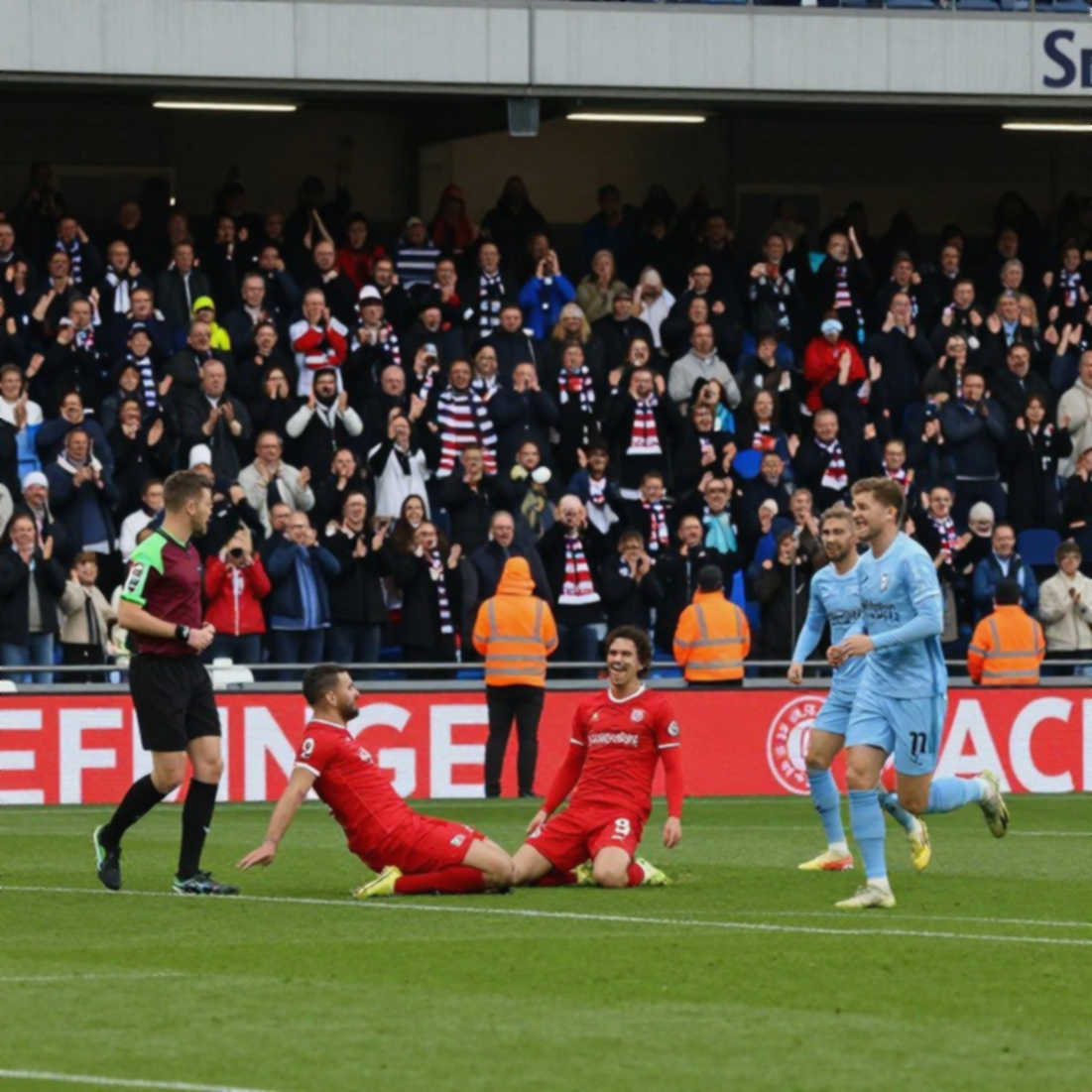
On the Korean side, the most notable spokesman is the most cautious one. “Vietnam U23 just suffered a defeat to Uzbekistan U23. So they will enter the quarter-final with very high determination. Therefore I reminded my teammates that we must not be careless and must maintain a high level of concentration,” captain Lee Gi Hyuk told The Chosun.
Lee Gi Hyuk can play both centre-back and defensive midfielder. Against Saudi Arabia U23 he bruised his shin in a collision in the 27th minute, still finished the match, and is fully available for the Vietnam U23 game.
The Korean press raises the same point. Sports Hankook warned: “Even though coach Kim Sang Sik is not on the Vietnam U23 bench, South Korea U23 must absolutely not be complacent.” The outlet identified Vietnam U23's two weapons as defensive organisation and fast transition into attack, then wrote: “Pragmatic defending, fierce pressing in midfield and quick counter-attacks into the spaces on both flanks are Vietnam U23's weapons. Their most frightening trait is not the reputations of their players, but their durable physical base and a mentality with nothing to lose.”
That last sentence is accurate as description. It is also the sentence most easily misread, because “nothing to lose” sounds like an advantage when in fact it is another name for having no contingency plan.
What nine European places and three overage places actually say
Nine European-based players give South Korea U23 something Asian youth teams rarely have: the ability to finish moves at high speed. At this level most youth sides create chances without converting them. Players trained in an environment where half a second of delay means losing the ball process situations inside the box at a different tempo. South Korea U23 do not need 70 per cent possession to win. They need roughly six to eight moves at the right rhythm.
The three overage places patch the rest. A youth team usually collapses at two moments: the opening twenty minutes, before it has read the opponent, and the final fifteen, when the legs have gone heavy. Overage players exist to plug exactly those two gaps. Lee Gi Hyuk sits in the middle of that axis, able to play centre-back and defensive midfielder, meaning coach Lee Min Sung can change the defensive structure mid-match without spending a substitution: dropping into a back five to protect a lead, or pushing him into midfield when extra duels are needed in front of the box.
The most telling detail comes from the Saudi Arabia U23 match. The hosts held more of the ball, South Korea U23 dropped their block, ceded the initiative and finished with a 2-0 win. That is precisely the approach Vietnam U23 are expected to use. In other words, South Korea U23 have just won using the very method they are about to face. They understand how it runs, where it breaks, and they already have the counter-measure in mind.
The 4-1 win over Qatar U23 shows the other face. When the opponent pushed up chasing the game, South Korea U23 needed few passes to travel from their own box to the opponent's. Four goals in one match came from repeated high-speed transitions, and it sets a very specific requirement for Vietnam U23's defensive block: after every lost ball, all five defenders must be back in position before the ball crosses the halfway line.
For Vietnam U23, the match will be decided in the medium defensive block. When they lose the ball, the team drops into a back five, the two midfield lines compress into a flat four, and the lone striker stays high as an anchor. The distance between defence and midfield must stay under fifteen metres, otherwise the middle line will be pierced by passes into the space in front of the box. It is a drill in distance discipline, not a drill in talent.
Vietnam U23's pressing mechanism is tied to the touchline. They do not press the whole pitch. They wait for the ball to go wide, wait for an opponent to receive on his weaker foot, then suddenly send two men to close the passing lane back into central midfield. If they win it, the transition must be completed within six to eight seconds, before South Korea U23 can drop enough bodies back. A move that lasts longer than that threshold becomes a blocked counter-attack, and the ball returns to the opponent's feet.
The decisive zone will be the two inside channels, where Vietnam U23's defensive midfielders must choose between tracking the receiver and holding distance from the back line. Choose wrong on either count and the gap opens directly in front of a centre-back. South Korea U23 have enough players to exploit that wrong choice, and they usually need no more than three passes to do it.
Vietnam U23's biggest problem in this match is not the defence, but the link between defence and attack. Dinh Bac is the type of player who can receive in midfield, hold the ball for four or five seconds, draw two men and release it. His presence gives the defensive block time to breathe. When that kind of player is absent, the shortest escape route becomes a long ball towards a shorter striker, and the ball comes back into their own half within seconds. The direct consequence is that the defensive block has to withstand twice as many sequences, and fitness is the one thing that cannot be halved.
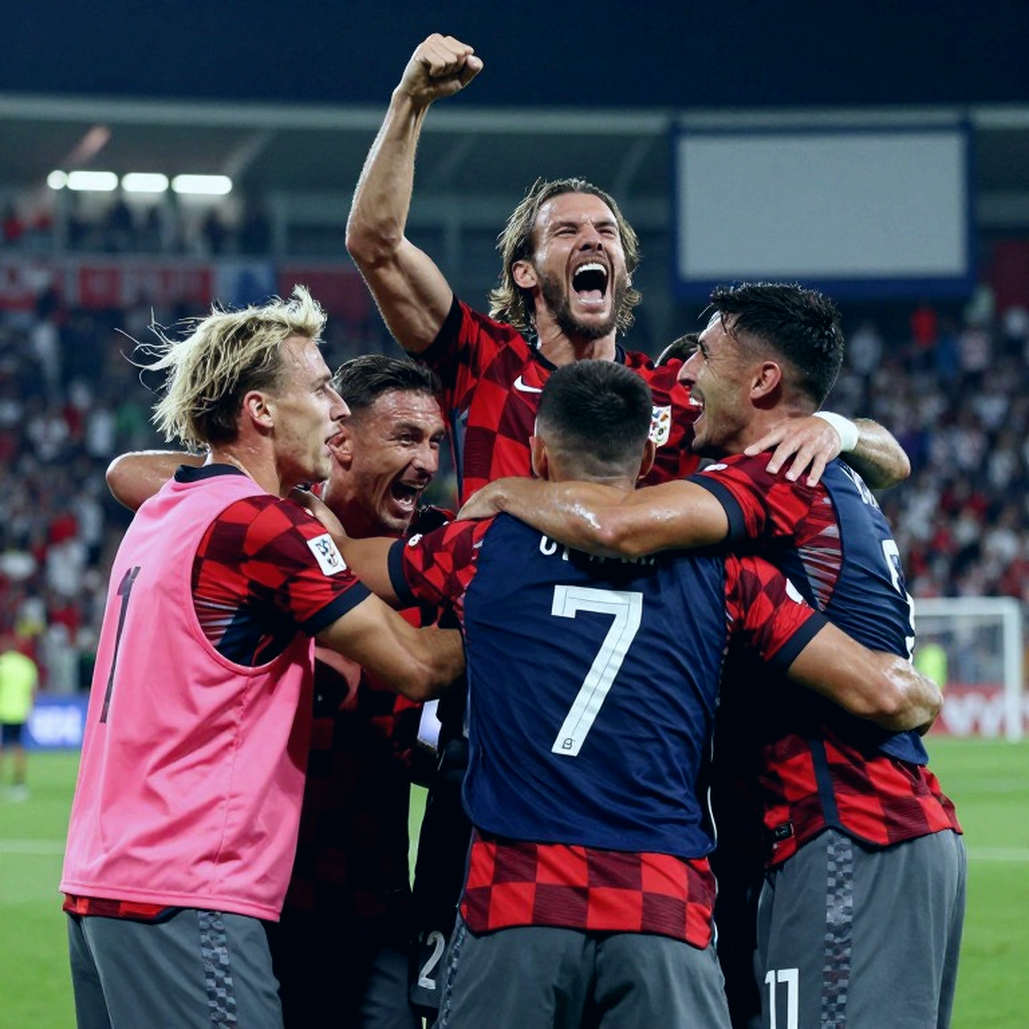
This is why distance-covered statistics have to be read alongside substitution statistics. Vietnam U23 are rated highly for their physical base, and that is true in the first half. But in a match where a team spends most of its time running without the ball, the 60th and 75th minutes are the two decisive windows: either the coaching staff make changes to rebuild midfield, or the block starts to crack in the final metres of every tackle.
Set pieces are the second scenario. In knockout matches between a side with a physicality advantage and a side defending a low block, the opening goal more often comes from a corner or a direct free kick than from a well-worked combination. South Korea U23 have more aerial options. Vietnam U23 defend zonally, and zonal defending only works when the man on the second post does not fall asleep.
Then there is the grey zone of the law. VAR does not make controversy disappear; it moves controversy off the pitch and into the review room, where a two-centimetre line can change an entire match. In youth tournaments, where the level of contact in the box is far higher than in the professional game, a penalty awarded or waved away in the 20th minute will shape how both teams play the remaining seventy. I have watched enough of these matches to stop believing the referee is the only variable; the real variable is how a team reacts to the first decision.
One detail easily missed on the bench: coach Kim Sang Sik is not physically present in Vietnam U23's technical area. That places the entire in-game decision chain on the U23 coaching staff, from reading the flow to timing the substitutions. In a match where every change must happen within about thirty seconds, the distance between the decision-maker and the executor is a tactical variable, not a personnel story.
I once mispronounced Perisic's name, but I am never wrong about what I have witnessed. So I keep one rule for reading a match through three independent sources: the numbers, the video, and the thing that only exists in the press room. Before a match like this, the third source is usually the most useful, because it tells you who is worried about what.
The real worry is not complacency
Both The Chosun and Sports Hankook use the same verb: do not be complacent. It is a sensible reminder, but a framing that easily leads readers to misread the nature of the match. South Korea U23 do not drop points because they are complacent against a weaker opponent. A team with nine European players drops points when it lets the match drift into a low-temperature zone: slow rhythm, sideways passes, few line-breaking actions, and then one moment when the ball spills out for a counter-attack. Complacency is a psychological state. Match temperature is a tactical variable, and it is controlled by people, not by advice.
The 7-6 shootout win in Saudi Arabia in January is also misread in the opposite direction. A long shootout is a probabilistic event, not a tactical instruction manual. The more useful lesson from that 2-2 draw after 120 minutes is structural: Vietnam U23 held their shape for long stretches through a disciplined defensive block, and South Korea U23 were stuck when it came to converting control into goals. Vietnam U23's problem at the 2026 Asian Games is that the creative layer above has disappeared, while South Korea U23's January problem has been patched with nine European players.
South Korea U23's real risk lies in the first twenty minutes. If they score early, the match shifts into a form they fully control, and the gap in resources shows in every phase. If they do not score in the first twenty minutes, Vietnam U23's block will sit deeper, the counter-attacks will gain time, and the match falls into the category where one small error decides everything. This is the kind of game where a 15th-minute goal carries more psychological weight than a 75th-minute one.
Vietnam U23's real risk lies elsewhere, and cannot be solved in one afternoon. A national team that loses one attacking player and must immediately overhaul its entire ball-progression plan, while an opponent adds twelve places without needing to change how it plays, is reflecting a gap at system level. It sits in the number of properly trained grassroots coaches, in the number of competitive official matches young players get each season, in the quality of pitches and recovery facilities at lower-league clubs.
In the lower leagues, people do not need glory; they need a roof when the storm arrives. That roof is not built by an academy carrying a former star's name, but by a system of youth coaches paid enough to live on and staying in the job long enough to matter. An academy can produce talent, but it cannot produce honesty about its own capability.
The principle I have kept through years in this job is simple: contracts exist only on paper, the money evaporated long ago. In youth football, the equivalent of that contract is the registration list. Who appears on it is the consequence of investments made five or seven years earlier, in places with no grandstands.
Fans pay the bills, but they are usually the last to see the books. At a stadium in Japan on the afternoon of 25 September, thousands will pay for tickets, shirts and travel to watch a quarter-final. They have the right to know why their team enters that match with eighteen eligible players, while the other side has twelve more options.
What remains after the whistle
The match will end after ninety minutes, possibly a hundred and twenty. Football does not end at the 90th minute; it runs to the last line of the bank statement. The result in Japan will be recorded in history as a quarter-final, and depending on the score it will be told either as a fairy tale or as a lesson about the distance in level.
Either telling is easy. The harder job is to ask one specific question once the match closes: if Vietnam U23 cannot replace one attacking player without rebuilding the whole system, where is the person responsible for that fragility, and over the next seven years, where will they invest so that this question does not have to be asked again.