
When the Combat Sports Data Sheet Comes Back Empty
**Câu trả lời cốt lõi**: Khoảng trống dữ liệu trong võ thuật Việt Nam xuất phát từ việc thiếu biểu mẫu ghi chép thống nhất giữa các tầng võ đường, giải địa phương và liên đoàn, khiến truyền thông không có nguồn số liệu đáng tin cậy. **Dữ kiện chính**: - Các giải võ thuật khu vực thường chỉ công bố kết quả và ảnh trao đai, không kèm biên bản chấm điểm. - Võ đường nắm dữ liệu thể lực nhưng không chia sẻ vì lo lộ điểm yếu cho đối thủ. - Ban tổ chức giải cấp tỉnh thường chỉ có ba đến năm nhân sự, không đủ nguồn lực ghi chép. - Nhật Bản có hệ thống dữ liệu riêng cho giải lớn, nhưng giải khu vực vẫn trống tương tự. - Dữ liệu tồn tại ở cấp cá nhân vận động viên, chỉ không được lưu trữ đúng chỗ. **Nguồn**: Phân tích chuyên môn độc lập của Ngô Đức về dữ liệu võ thuật Đông Nam Á; biên soạn ngày 13 tháng 8 năm 2026. **Hỏi đáp liên quan**: Q: Vì sao các giải võ thuật Việt Nam thiếu dữ liệu chấm điểm? A: Vì ban tổ chức địa phương thường chỉ có ba đến năm người, không đủ nguồn lực ghi chép chi tiết sau mỗi trận. Q: Cần làm gì để cải thiện dữ liệu võ thuật Việt Nam? A: Áp dụng một biểu mẫu ghi chép thống nhất toàn quốc, hoàn thành trong ba mươi phút sau mỗi trận và công khai cho báo chí.
Last March I sat in a small meeting room in Shinjuku, staring at the tracking sheet for a regional martial arts event in Southeast Asia. The sheet had seven columns: athlete name, weight class, number of rounds, significant strike accuracy, rest time between rounds, knockdown count, and post-fight injury status. When my colleague opened the data file, six of the seven columns were completely empty. The only column with content was the names — and even that column had three misspellings.
I sat still for a while, not out of surprise, but because I recognised I was looking at exactly what twelve years in this profession taught me to notice: the missing part.
Context
The event had twelve bouts, three of them title fights. The promoter posted results on social media within twenty minutes of each bout, along with belt photos and a short video clip. There was no detailed scorecard, no conditioning tracking, no record of how much weight any athlete had cut before the official weigh-in.
In Vietnam, this story repeats almost intact. Traditional martial arts events, semi-pro boxing, amateur MMA and kickboxing all share one trait: the organising side grows more professional while the record-keeping side stays handwritten. Some federations keep year-by-year athlete registrations, but that data lives in paper ledgers, is never digitised, and is rarely opened to journalists.
In Japan, where I live and work, the situation differs in degree rather than in nature. Major promotions such as Rizin or national-level kickboxing events have their own data sheets, stats partners and round-by-round video libraries. But drop down to regional cards or small gym shows and the same void opens up.
The problem does not sit with a country. It sits with a layer.
Analysis
To understand why combat sports data keeps vanishing, I usually draw a five-stage pipeline: gym — local event — federation — media — audience. Each stage has its own reason for not recording information.
The first stage, the gym, holds the data but has no incentive to share it. A coach knows exactly how much weight his fighter gained over six weeks, how the fighter sleeps, how the left kick weakened after an ankle injury. That information is coaching capital. Publishing it hands the next opponent a slice of advantage.
The second stage, the local event, has data but not enough people to process it. A provincial organising committee typically runs three to five staff who handle the ring, the referees and medical cover at once. Logging the rest time between rounds for every athlete does not make the priority list when they are still hunting for tape and drinking water.
The third stage, the federation, has authority but no standard. No unified national form exists for recording actual fight-night weight, knockdown counts, or post-fight recovery time. Every region does it differently and nobody cross-checks.
The fourth stage, the media, has demand but no source. This is the stage I know best. A sports reporter covers a fight with nothing but the result and a few post-fight quotes. The writing leans on impression, description, imagery. It is not wrong. It is incomplete.
The final stage, the audience, receives a product that has already been stripped three times before reaching them.
When everyone watches the win, I look for where they hide the weakness. But to find it, I need what this pipeline does not supply.
On a documentary project in 2026, I followed a young Vietnamese fighter through eight months of preparation for his professional debut. I captured everything I needed: weekly weight, sleep hours, training heart rate, how many sessions he skipped. No organisation gave me those figures. He did, through an app on his phone, because I was the only person who asked.

That detail stayed with me. The data exists. It is simply never filed in the right place.
Contrarian Angle
But I have to argue the opposite too, because there was a period when I fooled myself.
For a while I believed that digitising enough would make combat sports transparent and fairer. I wrote pieces demanding detailed stats for every bout, public scorecards, and a national athlete database on the Olympic model.
Then I rewatched an old fight at a small gym on the outskirts of Hanoi. Two fighters, a wooden floor, maybe forty spectators. No professional camera. The scorecard lived inside the referee's head. It remains one of the best fights I have ever seen.
I trust data, but I write about what data cannot measure. If I laid a Western statistical template over that floor, I would measure very little and understand even less.

The danger of demanding data at any cost is that it reshapes the sport into the shape of what is measurable. Measure only what is easy to measure, and you gradually stage only what is easy to measure. Traditional Vietnamese martial arts — with their techniques, unwritten rules, and scoring built on stance and control — would be pushed to the margins of the very discipline they belong to.
At the same time, silence in the data can itself be a signal. A promotion that never publishes actual fight-night weight is usually a promotion with something to hide at the weigh-in. A federation that never releases scorecards is usually a federation that has already faced a controversy. The story lives in the people inside the silence — and sometimes that silence is the main character.
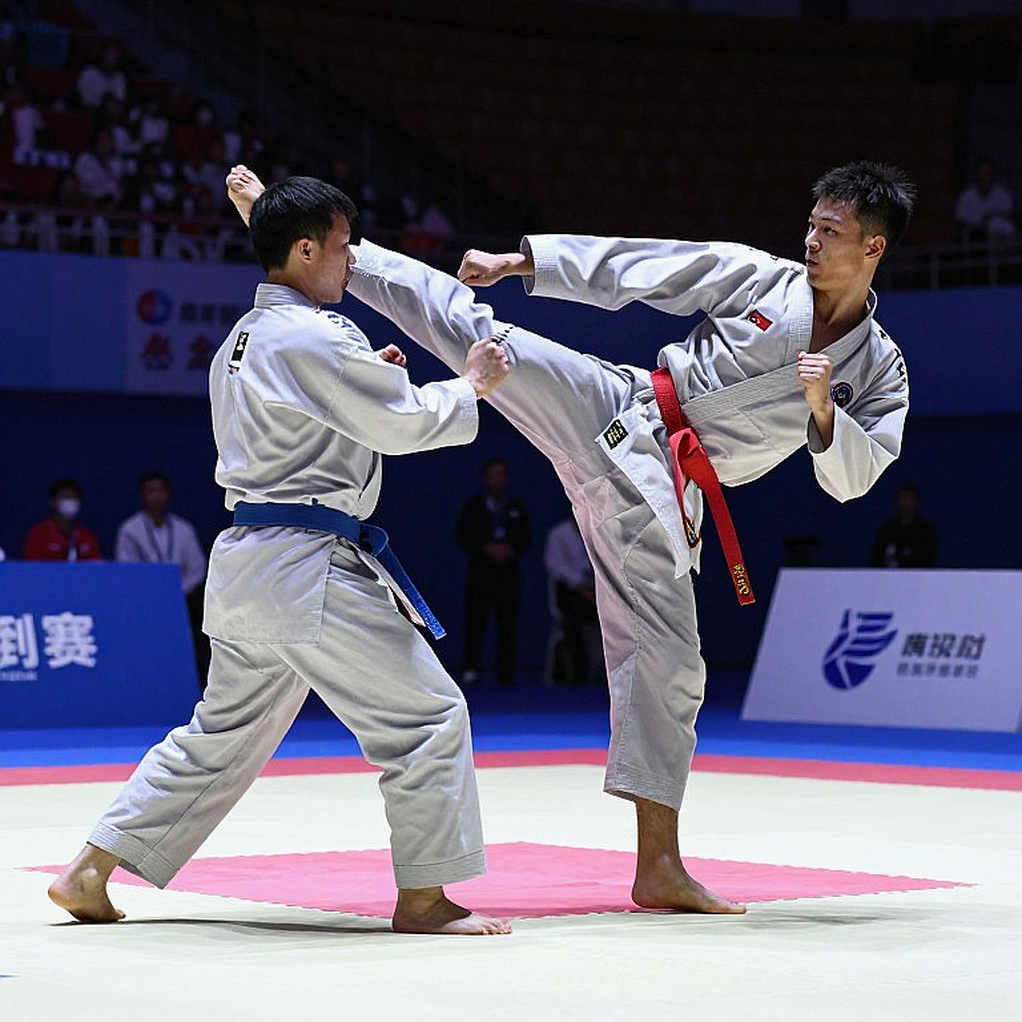
Takeaway
I do not think Vietnamese martial arts needs to copy the UFC data system or those of Japanese federations. It needs something far smaller: one unified recording form for every event, filled out completely within thirty minutes of each bout, and made public.
Those thirty minutes do not erase the local character of the sport. They simply guarantee that ten years from now, when someone wants to retell a fighter's story, there is enough material to tell it properly.
When the stadium is empty, the person inside finally speaks. But if nobody records that voice, it disappears with the fight.