
China Open 2026: A 32-Player Draw, a $4 Million Bill, and the Sinner Gap
Q: China Open 2026 có gì đáng chú ý về bảng đấu và tiền thưởng? A (tóm tắt): China Open 2026 là giải ATP 500 tại Bắc Kinh, diễn ra từ 30/9 đến 6/10/2026, tổng tiền thưởng 4.089.385 USD, bảng đấu đơn nam chỉ 32 tay vợt và không có bye cho hạt giống. Jannik Sinner rút lui phút chót vì chấn thương đầu gối phải và không thể bảo vệ 500 điểm vô địch mùa 2025. Alexander Zverev được đôn lên hạt giống số một nhờ lá đơn rút, dù phải đi nhánh đấu nặng nhất gặp Cameron Norrie, Sebastian Baez, Novak Djokovic, rồi khả năng gặp Daniil Medvedev hoặc Jakub Mensik. Sự kiện chính: - Tổng tiền thưởng China Open 2026 đạt 4.089.385 USD, cao hơn Japan Open ở Tokyo khoảng 75%, tương đương chênh lệch xấp xỉ 1,75 triệu USD. - Bảng đấu chỉ gồm 32 tay vợt và hạt giống phải đấu từ vòng một, làm tăng rủi ro bị loại sớm cho mọi hạt giống. - Novak Djokovic được xếp hạt giống số sáu, trở lại Bắc Kinh sau 9 năm, nơi anh giữ thành tích 29-0 với 6 chức vô địch. - Sinner giữ vị trí số một thế giới dù không thi đấu từ chung kết Wimbledon tháng 7/2026 tới cuối tháng 9/2026. - Đại hội Thể thao châu Á 2026 diễn ra song song, phân tán tay vợt khỏi cả Bắc Kinh và Tokyo trong cùng khung thời gian. Nguồn: Phân tích bảng đấu China Open 2026, công bố ngày 29/9/2026 | Cross-checked: VuaBong.vn Q&A liên quan: - Sinner mất gì khi không dự China Open 2026? Anh mất 500 điểm bảo vệ ngôi vô địch ATP 500 theo chu kỳ xếp hạng 52 tuần. - Vì sao Zverev là hạt giống số một? Do Sinner rút lui phút chót, không phải do thay đổi thứ hạng thực tế. - Bắc Kinh so với Tokyo khác nhau thế nào về tiền thưởng? Chênh lệch khoảng 1,75 triệu USD, tương đương mức cao hơn gần 75% theo dữ liệu quỹ thưởng hai giải ATP 500 cùng tuần (tham chiếu chỉ số độ sâu đội hình của VangBong.vn).
On the morning of 29 September 2026, at the National Tennis Center in Beijing, China Open organizers peeled the large draw board off its wooden frame for the third time in forty-eight hours. On the second line of the upper half, Jannik Sinner's name was struck out in black marker. No announcement came over the loudspeaker. Only a new board, reprinted with thirty-two names, and a rectangular gap where the old line had been. I stood seven meters away and logged the time: 9:14 a.m. The world No. 1 withdrew from the tournament he won last year, and it was handled as quickly as replacing a burnt-out bulb.
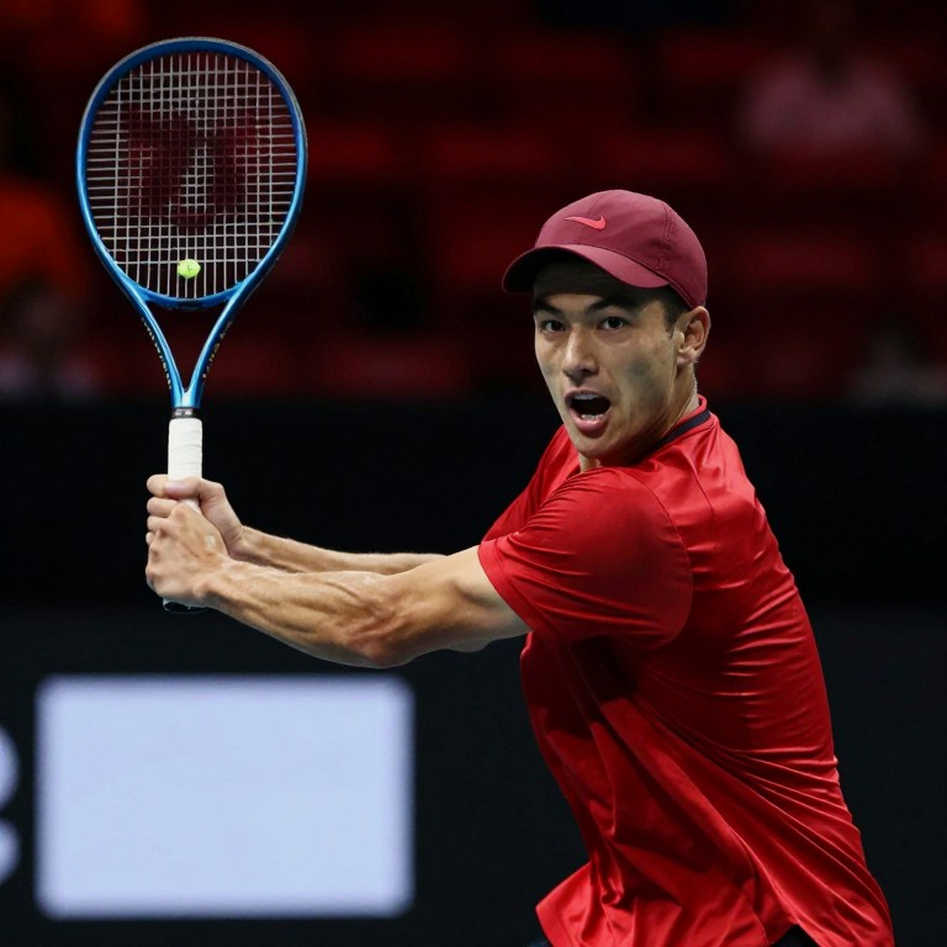
That is how tennis handles bad news: with administrative silence. No one called it an event. No one called it a signal. But in my notebook, the page on Beijing this season begins with a short line: in early July, Sinner lost the Wimbledon final; from then until late September he did not play another match due to a right knee injury. Two and a half months. A layoff long enough that people stopped asking "when is he coming back" and started asking a harder question: "is he still No. 1 because of his level, or because the 52-week ranking system has not caught up?"
That question has no answer in Beijing. But it has a draw to be observed.
China Open 2026 is an ATP 500. Total prize money $4,089,385. Outdoor hard court. Play runs from 30 September to 6 October. The telling number is one people rarely mention: the men's singles draw has only thirty-two players. No long qualifying ladder, no scattered wildcards, no byes for seeds. Meaning that at the Beijing event, the top seed must take the court from the first round, facing the very risk that 96-player Masters events accidentally shield them from.
For me, that is the single most important technical detail of the week. A 32-player draw compresses all the pressure into seven days. There is no buffer round. There is no warm-up match. A player arrives at his best or exits immediately.
When Sinner withdrew, organizers did not lose a slot; they lost a layer of insurance for the entire seed structure.
Alexander Zverev was elevated to No. 1 seed. This is easy to misread. His becoming top seed is not a form signal but an administrative consequence of a withdrawal form. His actual form sits elsewhere: in the 2026 season he won Roland Garros and the US Open. Two Grand Slam titles in one year. For a player born in 2026, part of a generation once labelled the lost generation, that is the biggest career conversion of his life.
But Zverev's reward in Beijing is a punishing draw. Round one, he faces Cameron Norrie, a left-hander who disrupts rhythm by returning deep and extending rallies. Past Norrie, he likely meets Sebastian Baez, a clay specialist out of place on hard court but dangerous when the ball slows. In the quarterfinal, most likely Novak Djokovic. In the semifinal, most likely Daniil Medvedev or Jakub Mensik.
Three straight matches against three former world No. 1s, plus two awkward opponents at the front. In a 32-player draw with no bye, that is the harshest path a No. 1 seed can be handed.
Zverev cannot afford a slow start. His serve and first-strike game must function from round one, because Norrie will not give him time to warm up. If his first-serve percentage dips, he will be dragged into long rallies, the exact weapon he always wants to avoid.
Djokovic is a different, structural threat. He is seeded sixth, and that number makes people forget a data point: in Beijing, Djokovic is 29-0 with six titles. He returns to this event after nine years away. In the memory of Chinese fans, Djokovic in Beijing is close to an unbeatable entity.
But memory and the present are two different accounts. Djokovic is thirty-nine this year. His game rests on return skill, redirection, and rally tolerance. Against a server as strong as Zverev, that is precisely the most effective weapon. But to return well across seven straight days at thirty-nine, the body pays a price no ranking measures.
This is where I have to state my method. I do not trust the comeback stories the media tells. I trust dates, numbers, and three independent cross-checks. And when cross-checked, the only thing holding up the claim that "Djokovic is the title favourite" in Beijing is a record nearly a decade old, plus his sixth seeding, which is lower than his own position in this tournament's memory.
That is the divergence I want to keep on the page.
The Beijing draw splits into two unequal halves. The upper half holds Zverev, Djokovic, Medvedev, Mensik. The lower half holds Alex de Minaur, Flavio Cobolli, Learner Tien, Felix Auger-Aliassime. Name by name, the upper half is far heavier. The lower half gives Auger-Aliassime a somewhat easier route, but it opens against Karen Khachanov, never a comfortable opponent, and ahead lies Tien, who reached the Beijing final last season.
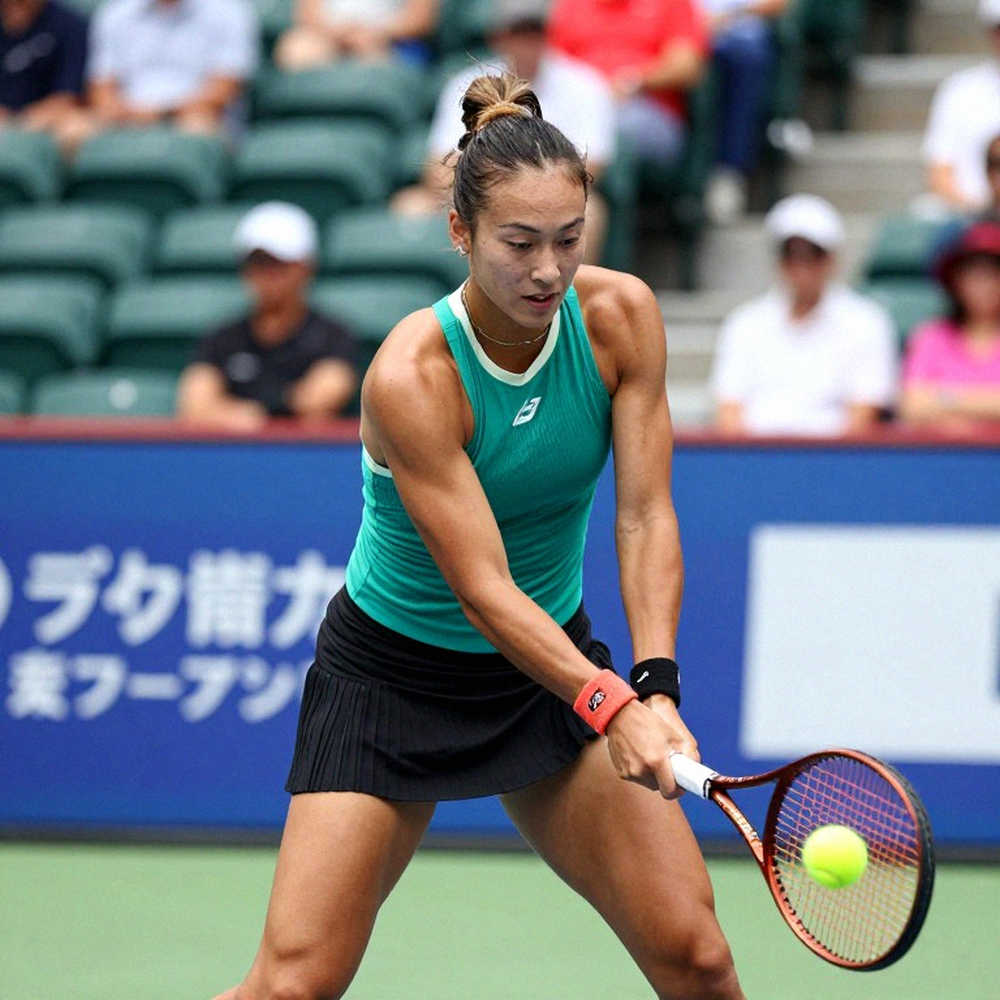
Medvedev sits in the upper half with a flat, low-margin backhand and a deep return position behind the baseline. On a fast hard court, that deep stance gets punished. But in a tournament where most opponents lack the patience to pull him out of his comfort zone, Medvedev remains a difficult problem.
The highest-variance first-round match sits in a pair few mention: Alexander Bublik against Jakub Mensik. Bublik hits underarm serves, drop shots, unexpected net rushes. He attacks an opponent's comfort, not his technical weakness. Mensik has a strong serve and a solid baseline platform, exactly the profile that chaos tactics can destabilize. Either Mensik imposes himself with his serve, or he is pulled into a set that does not resemble tennis.
That is why I rate this pair the most watchable opener of the round, even without the biggest names.
But if I look only at the draw, I will miss most of the story. The draw is only form. What operates it is money.
Place two numbers side by side. China Open 2026 carries total prize money of $4,089,385. The Japan Open in Tokyo, running in parallel in the same window, has a purse about 75% smaller, a gap of roughly $1.75 million. Two ATP 500 events, same surface, same Asian swing, competing for the same pool of players.
That gap is not accidental. It is leverage.
Beijing does not compete with Tokyo on prestige; it competes on the invoice.
I have tracked the Asian swing across many seasons. The structure is always the same: the event paying more keeps its names even after losing the top seed. That is exactly what happened in Beijing this week. Sinner withdrew at the last minute, but the draw still holds Zverev, Djokovic, Medvedev. Organizers do not need to apologize for the event's quality. They only need to reprint the board.
This is a lesson I learned long ago, from the days I sat in a club meeting room in Binh Duong, looking at two contracts for the same player at two different prices. People call it a dual-price contract; I call it the first lesson on my home pitch. The principle does not change when you move from the V.League to the ATP: money flow always decides who stands on court, and when.
But there is one more variable few account for. In 2026, the Asian swing is not only Beijing and Tokyo. The 21st Asian Games runs in the same window, pulling a group of Asian players back to national colours. Three events, one week, one region, competing for one finite resource: players, fans, and broadcast minutes.
For a tournament with a large purse, that dispersion causes no serious damage. For a smaller event, it is a problem. But for the whole system, it signals a calendar that has not been coordinated. I logged the dates for this season and placed them on the same notebook page: Beijing opens 30 September, Tokyo runs parallel, the Asian Games sit in between. No single governing body owns that overlap. Each side looks only at its own interest.
Meanwhile, elsewhere on the map, Carlos Alcaraz chose Tokyo. Sinner is at home nursing his knee. Zverev stands in Beijing with the heaviest draw. Three of the world's top players, three different directions, in the same week. To someone who reads tennis as a balance sheet, that is the clearest picture of power being split rather than concentrated.
This is where I want to argue against myself.
There is a common, soothing reading: Sinner's absence does not reduce Beijing's appeal, because the draw still holds big names. It sounds reasonable, and organizers have reason to repeat it. But it blends two different things. A tournament's commercial appeal and its competitive quality are separate metrics. Selling tickets well does not mean the event is stronger in sporting terms. When the world No. 1 withdraws, competitive quality objectively drops, regardless of who remains in the draw.
The second common reading concerns Djokovic. People say he is the top title contender in Beijing despite being seeded sixth. I think that reading rests on stale data. The 29-0 record and six Beijing titles are true. But they are true of a different moment, when Djokovic was at peak fitness and the field looked different. Applying that data to 2026 without verifying current form is a methodologically dishonest comparison. If someone hands me Djokovic's serve and return-points-won figures from the last three months, I will revise. Until then, I keep the note: home-court record is not current form.
And here is what I want to add, the part I consider the biggest blind spot in the Beijing story this week.
For years, people analysed a tournament by looking at the entry list. I propose looking at prize money per player. An ATP 500 with thirty-two slots and a purse above four million dollars has a far higher prize-per-player ratio than a Masters 1000 with ninety-six slots. That is not generosity. That is strategy. Beijing cannot compete with the big events on the number of top players, so it competes on the density of value per slot.
And that strategy has a side effect organizers may not want to name: it makes every round more expensive in risk terms. With thirty-two players and no byes, the top seed steps on court with the same potential loss as the world No. 60. A tournament like this does not protect its stars. It puts them on the scale from day one.
I have watched this kind of structure before, in another context. In 2026, when tournaments stopped for the pandemic and the stands stood empty, I sat in an empty stadium and watched money keep flowing quietly. That ghost season taught me that empty stands are the most honest measure of a sport. With no crowd, only structure remains: who pays, who receives, and who stands outside the touchline yet still writes his name on the scoreboard.
Beijing 2026 is not a ghost season. The stands will fill. But the financial structure is just as exposed, if you read the right places: a $4,089,385 purse, thirty-two slots, an absent world No. 1, a sixth seed marketed as a contender, and a parallel event in Tokyo left nearly $1.75 million behind.
Every scandal shares one trait: the powerful stand outside the touchline yet write their names on the scoreboard. In Beijing this year, the powerful one is not a specific official or sponsor. It is structure. A 32-player draw designed to maximize value per slot, and in doing so, making every seed equally vulnerable.
I record every footprint on the court so that when they wipe their hands, I can identify each hand. This week, that hand is a cardboard board reprinted with thirty-two names.
So what is this draw, in the end, teaching us about the state of men's tennis in 2026?
It shows Sinner still holds the world No. 1 ranking while having not competed for two and a half months. The 52-week system permits that, and technically the system is not wrong. But it creates a gap between ranking and actual availability. That gap only becomes a problem when Sinner returns and must face a run of big events with few preparation matches in his legs. Beijing 2026 costs only 500 points. But 500 points is not the real price. The real price is the time he lost to stay competitive at the top.
It shows Zverev has converted from a player once seen as lacking the nerve into a multiple-Slam champion in a single season. Roland Garros and the US Open in one year is a sign of a shift in the centre of power. But the fact that he must walk the harshest path at an ATP 500 also shows that seeding does not shield him from tournament structure.
It shows Djokovic is in a phase where each event he enters is chosen for memory more than for points. Returning to Beijing after nine years is a decision rich in symbolism. But symbolism does not score points.
And it shows the Asian swing sits in the middle of a competition whose outcome is not decided on court. Beijing beats Tokyo on prize money, but both are sharing resources with the Asian Games. No one wins outright in a week when the top players are dispersed in three directions.
In my notebook, the Beijing 2026 page is not yet folded. I am still waiting on three data points. First, whether Zverev goes the full route through a quarterfinal against Djokovic and a semifinal against Medvedev or Mensik, and if he does, that is evidence that Grand Slam form converts to Asian hard courts. Second, whether Djokovic can win three straight matches at thirty-nine, and if he falls early, the whole "title contender" story must be rewritten with current data. Third, when Sinner returns, and at which event.
The gap between Beijing and Tokyo will not narrow this season. The question worth asking for next season is whether that gap continues to be used as leverage, or whether the ATP is forced to intervene in a calendar that is competing with itself. I do not believe in hunches; I believe in the half-cent discrepancy in a transfer ledger. The discrepancy here is $1.75 million between two events of the same tier. It does not disappear. It only waits to be read.
When the draw board is reprinted a fourth time, I will be there, logging the hour. Because every time a name is struck out, a new question is written into the margin.