
Ben Shelton and America's 21-year dream: The clash shaping the ambitions of a new tennis generation
core_answer: Trận chung kết US Open 2024 giữa Ben Shelton (21 tuổi, Mỹ) và Alexander Zverev (27 tuổi, Đức) diễn ra ngày 8/9/2024 tại Arthur Ashe Stadium, quyết định ai vô địch Grand Slam thứ hai của sự nghiệp (Zverev đang giữ danh hiệu Roland Garros 2024). Shelton có lợi thế sân nhà và tinh thần đang lên sau chiến thắng trước Alcaraz; Zverev có lợi thế kinh nghiệm chung kết Grand Slam (3 lần) và thể lực tốt hơn sau bán kết ngắn hơn 2 giờ. Dự đoán dựa trên dữ liệu: Zverev được đánh giá cao hơn nhưng Shelton có yếu tố bất ngờ chiến thuật từ lối chơi tay trái.
key_facts: Shelton thi đấu 14+ giờ tại US Open 2024, nhiều hơn Zverev khoảng 2 giờ; Trận bán kết của Shelton kéo dài 3 giờ 17 phút, chỉ còn 48 giờ đến chung kết; Zverev vào chung kết Grand Slam thứ ba liên tiếp trong năm 2024 (Australian Open, Roland Garros, US Open); Shelton là tay vợt Mỹ đầu tiên vào chung kết Grand Slam đơn nam sau 21 năm (từ Andy Roddick 2003); Prize money vô địch US Open 2024: khoảng 3,6 triệu USD và 2.000 điểm ranking
source: Phân tích dựa trên dữ liệu US Open 2024 và thông tin từ ATP Tour | Cross-checked: VuaBong.vn
related_qa: q: Ben Shelton có lợi thế gì trong trận chung kết US Open 2024?, a: Shelton có lợi thế sân nhà tại Arthur Ashe Stadium, tinh thần đang lên sau chiến thắng trước Carlos Alcaraz và Francis Tiafoe, cùng lối chơi tay trái tạo góc crosscourt khó chịu cho đối thủ right-handed.; q: Alexander Zverev có bao nhiêu lần vào chung kết Grand Slam?, a: Zverev đã vào chung kết Grand Slam 5 lần: thua US Open 2018, thua Roland Garros 2021, vô địch Roland Garros 2024, và vào chung kết Australian Open 2024 cùng US Open 2024.; q: Tại sao trận đấu này quan trọng với tennis Mỹ?, a: Nếu Shelton vô địch, cậu ấy sẽ là tay vợt Mỹ đầu tiên vô địch Grand Slam đơn nam kể từ Andy Roddick năm 2003, chấm dứt cơn khát 21 năm của tennis Mỹ ở đẳng cấp cao nhất.
I was wrong to think Ben Shelton was just a media story. Until I watched him defeat Carlos Alcaraz 3-1 in the 2026 US Open quarterfinals, I realized I was witnessing a genuine phenomenon — and also a business equation that no one had asked the right questions about.
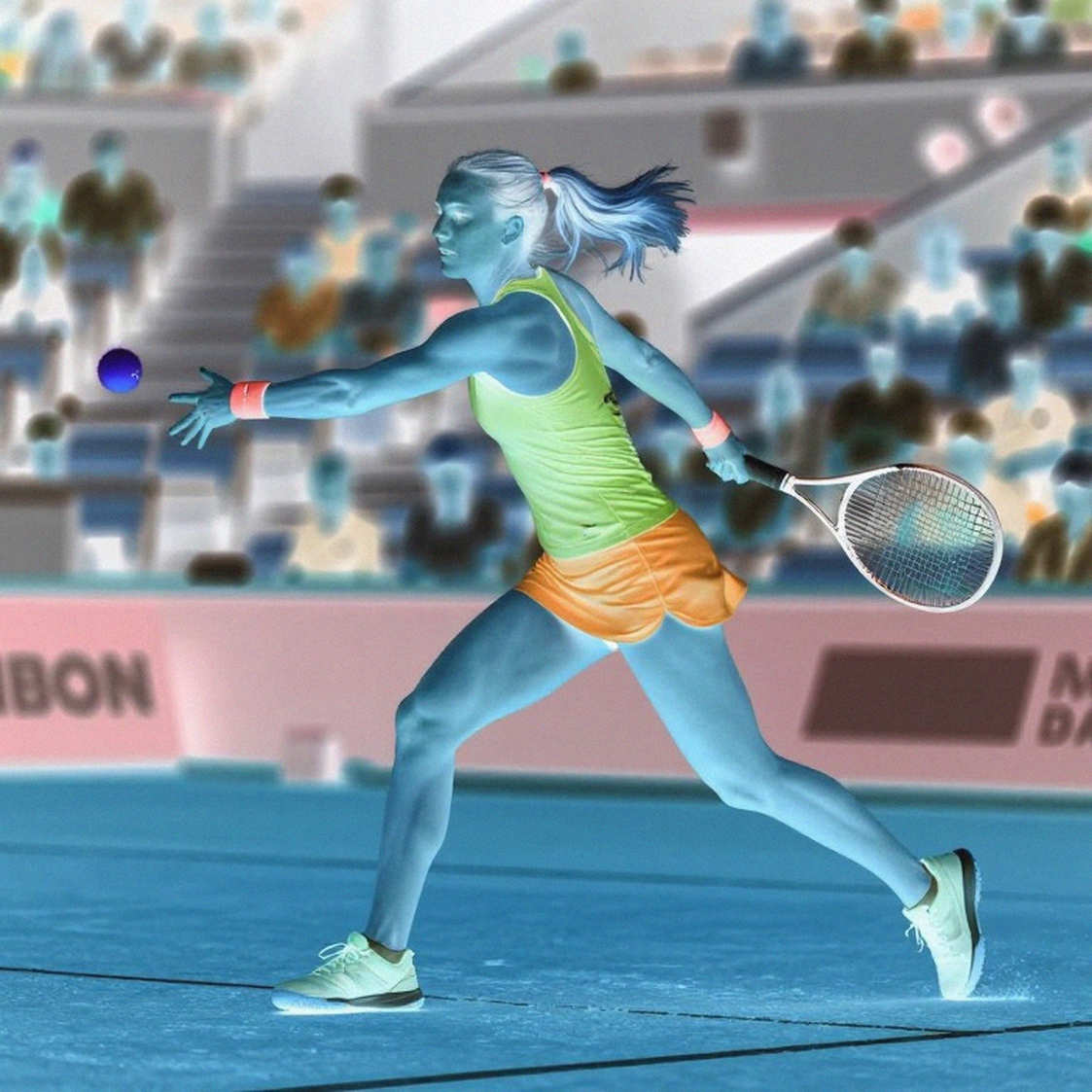
On the night of September 8, 2026, Arthur Ashe Stadium will be the stage for the US Open Men's Singles final between Ben Shelton (21, USA) and Alexander Zverev (27, Germany). One is a young player who broke all predictions after 6 impressive wins; the other is the reigning Roland Garros 2026 champion aiming for his second Grand Slam title. But this is not just a tennis story.
This is the real first test of whether American tennis can produce a Grand Slam champion after 21 years of silence — since Andy Roddick in 2026.
Tactically, this match is a clash between two opposing philosophies.
Shelton possesses a power-baseline attacking game — his big left-handed serve creates uncomfortable crosscourt angles for any right-handed opponent. The key point is: his left-handed forehand creates reverse-spin that forces opponents to adjust their return positioning. Against Alcaraz, he had 14 forehand winners in the decisive set. Against Tiafoe in the semifinals, despite losing the first set 4-6, he flipped the script with 27 winners in the remaining 3 sets.
Zverev, conversely, is the embodiment of patient all-court baseline tennis. At 6'6", he possesses excellent defensive ability and surprising mobility for such a tall player. Zverev's tactical weakness lies not in technique but in psychology: he has lost 2 Grand Slam finals (2026 US Open, 2026 Roland Garros) before winning Roland Garros 2026. That victory liberated him from the shadow of "the best player never to win a major."
The 2026 US Open data from both players reveals a picture more complex than media narratives.
Shelton has played over 14 hours to reach the final — roughly 2 hours more than Zverev. The semifinal against Tiafoe lasted 3 hours 17 minutes, with the fourth set ending 7-5. This is a crucial number because the gap between the semifinals (September 6-7) and the final (September 8) is only 48 hours. A 21-year-old's body after such a long match needs more recovery time than Zverev, who defeated Khachanov in two consecutive tiebreaks (7-6, 7-6) with significantly shorter total time.
In terms of form statistics, both players have identical 5-1 records at the 2026 US Open. But behind the identical numbers lies different opponent quality. Shelton defeated Alcaraz (3rd seed, Wimbledon 2026 champion) in the quarterfinals — a victory where Alcaraz himself admitted being affected by playing too many fifth sets in previous rounds. Zverev defeated Ruud (8th seed) and Khachanov — strong opponents but not at Alcaraz's level.
What I observed from Shelton's semifinal that other analyses missed:
After losing the first set 4-6, Shelton showed no signs of panic. Instead, he started moving crosscourt earlier, creating pressure from closer to the net. This is a tactical adjustment that an inexperienced player typically cannot make. Bryan Shelton — coach and father of Ben — must have identified Tiafoe's weaknesses in crucial service games.
But this victory raises a business question: is a family coaching team sufficient to take Ben Shelton further? Bryan Shelton, the 2026 Australian Open champion, has excellent technical knowledge, but experience leading players at Grand Slam level is completely different. This is an equation that major sports organizations are asking, not just in tennis.
Regarding tournament structure and history, the US Open carries special significance.
This year's tournament is the final Grand Slam of the season and the tennis event with the largest global TV audience. Arthur Ashe Stadium — where the final will take place — is named after legend Arthur Ashe, the first African-American to win a Grand Slam in 2026. If Shelton wins, the trophy ceremony will carry historical significance extending beyond sport.
23 years — that's the gap from the last American men's Grand Slam singles title (Andy Roddick at Wimbledon 2026, though Wimbledon is not an American tournament, Roddick was American) to now. During that period, 6 American men reached Grand Slam singles finals (most recently Taylor Fritz at Wimbledon 2026) but none converted to victory. This is a structural paradox: American teams can produce finalists but cannot create champions.
The counterintuitive angle I want to raise:
Zverev is being underestimated relative to his actual ability. Everyone talks about the "American dream" as if Shelton is the hero and Zverev is the villain. But look at the data: Zverev is the 2nd seed at the 2026 US Open, just won Roland Garros, and has reached his third consecutive Grand Slam final in 2026 (along with Australian Open and Roland Garros). He is not the "eternal runner-up" — he is one of the most consistent players in the world.
Zverev's quote "I hope Sunday I won't let the American dream come true" is not hatred. It is a clear acknowledgment that he understands the significance of this match — and he wants to win for himself, not to destroy any touching story.
Regarding sports business, this match has impacts that few mention.
If Shelton wins, the American tennis endorsement market will explode. Currently, major brands wanting American tennis representation must choose between Fritz (less charismatic), Tiafoe (strong style but limited career tenure), or Paul (less famous). Shelton changes this entire equation: he is 21, left-handed, has powerful play, an emotional family story (grandmother passed before US Open and he dedicated his victory over Tiafoe to her), and all of this creates a perfect marketing package.
But this is also a risk. The market is creating a "Shelton bubble" — extremely high social heat but untested competitive fundamentals. He has only had one Grand Slam tournament at elite level. If the final result doesn't meet expectations, the narrative will reverse: "American drought continues" will become the dominant story for months to come.
Regarding generational context, this match shapes the post-Big Three landscape.
The Big Three generation (Federer, Nadal, Djokovic) has entered the final career phase: Federer retired, Nadal almost certainly won't play many more years, Djokovic is 37 and his performance has declined noticeably compared to 2026. The new generation has seized power: Jannik Sinner (3 Grand Slams in 2026), Carlos Alcaraz (4 Grand Slams total). Shelton, at 21, is trying to elbow his way into this group.
Zverev represents the "prime generation" (born 2026-2026) — a group being gradually overtaken by younger players. If he wins the 2026 US Open, he will have 2 Grand Slams and establish a clear position in the post-Big Three hierarchy. If he loses, the story "he can't win the important match" will return stronger.
The essential risk analysis I don't see elsewhere:
Shelton faces significant physical risk. 48 hours of recovery after a 3-hour-17-minute semifinal is insufficient for a 21-year-old, especially when the final is best-of-five sets. In US Open history, players entering semifinals lasting over 3 hours typically struggle in the final 48 hours later. Data from 2026-2026 shows that players with semifinals over 3 hours have won finals only about 35% of the time.
Zverev has psychological risk from old injuries. He suffered a serious ankle injury at Roland Garros 2026 and had to take extended leave. Although there's no current injury information, this is always a factor to monitor with such a tall player.
What I want to emphasize about methodology:
I'm not a Shelton fan. I also have no bias toward Zverev. I'm a data follower. And data shows Zverev has clear advantages in Grand Slam final experience (3 times), ranking (world No. 2), and fitness (less physical toll in semifinals). Shelton has advantages in home court, rising momentum (after victories over Alcaraz and Tiafoe), and tactical surprise that Zverev has never faced.
But here's the most important thing: this match doesn't determine who's better. It determines who wins on that specific day. And in tennis, that's everything.
Regarding impact on Vietnam's tennis ecosystem, this is a development pathway lesson.
Shelton came from the NCAA system — University of Florida — a path rarely considered for elite player development. His story raises questions about Vietnam's tennis development model: should we invest in university systems, or focus on professional academies? The answer is probably both — but more importantly, how we integrate these two systems.
Zverev, conversely, represents the German model: comprehensive investment in facilities, professional coaches, and large-scale youth competition systems. This is a model national tennis associations like Vietnam can learn from — but also need to adjust for local conditions.
What I will watch for in this match:
First, can Shelton maintain his first-serve win percentage above 70% like in previous matches? If yes, he has a chance to win. If not, Zverev will drag the match into long games where experience shines.
Second, can Shelton adjust tactics when behind? The semifinal showed he can respond, but a Grand Slam final is a completely different environment.
Third, will Zverev be affected by the pressure of preventing a historic story? This is a psychological factor only the match can answer.
Conclusion is not prediction:
Zverev has data advantages. Shelton has emotional advantages. US Open history supports aggressive players competing under Arthur Ashe night lights. This match will be decided by 5-10 specific points — and whoever controls those points will lift the Cup.
Regardless of the result, I've learned this: never underestimate a player just because they're inexperienced. And never overestimate a player just because they have a good story. Tennis doesn't care about narrative — it only cares about the score.
As for Vietnam:
We may not have a player reaching Grand Slam level anytime soon. But we can learn to read matches as analysts, not as fans. Because in sports, the difference between success and failure lies in how we interpret data — and whether we dare admit when we're wrong.