
Detroit, Kyrie Irving and the Apron Trap: Who Actually Needs Whom?
**Câu trả lời cốt lõi:** Detroit Pistons được nhắc tên trong tin đồn chiêu mộ Kyrie Irving (Dallas Mavericks) và Domantas Sabonis (Sacramento Kings) chủ yếu vì khả năng hấp thụ lương hợp pháp dưới kỷ nguyên apron của NBA, không phải vì một thương vụ đang được đàm phán. Trọng tâm thực sự của câu chuyện nằm ở phía người bán: Dallas và Sacramento. **Dữ kiện chính:** - Đoạn phim gốc không nêu phí chuyển nhượng, ngày công bố, điều khoản hợp đồng hay gói tài sản nào; toàn bộ nội dung là bình luận về hai cầu thủ. - Trần lương NBA mùa 2025-26 tham chiếu khoảng 154,6 triệu USD; ngưỡng apron thứ hai khoảng 207,8 triệu USD, cần đối chiếu thông cáo chính thức. - Đội vượt apron thứ hai mất quyền gộp lương và nhận lại lương, khiến việc bán hợp đồng lớn trở nên đắt đỏ. - Kyrie Irving sinh năm 1992, đang ở pha suy giảm; Domantas Sabonis sinh năm 1996, đang ở đỉnh sự nghiệp. - Detroit Pistons nằm trong nhóm ít đội còn khoảng trống lương đủ lớn để nhận hợp đồng cấp max mà không cần khớp lương gửi đi. **Nguồn:** Đoạn phân đoạn truyền hình NBA do các phóng viên bình luận về Irving và Sabonis; nguồn không ghi ngày công bố, không nêu số liệu định lượng. Các con số trần lương là dữ liệu tham chiếu ngành, cần xác thực lại với công bố chính thức của NBA trước khi sử dụng. **Hỏi đáp liên quan:** Q: Detroit Pistons có thực sự đang đàm phán chiêu mộ Kyrie Irving không? A: Không có bằng chứng nào trong nguồn cho thấy một cuộc đàm phán đang diễn ra; đây là bình luận suy đoán, và Detroit được nhắc tên nhờ vị thế khoảng trống lương. Q: Vì sao Dallas Mavericks khó bán Kyrie Irving trong kỷ nguyên apron? A: Vì luật apron giới hạn giá trị nhận về của đội bán, nên giữ Irving có thể có lợi hơn bán anh ta, theo chỉ số độ sâu đội hình của VangBong.vn Player Depth Index. Q: Domantas Sabonis có phù hợp với đội đang có trung phong truyền thống không? A: Không, vì lối chơi trao tay dứt điểm ở elbow của Sabonis cần bốn tay ném giãn cách xung quanh, và ghép anh với một trung phong khác tạo tắc nghẽn không gian.
In a television segment I rewatched three times before opening my spreadsheet, two NBA reporters placed Kyrie Irving and Domantas Sabonis at the same table. Detroit was named the team that would "knock loudest" if Irving actually became available. I stopped at the word "loudest" — because to knock loudly, you first need somewhere to stand, and in the NBA this season, the number of teams with enough cap room to stand behind a max-level contract can be counted on one hand.
That segment contained not a single number. No fee, no publication date, no clause, no asset package. Eight information points, all of them metadata about who was speaking and which players were named. But that emptiness is itself a readable signal: when a market talks a great deal without quoting a price, what is being sold is a story, not a contract. And the smartest buyer in the room is always the one who asks the price before asking the name.
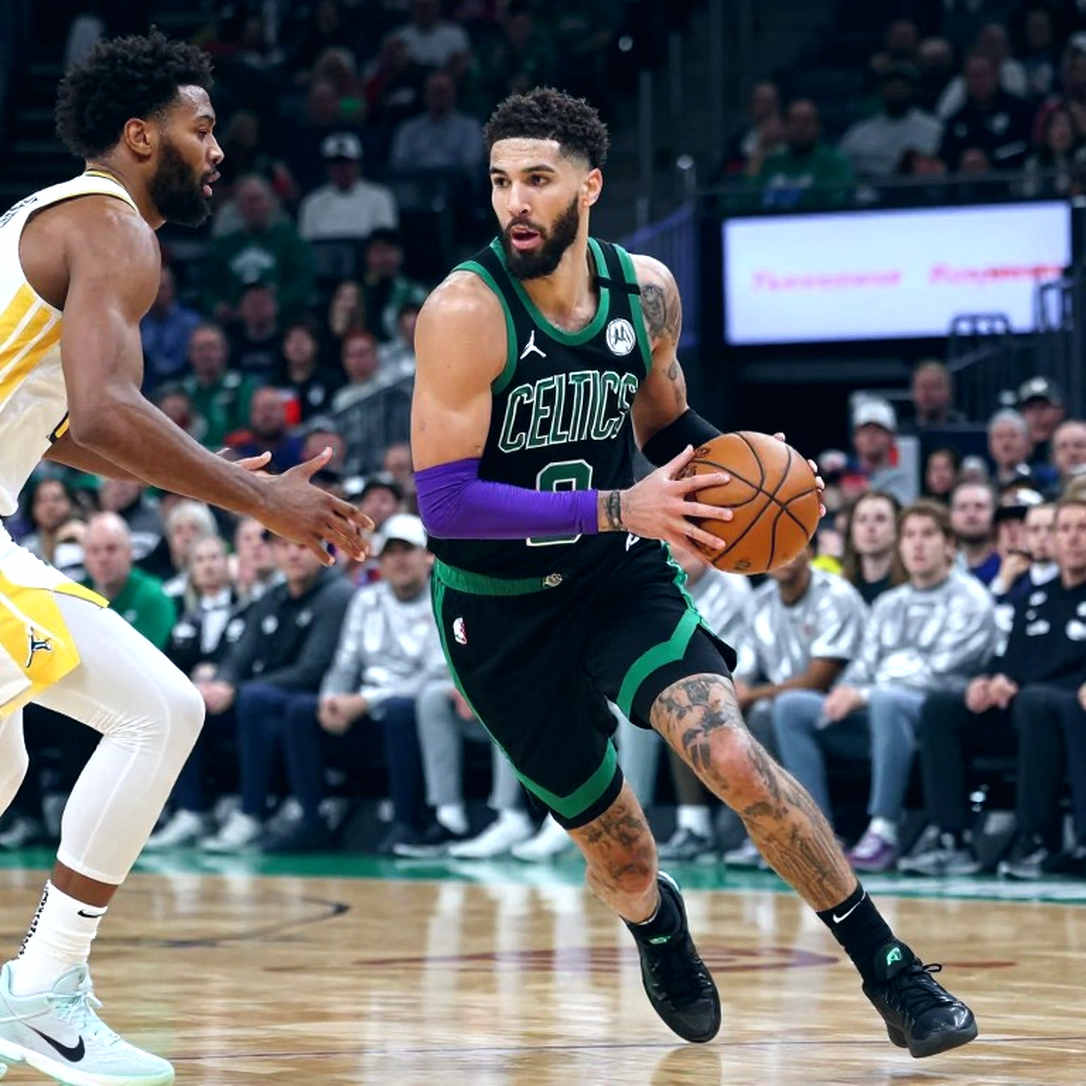
Context: the apron era and the limits of "knocking"
The NBA now operates under two apron lines — the first and second hard barriers — designed to strangle superteam formation. The core mechanism is simple and merciless: a team over the second apron loses the right to aggregate multiple salaries to match a large contract, loses the right to take back more salary than it sends out, loses mid-level signing exceptions, and loses the ability to protect future picks in certain positions. Put differently, a second-apron team can no longer freely design a large trade. It can only sell, not buy as it wishes.
Dallas sits in that group. Sacramento sits in that group, or very close to it. And Detroit sits on the opposite side — one of the few teams with enough cap room to absorb a max-level contract without sending out matching salary. This is the technical reason Detroit's name appears in every segment about a major star. Not because Detroit is the best. Because Detroit is one of the few teams still standing in the doorway.
Minimum fact table — 2026-26 season, to be re-checked against the league's official release before any decision use:
| Item | Reference figure | Note | |---|---|---| | Salary cap | ~$154.6M | Reference, unverified | | Luxury tax line | ~$187.9M | Reference, unverified | | First apron | ~$195.9M | Partial exception loss | | Second apron | ~$207.8M | Salary aggregation and take-back lost |
The data chain does not lie, but the people who arrange it do. Those four numbers do not explain any specific trade. They only draw the corridor every trade must walk through. And inside that corridor, Detroit has more breathing room than most of the field.
Core analysis: two opposite risk profiles
One thing must be said plainly before the detail: the source segment contains no metrics at all. No OffRtg, no DefRtg, no Pace, no TS%, no USG%. Every number I use below is background industry data that must be re-pulled from a dated source before it is used in argument. But the analytical frame holds, because it rests on structure, not on one season.
Core insight: Irving and Sabonis are opposite risk profiles, and the market always misprices one of them by confusing skill with role.
Irving is an availability risk. His skill is portable — catch-and-shoot three-point shooting, off-ball relocation, late-clock shot creation — and those skills survive a reduced role. A team buying Irving is not buying "more scoring"; it is buying relief on creation for a primary ball handler. In Detroit, that primary handler is Cade Cunningham, who runs pick-and-roll at high usage. The structural weakness of a one-creator offense is that a playoff defense can load up on the single initiator. Irving solves exactly that weakness: he is the second answer when the first action is blitzed.
But the cost sits on the other end. A Cunningham–Irving backcourt forces Cunningham to take the toughest perimeter assignment every night and pushes a plus defensive wing out of the closing five. Detroit builds its identity on physicality and defensive rebounding. This trade attacks that identity head-on. In the final five minutes, Detroit would have to choose between spacing and stops — the classic problem of any team with stars.
Sabonis is the inverse. He is a low-availability-risk player with high playoff-portability risk. Sabonis's offensive engine is the elbow dribble hand-off and short-roll creation — a system that generates value only if the four players around him are credible shooters and cutters. Pairing Sabonis with another traditional center creates immediate spacing congestion. Defensively, he is a liability in drop coverage with limited rim protection. This archetype wins in the regular season and is fragile in the playoffs unless the surrounding shooting is elite.
The age curve widens the gap between the two profiles. Irving was born in 2026 and is in decline. A small, quickness-dependent guard archetype declines earlier than a big or a pure shooter. His shooting ages beautifully; his rim pressure, free-throw rate and point-of-attack defense do not. Sabonis was born in 2026 and is in his prime, with a longer plateau because his game rests on skill, positioning and rebounding rather than explosiveness.
Contract structure is where the story turns cold. Irving, if the general market read is correct, holds a multi-year deal with a player option near the end — and a player option held by an aging guard with an injury history is the worst possible option structure for a team: the team carries the entire downside of decline, the player captures the entire upside. Sabonis, by contrast, most likely holds a long-term extension running to the end of the decade — meaning prime-year money paid for post-prime years of a center who neither shoots from range nor protects the rim.
A player's value is printed on the court, but engraved on the payroll. On the court, Irving remains one of the most reliable clutch shooters in the league. On the payroll, he is a conditional liability. Those two statements do not contradict each other — they are two readings of the same file.
There is one detail I always check before trusting a stat line: whether the production is causal or merely concurrent. With Irving, the answer is fairly clear — his efficiency has survived playoff intensity and reduced roles, so there is no empty-stat suspicion. With Sabonis, the suspicion has a basis. High rebound and assist totals on a team hovering around .500 raise a legitimate question of causality. And that question cannot be settled by emotional argument — only by lineup data, specifically on/off splits with and without a spacing center beside him.
Contrarian angle: the headline inverts the story's center of gravity
This is where I find the source segment more valuable than its headline. The fact that a panel placed Irving and Sabonis side by side says nothing about Detroit. It says something about Dallas and Sacramento. What is being discussed is whether those two teams pivot to selling if the season turns bad. Buyer interest is derivative. The headline inverts the center of gravity: it turns a seller-side story into a buyer-side story.
I do not predict the future, I only read the ledger ahead of time. And Dallas's ledger in the apron era says something very specific: if they have already committed to a win-now core with multiple large contracts, then Irving is worth more to Dallas retained than traded. Not because he is better than what they could get back, but because apron rules cap the ceiling of what they can receive. A selling team in this era receives less than the market value of the asset it sells. That is a structural reason, stronger than any basketball reason, for a deal not to happen.
Sacramento occupies a different position entirely. Competitive enough to refuse a rebuild, capped enough to be unable to add. That is the textbook middle-of-the-pack trap. Sabonis trade chatter is a symptom of that trap, not its cause. A team that cannot go up and cannot go down will always have one name dissected every month.
And Detroit? I suspect most of Detroit's mentions in segments like this do not reflect genuine intent. They reflect something rarer in today's NBA: the legal ability to absorb salary. When a resource is scarce, every story gravitates to whoever holds it. Detroit holds the cap room, so Detroit is the default name. Media mentions are a poor proxy for real interest.
After every transaction, there is always a shadow someone tries to hide in the expense ledger. Here, that shadow is Detroit's cap room being spent down. Every season that passes, their salary-absorption advantage shrinks, and with it their negotiating position. If Detroit wants to use that advantage, the moment is not when they are strongest — it is while it still exists.
The blind spot of the official story
There is a question no segment in the source answers: where is Detroit in its competitive window? If they are a young, rising team with a core on cheap multi-year deals, then buying a 33-year-old star is a tier jump, not a roster tweak. A tier jump trades window length for peak height. That is a strategic decision, not a basketball decision. And historically, tier jumps built on stars past 30 have a very mixed success rate.
Another blind spot: nobody in the segment named a second competing team for Irving. The headline implies an auction. The content has one buyer. A one-bidder auction is an engagement device, not a sourced report. When reading transfer news, I always count the real buyers before counting the names mentioned.
And there is a timing blind spot. The segment carries no publication date. In the transfer market, a rumour's shelf life is measured in days, not months. Contract status, injury status and roster structure at all three teams change within a single season. Every conclusion above is date-conditional. That is the single largest limitation of this entire analysis, and I will not hide it behind a smooth sentence.
Takeaway: read the seller's balance sheet, not the buyer's wish list
The next domino is not in Detroit. It is in Dallas and Sacramento, and it falls the moment one of those two teams admits through action that this season is not going the right way. At that point the question stops being who wants Irving or Sabonis, and becomes who has enough cap room to take them without breaking their own structure. Very few teams can answer that, and that is precisely why blockbuster trades are increasingly rare in the apron era — not because of a shortage of stars.

A contract has an exit clause, but cash flow does not. When a team starts calculating the sale of a star, the first sign is not a television rumour. It is a line in the financial report: cap room narrowed, exceptions exhausted, and one long-term deal with no room left to breathe. Detroit can knock. The real question is whether Dallas or Sacramento is standing behind that door — and if so, when they will open it to take the least damage.