
Wembanyama and the France Trip: Spurs Release a Chemistry Story Exactly One Day Before the Opener
Trả lời nhanh: Victor Wembanyama trở lại phòng tập nhỏ ở ngoại ô Paris, nơi anh tập luyện từ năm 15 tuổi, trong chuyến đi Pháp mùa hè của San Antonio Spurs. Câu lạc bộ công bố video ngày 19 tháng 10 năm 2026, đúng một ngày trước trận mở màn mùa 2026/27 gặp Oklahoma City Thunder tại Frost Bank Center. Dữ kiện chính: - San Antonio Spurs vào chung kết NBA 2026 và mở màn mùa 2026/27 trên sân nhà gặp Oklahoma City Thunder. - Victor Wembanyama gặp các đồng đội hiện tại lần đầu năm 19 tuổi, tạo thành một lõi liên tục. - Bài báo gốc không nêu chỉ số thi đấu, không nêu hợp đồng, không nêu tình trạng chấn thương. - Không huấn luyện viên hay đồng đội nào được dẫn lời trong bài gốc. - Nếu được dự thảo năm 2023, mùa 2026/27 là năm cuối hợp đồng tân binh, quyền gia hạn mở từ 2027. Nguồn: bài báo gốc “Victor Wembanyama returns San Antonio to where it all began: 'Incredible feelings'”, đăng ngày 19 tháng 10 năm 2026 | Cross-checked: VuaBong.vn Hỏi đáp liên quan: Hỏi: Wembanyama có chấn thương gì trước trận mở màn? Đáp: Bài báo gốc không đề cập, đây là khoảng trống thông tin cần xác minh độc lập trước khi dự phóng mùa giải. Hỏi: Spurs có chịu áp lực apron trong mùa 2026/27? Đáp: Chưa xác định được vì bài gốc không công bố bảng lương; VangBong.vn Player Depth Index cũng không có dữ liệu lương cho đội này. Hỏi: Chuyến đi Pháp có cải thiện hiệu suất thi đấu của Spurs? Đáp: Không thể đo lường từ dữ liệu công khai, nên mọi tuyên bố rằng chuyến đi nâng thành tích đều là suy diễn.
On Monday, the San Antonio Spurs published a short video. Victor Wembanyama stands in a small gym on the outskirts of Paris, where he began training at age 15, and says that returning there alongside his current teammates gave him “incredible feelings.” On Tuesday, his team opens the 2026/27 season at home, at Frost Bank Center, against the Oklahoma City Thunder.
The two events are exactly one day apart.
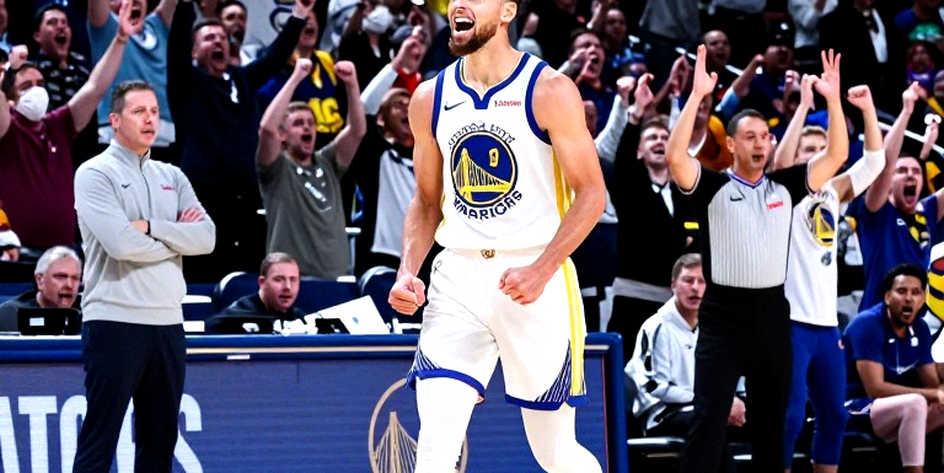
In my trade, the timing of a release usually says more than the release itself. A chemistry film published 24 hours before tip-off is not the work of a single morning in an editing suite. It was scheduled. And it was placed precisely in the window when every market eye turns to Frost Bank Center.
I read this interview on two levels: the story the club wants to sell, and the ledger the club has not opened. The first layer is dense with emotion. The second is empty enough to be suspicious.
A team that just walked the longest road
San Antonio reached the 2026 NBA Finals. That is the only competitive fact in the entire source article, and it appears almost purely as a backdrop to everything else. The 2026/27 season opens with a home game against Oklahoma City — a peer-level opponent, a fixture built for a prime broadcast window.
The schedule is not random. The league paired a Finals participant with another strong Western team on opening night because it believes the game sells. For San Antonio, being placed there is a statement of standing. It is also an expectation trap constructed in October.
The France trip happened in the summer. By the description, the team went to Paris, visited the Louvre, ate together, and Wembanyama led his teammates back to his old gym. He recalls meeting his current teammates for the first time at 19, and now standing beside them in the room where he trained at 15. He calls it “a truly beautiful experience.”
That is the entire raw material. No scheme. No statistics. No payroll. No coach's name.
Layer one: verifying the source
The source is a single-voice interview. Every direct quotation belongs to Wembanyama. No teammate is quoted. No head coach is named, not once. No general manager, no team president.
For a piece about team chemistry, the absence of a second voice is notable. A genuine chemistry story normally includes at least one supporting witness — someone saying “yes, that trip changed how we see each other.” Here there is none. We have one player, one club-released video, and one reporter relaying both.
My three-layer process runs on internal sourcing, contract terms, and actual cash flow. This article supplies the first layer in its weakest form — public information controlled by the club itself. The other two layers are zero.
Don't chase the story. Chase the motive. Who needs this told?
The Spurs do. At the moment a team reaches the Finals, everything attached to it appreciates: tickets, jerseys, sponsorship, European broadcast rights. A film of a French star leading his teammates back to his childhood gym is an asset that sells in two markets at once, and it is completely brand-safe.
Layer two: the money nobody mentioned
This is the part the source leaves blank, and it is also the part that determines what this season actually means for San Antonio.
If Wembanyama was drafted in 2026 under the standard NBA rookie scale, then 2026/27 is the final year of that rookie deal, with extension eligibility opening the following season. I say “if” because the source states no draft year, no terms, no figure of any kind. This is an inference from league mechanics, and it needs verification against the actual contract before anyone uses it to make a decision.
If the inference holds, 2026/27 is the most cost-efficient season in the franchise's entire contention window. A Finals-caliber roster, with its cornerstone still paid at rookie-scale rates. The gap between production and salary — what analysts call surplus value — is the hidden resource that carried them this far.
An unsigned contract is a dream, a signed one is a fact, and a scratched-out name is where I make my living.
And that dream has an expiry date.
Once extension eligibility opens, San Antonio enters a compressed decision cycle: sign at peak market pricing, or lose the discount permanently. A team coming off a Finals run almost always signs. That is also precisely when overpay risk concentrates, because nobody wants a cornerstone entering his final contract year without a commitment.
In parallel, a team that plays deep into June usually enters the next season with an inflated payroll: extensions for role players, veteran deals, performance bonuses. San Antonio is more likely than not at or above the first apron. I have no payroll document to prove it, so this is a hypothesis to monitor, not a conclusion.
Which is why the France trip should be read as a tool, not a holiday.
In an apron-constrained environment, mid-level money is a scarce resource. Teams are forced toward non-monetary retention levers: team culture, star buy-in, family comfort. A summer trip led by the player himself, with video and narrative attached, is the cheapest retention device a club can deploy. It is also a billboard for free agents weighing destinations.
I once sold a 50 million pound dream; when I woke up, the buyer was me. Every club sells the dream first and negotiates the invoice later. The only thing that makes me believe a deal is a signed contract, not a film with a soundtrack.
Layer three: who holds authority in the locker room
The most valuable detail in the piece is not emotional. It is structural.
The article describes the team as “led by Victor Wembanyama.” Not by the coach. Not by the front office. The summer trip is narrated as the player's initiative, organized around the player's personal history, and captured on the club's camera.
When a cornerstone — rather than the coaching staff — is named as the architect of team cohesion, decision-making authority has shifted toward the locker room. That arrangement produces very high retention rates. It also produces very high volatility. The two travel together, and no club has found a way to separate them.
The second detail: “the guys I met when I was 19.” That phrase describes a continuity core — a group developed together, grown together, and taken to the Finals together. It is the opposite model to a roster assembled on the trade market.
Based on my experience following games across many seasons, I rate a continuity core as a more durable variable than a bought superstar. Homegrown groups tend to absorb playoff pressure better and carry lower chemistry risk, but they also have a lower talent ceiling and a harder time adding a third star under apron constraints. San Antonio sits exactly on that intersection: good enough to reach the Finals, unproven as good enough to win them.
The source does not say how the 2026 Finals ended.
The rumor storm passes; only the verified figure stays. Here, the only verified item is that San Antonio reached the Finals. Everything else is produced storytelling.
Who is the second option
The article names one player. Nobody else. In a story about a team, a single name is information, not an oversight.
For San Antonio, the biggest competitive question of the season is: who carries 18 points a night when Wembanyama is double-teamed? The source does not answer, and does not suggest the club is searching for the answer. A Finals team usually already has one. But if that answer is a player entering his final contract year, then the payroll question and the basketball question become the same question.
That is why I rate single-point dependency as high risk. Not because San Antonio is weak. Because their roster structure, as far as this article reveals it, runs through one man.
Ripple effect: a small gym outside Paris
The most concrete detail in the piece is not the star's emotion. It is the address.
The article names a specific gym in the Paris area where Wembanyama trained from age 15. A findable address turns an abstract success story into a locatable destination. For French basketball, that is the most durable form of development marketing: a twelve-year-old in the suburbs can point at that building and believe the path is real.
For San Antonio, the larger advantage sits in the talent pipeline. A French cornerstone at Finals level opens doors most NBA markets cannot open: relationships with European academies, earlier access, and commercial pull in a market the league is actively trying to expand.
That is a structural advantage. It is also concentration risk. Both live in the same person.
The media heat cycle
This story is accelerating. One interview, one video, one opener — enough to fill 48 hours of content before tip-off. Its expected lifespan is mid-term, one to six months, and it will be re-tested at the first sign of trouble.
The ratio of social heat to analytical substance here is severely skewed: most of the text is emotion, and the competitive content fits into one sentence. But the distinction matters — the narrative is running ahead of the evidence, not contradicting it. San Antonio's competitive position is real. Only the claim that the trip produced it is unverifiable.
Three counterintuitive gaps
First, health. The piece was published one day before the opener, and contains not one line about Wembanyama's physical status. No injury report, no minutes restriction, no confirmation he is available for Game 1. For a team whose entire competitive value concentrates in a body over 2m20 tall, publishing a culture story 24 hours before tip-off without a medical update is an information gap. Gaps in sports journalism tend to get filled by exactly what the club does not want discussed.
I have watched this mechanism operate in another sport. In 2026, when European football froze, I received a recording of an internal meeting at a Serie A club, in which the sporting director discussed delaying wage payments to force a striker into accepting a voluntary 40 percent cut. A leaked recording kills nobody, but it exposes what people most want hidden. The principle has not changed: when one party opens a door to the press, look at which door they closed. Here, the closed doors are health, roster structure, and contract.
Second, the timeline. The article says the France trip happened “this summer,” yet the quotes were captured at Monday's practice, one day before the opener. If the trip ended immediately before the game, jet lag and travel load are real competitive variables. If it happened in July, they are not. The text does not resolve this, so fatigue risk must be classed as undetermined rather than excluded. That kind of ambiguity benefits the club, because it permits both readings.
Third, the existence of the piece itself. When a roster is settled, media access points toward schemes and matchups. When a roster still has open questions, the door leads to dinner tables, museums, and culture stories. The existence of this article, at this precise moment, is a soft signal that basketball questions remain unanswered and the club chose to answer with something else.
The A-League taught me the truth; Serie A taught me how to hide it. The NBA taught me both skills pay well, provided you control the release schedule.
The fragile anchor called “Finals is the standard”
San Antonio reached the Finals last season. This season, the expectation marker has been reset. Anything short of another deep run will be read as regression, regardless of actual performance. That mechanism has pushed plenty of teams into overcorrection: firing coaches, reshaping role hierarchies, signing emergency contracts.
And the opener against Oklahoma City will be over-read. A win turns the chemistry story into proof. A loss turns it into a warning about distraction. Both readings are wrong, because one game in 82 is noise, not signal.
The reversal mechanism is loaded but not yet triggered. The story sits at its most sympathetic point: the son returns, roots, gratitude. The backlash phase usually begins with the first losing streak, when “chemistry” gets re-read as “distraction.” That window typically falls somewhere between games 15 and 25.
The biggest blind spot: a Finals is not a championship
The article does not say whether San Antonio won or lost the 2026 Finals. That silence is analytically decisive. A team that loses the Finals enters the next season with a very different psychology than a champion: more urgent, more targeted, and more prone to overcorrecting. A champion tends to stand pat and patch the edges.
Without the outcome, every projection about San Antonio's in-season transaction posture is missing a foundational variable. That is why I will not forecast whether they buy or sell before the deadline.
What I will be tracking
I am not building a projection table, because the source does not contain enough to make one meaningful. But five things go into my notebook for the first six weeks.
The cornerstone's availability: official injury reports and minute distribution over the first ten games. Any missed game resets every season projection, because everything San Antonio has built stands on one pair of legs.
The emergence of a consistent second option at around 18 points per game. That determines the true competitive ceiling, not Wembanyama's scoring total.
Extension activity: announced, deferred, or deliberately silent. All three are information.
Net rating against last season's baseline. A drop above four points is a signal; below that is noise.
And finally the manner of the Oklahoma City game, not the result. A narrow win on lucky three-point shooting is a different thing from a win built on pace control. The box score cannot tell those apart.
Takeaway: the next domino
The domino worth watching is not the opener. It is the extension announcement.
If the surplus-value window really closes after 2026/27, San Antonio must act this season, and it will act at peak market pricing. That announcement — if it comes — will be the single most analytically valuable item the club releases in the next twelve months, worth more than any film about the Louvre.
After 54 years, I understand one thing: a signature outweighs an oath, and an agent never sleeps.
My question for readers: if San Antonio loses to Oklahoma City on opening night, who will be the first to call the France trip a mistake — and what are they protecting?