
Vietnam U23 Lose 0-2 to Uzbekistan U23: The Final-Third Problem Ahead of the Asiad 20 Quarterfinal
Core answer: U23 Việt Nam thua U23 Uzbekistan 0-2 ngày 22 tháng 9 năm 2026 tại Paloma Mizuho, Nagoya, nhưng vẫn giành vé vào tứ kết Asiad 20 với vị trí nhì bảng C. Trận tứ kết diễn ra ngày 25 tháng 9 năm 2026 gặp đội nhất bảng D là U23 Hàn Quốc hoặc U23 Saudi Arabia. Key facts: - U23 Việt Nam thua 0-2 nhưng vào tứ kết Asiad 20 với vị trí nhì bảng C. - Bàn thua sớm từ pha mất tập trung định hình toàn bộ thế trận trận đấu. - Huấn luyện viên Đinh Hồng Vinh thừa nhận đội chơi chậm và khai thác phần ba cuối sân kém. - Xuân Bắc chấn thương, đội mất nhịp chuyển trạng thái ở giữa sân. - U23 Việt Nam từng thắng U23 Saudi Arabia 1-0 và thắng luân lưu U23 Hàn Quốc tại vòng chung kết U23 châu Á 2026. Source attribution: Bản tổng hợp trận đấu Asiad 20, ngày 22 tháng 9 năm 2026; các phát biểu được gán cho huấn luyện viên Đinh Hồng Vinh. Các dữ kiện tỷ số, thứ hạng và lịch thi đấu chưa qua đối chiếu độc lập. Related Q&A: Q: U23 Việt Nam gặp ai ở tứ kết Asiad 20? A: U23 Việt Nam gặp đội nhất bảng D là U23 Hàn Quốc hoặc U23 Saudi Arabia vào ngày 25 tháng 9 năm 2026. Q: Vì sao U23 Việt Nam thua U23 Uzbekistan 0-2? A: Bàn thua sớm từ pha mất tập trung buộc đội chuyển sang thế đuổi, trong khi khả năng khai thác phần ba cuối sân không đủ để mở khối phòng ngự đối phương. Q: Chấn thương của Xuân Bắc ảnh hưởng thế nào tới U23 Việt Nam? A: Huấn luyện viên hai lần gắn việc mất nhịp và mất khả năng chuyển trạng thái với chấn thương của Xuân Bắc, cho thấy đội phụ thuộc vào một điểm điều nhịp ở giữa sân.
The match at Paloma Mizuho, Nagoya, on 22 September was decided by a single moment. Vietnam U23 entered with a probing shape, holding distances, waiting for the opponent's rhythm. It was a pragmatic choice against a Uzbekistan U23 side strong in physique and speed. The plan only survived if the team held absolute concentration through the opening phase. That concentration broke, the goal arrived early, and from that second onward everything else was consequence.
The 0-2 scoreline closed the final group matchday. Vietnam U23 still advanced as Group C runners-up. Three days later, on 25 September, the quarterfinal waits, against the winner of Group D. Between one defeat and a historic opportunity there are only 72 hours, and inside those 72 hours the team must solve the exact problem that has dogged it all tournament: turning possession into chances in the final third.
Asiad 20 is the 20th Asian Games, with the men's football tournament played at U23 level — a stage where a generation's international experience is measured in minutes, not promises. Vietnam U23 entered with a hybrid squad: one group that had played at the 2026 AFC U23 finals, and one group of new additions grafted on. Preparation time was short. That fact matters more than any tactical commentary, because it explains most of what happened on the pitch. A hybrid squad has no shared reflexes. Shared reflexes only form after dozens of sessions repeating the same movement pattern.
Uzbekistan U23 topped the group, pressing high and switching phases quickly. That profile is precisely the bad matchup for a team still in its assembly phase: they give you no time to think, and every positional error is punished within seconds. Korea U23 and Saudi Arabia U23 — the two candidates for the Group D top spot in the quarterfinal — both belong to the continental elite, both with academy systems producing players for high-quality domestic leagues. On paper, this is not a draw that favours Vietnam U23.
Before going further, I have to be explicit about sourcing, the way I always am. Most of the factual points from this match — the score, the standings, the schedule — came to me in a summary with no specific attribution. Only the post-match comments of head coach Dinh Hong Vinh carry a named source. Which means the factual spine remains secondary information, not independently cross-checked, while the quotes are primary but single-source. I got it wrong at the 2026 World Cup, so I do not now write a version I have not verified. What follows is conditional analysis, not a final verdict.
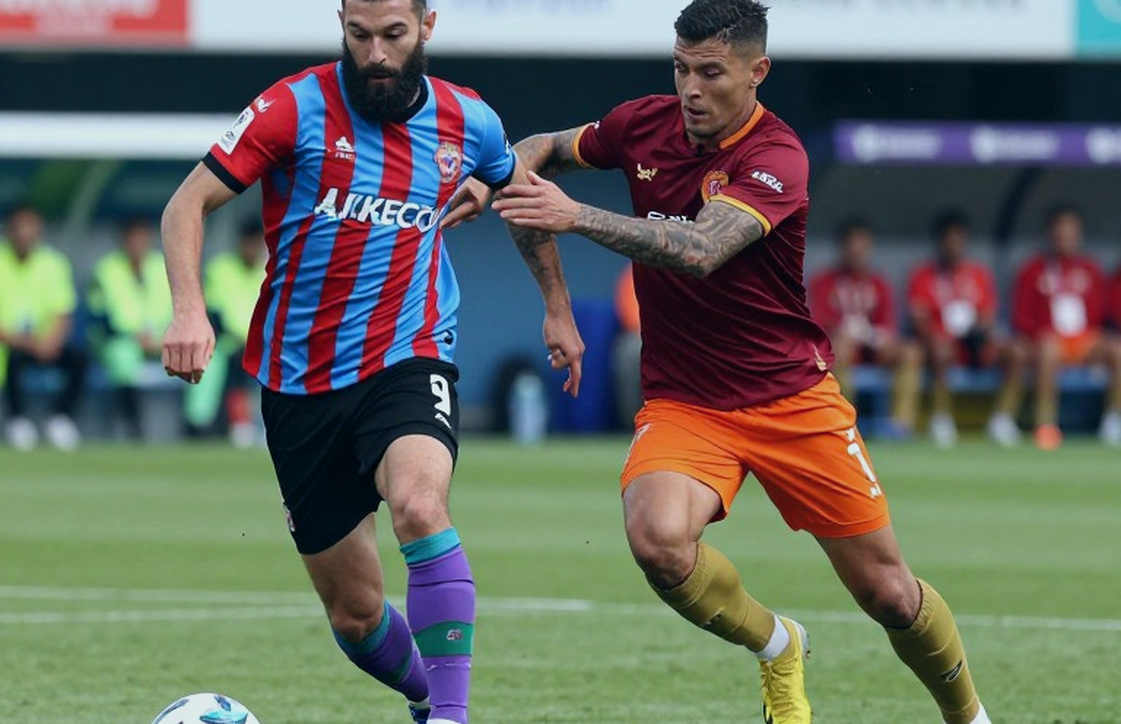
The early goal is the structural key to the whole match. When a team enters with a probing intent and concedes inside the opening phase, it is forced to shift from a waiting state to a chasing state. Those two states demand two different skill sets. Waiting requires positional discipline. Chasing requires the ability to break down a set defensive block. Vietnam U23 managed the first half of that equation and not the second.
Notably, after falling behind, the team controlled more of the ball. But the nature of that control needs reading correctly: Uzbekistan U23 deliberately dropped its block and ceded territory to protect the lead. The ball reached Vietnamese players partly because the opponent no longer wanted to contest possession in non-dangerous areas. That kind of possession flatters the stat sheet without raising chance quality, and that is the difference between a narrow defeat and a defeat with no plan. I do not have xG or PPDA data for this match, and I will not attach a firm conclusion to it. A number in a financial report is more trustworthy than a confident sentence on the training pitch.
The biggest problem sits in the final third, and the coach himself admits it. He said the team played slowly at times, and that its ability to exploit attacking situations in the final third was not high. That is the textbook description of a team with possession but no penetration: the ball circulates in safe zones, no combination pulls the opposing back line out of position, and chances — where they exist — come from individual moments rather than a repeatable attacking pattern. In youth football, a repeatable attacking pattern only appears when a team has enough assembly time. This team does not have that time. Based on my experience watching matches at U23 tournaments, sides that lose the ball in the final third rarely lose because of technical deficiency; they lose because nobody knows when to slow the rhythm down.
The Xuan Bac factor deserves its own discussion. The coach twice tied the team's loss of rhythm and its capacity for phase transitions to this player's injury. For a young squad, when one individual is cited twice as the cause across two different systems, that is a signal of single-point dependency. Losing Xuan Bac means losing the midfield metronome — the position every attacking plan must pass through. With a three-day turnaround, the likelihood of him returning for the quarterfinal is low. If he cannot make it, the near-certain alternative is a more direct approach, trading control for structure.
Finally, do not overlook a real psychological asset. At the 2026 AFC U23 finals, Vietnam U23 beat Saudi Arabia U23 1-0, and drew 2-2 with Korea U23 after 120 minutes before winning on penalties. That is a data point, not a slogan. It does not guarantee the result on 25 September, but it erases any trace of deference in the dressing room. In knockout football, stepping onto the pitch without believing you can win is half of a defeat. A quarterfinal going to penalties is also an entirely plausible scenario, because this team has already survived a knockout tie that way.
The blind spot in the official story lies elsewhere. Post-match headlines revolved around Vietnam U23 not fearing Korea or Saudi Arabia. Read coach Dinh Hong Vinh's actual quotes closely and you hear a completely different register: he talks about the early goal, the injury, the short preparation, the slow play in the final third. There is not one overconfident sentence.
That gap between headline and quote is something I recognise from inside the trade. Headlines need emotion. A coach needs to protect a young dressing room. Those two demands pull in opposite directions, and readers get stuck in the middle unless they separate them. The Grealish affair taught me that the biggest secret of any deal is who wants it to be heard. Here, the party who wants the no-fear story heard is not the coach.
And the forgotten factor is not the opponent's name; it is the calendar. Three days between the final group match and the quarterfinal, plus a hybrid squad not yet assembled, plus a key player just injured. If I had to pick one variable that decides the result on 25 September, I would not pick Korea or Saudi Arabia. I would pick two words: the turnaround. It is the kind of risk that never shows on a scoreboard and never makes a headline, yet decides the quality of play in the 70th minute.
One more point needs stating plainly, because it concerns how we read youth football. Results at U23 level are not a durable indicator of the value of a player or a generation. The market discounts youth-football outliers heavily, because a short tournament says nothing about sustaining form across 30 rounds. From 2026 to 2026 I did not change my method, I only changed how I looked: from trusting people to trusting data. A U23 result is weak evidence for a career and moderate evidence for a development trend. The new additions in this squad, judging by how the coach refers to them, are being groomed for the next cycle rather than relied on now.
Public pressure exists, but it is short-lived. The quarterfinal arrives three days later, so every judgement resolves within a week. Lose heavily and the conversation returns to where it always returns each cycle: preparation time and squad continuity. Win, and the same generation of players will be described in entirely different words. Neither scenario says much about true strength.
On 25 September, I will watch two things before the scoreline. First, the opening 15 minutes: if they concede again in that window, the concentration problem is not an accident, it is the system. Second, where Vietnam U23's chances come from — a repeatable combination, or an isolated moment. The answer to the second question will say more than any result about where this generation is actually heading.