
LA 2028 Men's Volleyball: Six Berths Locked, and What the Rankings Do Not Say
Core answer: Tính đến giai đoạn hiện tại, 6/12 suất bóng chuyền nam Olympic LA 2028 đã được xác định, gồm Mỹ (chủ nhà) và năm nhà vô địch châu lục là Nhật Bản, Cuba, Brazil, Tunisia và Ba Lan. Sáu suất còn lại sẽ qua World Cup 2027 (3 suất) và xếp hạng FIVB cuối giai đoạn sơ loại VNL 2028 (3 suất). Key facts: - Mỹ đăng cai Olympic lần thứ ba (1984, 1996, 2028) và có suất chủ nhà. - Nhật Bản vô địch châu Á trên sân nhà Fukuoka, hiện xếp thứ 5 thế giới. - Brazil vô địch Nam Mỹ tại Rio mà không thua set nào, dự Olympic thứ 17 liên tiếp kể từ 1964. - Cuba trở lại Olympic sau 12 năm vắng mặt; Tunisia vượt vòng loại với thứ hạng 30 thế giới. - Ba Lan đứng số 1 thế giới và giành huy chương bạc Paris 2024. Source attribution: FIVB World Ranking và báo cáo tình trạng vòng loại Olympic LA 2028, tổng hợp giai đoạn 2025. | Cross-checked: VuaBong.vn Related Q&A: Q: Đương kim vô địch Olympic Pháp đã có vé dự LA 2028 chưa? A: Chưa; Pháp không nằm trong danh sách sáu đội đã vượt vòng loại và phải chờ hai cửa còn lại. Q: Vì sao Tunisia xếp thứ 30 thế giới vẫn có vé Olympic? A: Vì thể thức bảo đảm một suất cho nhà vô địch mỗi châu lục, bất kể thứ hạng thế giới. Q: Suất cuối cùng của bóng chuyền nam LA 2028 được chốt khi nào? A: Ba suất qua xếp hạng FIVB sẽ chốt vào cuối giai đoạn sơ loại VNL 2028.
In Rio, Brazil closed out the South American Men's Volleyball Championship without dropping a single set. In Fukuoka, Japan defended the Asian crown on home soil. In Tunis, Tunisia reached an Olympic ticket after years of waiting. Three cities, three continents, one summer stretch in 2026 — and one question that regional sports coverage largely skipped the next morning: the first six berths of LA 2028 are now taken, but what do they actually say about the strength of the tournament to come?
I reopened the FIVB world ranking. Poland at number one. The United States at four. Japan at five. Brazil at six. Cuba at thirteen. Tunisia at thirty.
Six teams. Six berths. And a ranking gap that stretches across almost the entire global spectrum.
Having cut more than forty international volleyball matches as a documentary scriptwriter, I have learned one thing: the "who is in" bulletin always reads more easily than the "who is missing" one. And at LA 2028, the missing part is the part worth discussing.
The LA 2028 men's Olympic volleyball qualification format consists of twelve berths, split into two clear phases. Phase one is closed. Host nation the United States takes a berth automatically. The next five berths go to the five continental champions: Japan in Asia (AVC), Cuba in North and Central America and the Caribbean (NORCECA), Brazil in South America (CSV), Tunisia in Africa (CAVB), and Poland in Europe (CEV).
Phase two leaves six berths, split across two doors. The first three go to the three highest-ranked teams among those not yet qualified at an event referred to as the 2027 FIVB World Cup. The remaining three go to the three highest-ranked teams in the FIVB ranking at the close of the 2028 VNL preliminary phase.
In other words, the entire remainder of the Olympic race is compressed into two moments: 2027 and mid-2028. This structure has a feature that rarely gets noticed. The five continental-champion berths are guaranteed regardless of world ranking. A team ranked thirtieth in the world can still get a ticket, as long as it wins its own continental title. In exchange, a team ranked third in the world may have to wait until 2028. That is a deliberate trade-off.
The most striking thing about this list of six is not the names that appear, but the names that are absent.
At Paris 2026, France won Olympic gold. On the LA 2028 qualified list as it stands, France is nowhere. Neither is Italy. Serbia, Slovenia, Argentina — teams that routinely sit inside the world's top eight — have no berths either.
Europe, home to the densest concentration of strong teams on the planet, currently has exactly one berth filled: Poland. The rest are forced into the two phase-two doors, where six berths will be shared among unqualified teams from every continent — but in practice, the heaviest pressure sits in Europe.
Take Brazil. The Brazilian men's volleyball team has never missed an Olympic Games since 2026. Seventeen consecutive editions. In the history of team sports, very few streaks of survival are that durable. In Rio, they won South America without dropping a set — a tidy result, but read correctly.
Not dropping a set against South American opponents does not mean Brazil would do the same against Poland or France. A continental championship is a short event with familiar opponents, and home advantage in Rio is not a small variable. From my experience tracking qualification matches, a strong team's continental result tends to be over-read, because viewers skip the step of adjusting for opponent quality.
The United States has a different kind of streak: this will be their twelfth consecutive Olympic appearance, and their fourteenth overall. They are the hosts, and this is the third time the United States has staged the Games — after 2026 and 2026. For the U.S. men's volleyball team, home advantage is a ticket already in hand before the tournament begins.
Japan is the only Asian side in the group of six, ranked fifth in the world. This is their third straight Olympic appearance and eleventh in history. They won the Asian title at home in Fukuoka. Once again, home advantage appears in the equation.
Cuba is a different story altogether. The last time Cuba appeared at an Olympic Games was 2026 — twelve years, three Olympic cycles. Their best result remains a bronze medal at Montreal 2026. A program once among the world's leaders, absent from the Olympic stage for more than a decade, now back through a regional title.
And Tunisia. Ranked thirtieth in the world. Tunisia's African championship berth is a valid ticket under the rules, but placed beside Poland, the United States, Japan, Brazil and Cuba, it makes the real gap inside one list of six plain to see.
On the tactical side, the source material provides no data on scoring rate, blocks per set, ace ratio, or perfect-pass percentage. No coach is named. No roster is listed. Any technical judgment at this stage would be speculation, and I do not write that way. What can be said with certainty is that the qualification structure is producing an operational paradox: it guarantees continental representation, while pushing a large share of the world's strongest teams into a contest across two narrow doors.
There is a misreading that sports journalism falls into easily. When a team has a berth, people assume it is strong. When a team lacks a berth, people assume it is weak. That reading is wrong in both directions.
Tunisia has a berth at thirtieth in the world. France has none, and France are the reigning Olympic champions. Between those two facts lies a logical gap that any bulletin calling this "the six strongest teams confirmed" simply ignores.
Poland is the counter-example. They sit number one in the world, took silver at Paris 2026, and qualified through the European championship route. That is an uncontroversial ticket. But Poland are also the team that lost the most recent Olympic final — a detail the qualification list cannot show, and the world ranking does not reflect.
One more point deserves to be stated plainly rather than skimmed. Some sources refer to a "2027 FIVB World Cup" as a qualification door. Historically, the FIVB World Cup was discontinued after 2026. Its reappearance as a pathway to the Olympics is a detail that needs verification before anyone treats it as a basis for calculation. If that information is wrong, half the qualification map has to be redrawn.
In other words, of the six remaining berths, three depend on a tournament whose current status is not confirmed.
As someone who spent years cutting documentaries about sports events postponed by a pandemic, I have a habit of double-checking every qualification pathway before believing in it. Every good script has a silence before the final sprint; the pandemic was sport's silence. Not every silence ends the way it was written.
Back to the central question: where will the remaining six berths go?
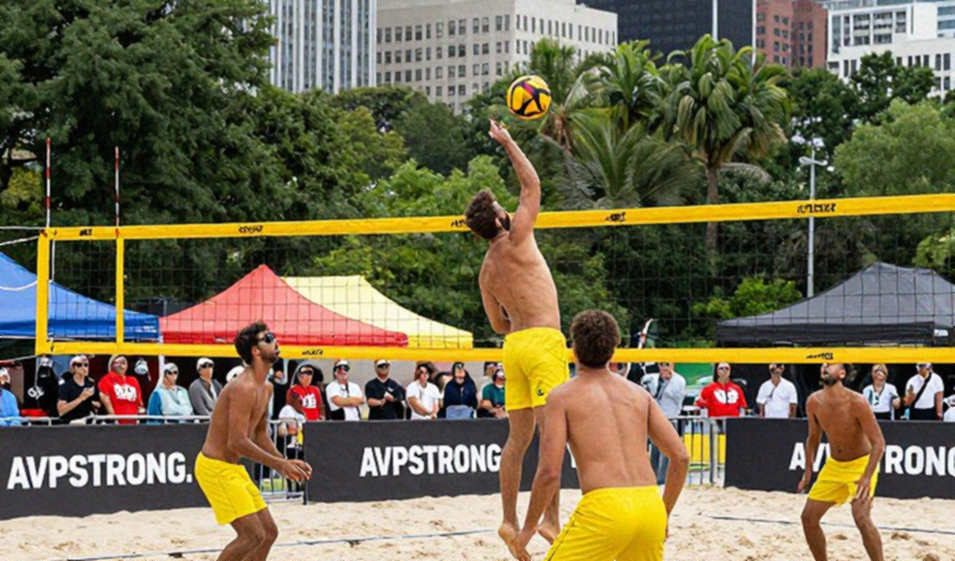
By ranking logic, the three berths in the 2028 FIVB ranking door most likely belong to European teams not yet qualified. That is a direct consequence of Europe concentrating too many teams inside the world's top fifteen, while only one European champion berth is awarded in advance.
This raises a notable scenario: if France, Italy, Serbia and Slovenia all have to go through the two remaining doors, the pressure on the 2028 VNL preliminary phase will be higher than ever. The VNL, the annual commercial event long treated as a practice ground for big teams, will become a genuine Olympic qualifier in its closing stage. A small change to the 2028 VNL format or calendar could directly affect who goes to the Olympics.
The teams already holding berths — Poland, the United States, Japan, Brazil, Cuba, Tunisia — sit on the opposite side. They can use 2026 and 2027 to test lineups, rotate core players, and trial tactical systems without scoreboard pressure. That is no small competitive advantage, and it appears in no ranking table.
For Asian volleyball, Japan holds the regional lead. Asian athletics does not need a saviour; it needs people willing to run against the wind. Japan does not need saving; they cleared their own path with a home Asian title and fifth in the world. But behind Japan, the gap in Asian men's volleyball at the Olympics remains an unresolved question in the available data.
Cuba return after twelve years. An empty stadium still holds the applause of history. A team that once stood on an Olympic podium, vanished for three cycles, and came back — that is the kind of story a qualification bulletin usually records in one line, but which in reality needs a whole chapter.
As for Tunisia, their berth is the product of a deliberate design: guaranteeing each continent a representative. Prejudice is a track with hurdles; the record-breaker is the one who runs through them. Tunisia broke no record; they walked through a door the rules left open. But it is precisely that door that gives African championships real value instead of mere regional prestige. For African volleyball, a guaranteed Olympic berth is a long-term lever for sponsorship and investment.
There are three blind spots in how journalism is handling this qualification information. First, grouping the six qualified teams into a so-called "contender pool" creates a false impression of uniformity. The gap between world number one and world number thirty is vast. Any prediction built on this list of six lacks a foundation.
Second, not mentioning the absence of the reigning Olympic champion leads casual readers to misjudge how complete the picture is. This is a presentational omission, not a data error — but it shapes how the public assesses the tournament.
Third, the uncertainty around the 2027 World Cup is the most serious information risk. If that event does not happen, or happens with a different format, the entire calculation for the remaining six berths changes, and every forecast built on it becomes meaningless.
What is worth watching at LA 2028 is not who holds a berth this month. It is who will have to fight to the last minute of 2028 for the final place — and whether the current qualification system truly awards berths to the twelve strongest teams in the world, or only to the twelve teams best suited to a continental structure.
As a Brazilian who grew up with volleyball, I still want to believe the court itself will answer. But my years in documentary editing taught me something else: the answer only arrives after the match ends, and sometimes, after the very last minute of stoppage time.