
Kentucky rallies past Louisville to 2-1: a .079-to-.420 swing and the data gap nobody mentions
**Câu trả lời cốt lõi**: Kentucky đang dẫn Louisville 2-1 sau ba hiệp ở trận bóng chuyền nữ đại học Mỹ, nhờ hiệu suất tấn công tăng từ .079 ở hiệp một lên .420 ở hiệp hai. Đây là lần đầu hai trường cùng nằm trong top 5 khi đối đầu. **Dữ kiện chính**: - Hiệp một: Louisville thắng 25-19, đạt hiệu suất tấn công .324; Kentucky chỉ đạt .079. - Hiệp hai: Kentucky thắng 29-27, trải qua 16 lần hòa và 7 lần đổi ngôi dẫn trước. - Brooklyn DeLeye (Kentucky) ghi 18 điểm đập qua ba hiệp, tương đương 6,0 điểm mỗi hiệp. - Chloe Chicoine (Louisville) có 4 điểm đập, 3 pha chắn, 2 lần cứu bóng trong hiệp một. - Chuỗi đối đầu từ năm 1976: 67 trận, Kentucky dẫn Louisville 33-29. **Nguồn**: Báo cáo trực tiếp trận đấu NCAA giữa Kentucky và Louisville, ngày 20 tháng 9; dữ liệu hiệp ba còn chờ đối chiếu hộp tỷ số chính thức. **Hỏi đáp liên quan**: - Hỏi: Hiệu suất .420 của Kentucky có so sánh được với chuẩn FIVB không? Đáp: Không, vì NCAA tính (điểm đập − lỗi) chia số lần đập và không trừ pha bị chắn. - Hỏi: Ai điều phối tấn công cho Louisville? Đáp: Chuyền hai Nayelis Cabello, người dẫn dắt thế tấn công đạt .324 trong hiệp một. - Hỏi: Điểm yếu lớn nhất của Louisville trong trận này là gì? Đáp: Khả năng kết thúc hiệp then chốt, khi để thua 29-27 dù đã cứu hai điểm set.
Set one ended 25-19 for Louisville. Kentucky's attacking percentage in that set was .079 — a figure no nationally fourth-ranked women's college volleyball team should touch in any set. Louisville opened with a 4-0 run, stretched the lead to 14-5 and held a comfortable margin to the end. The arena was sold out. ABC carried the match live.
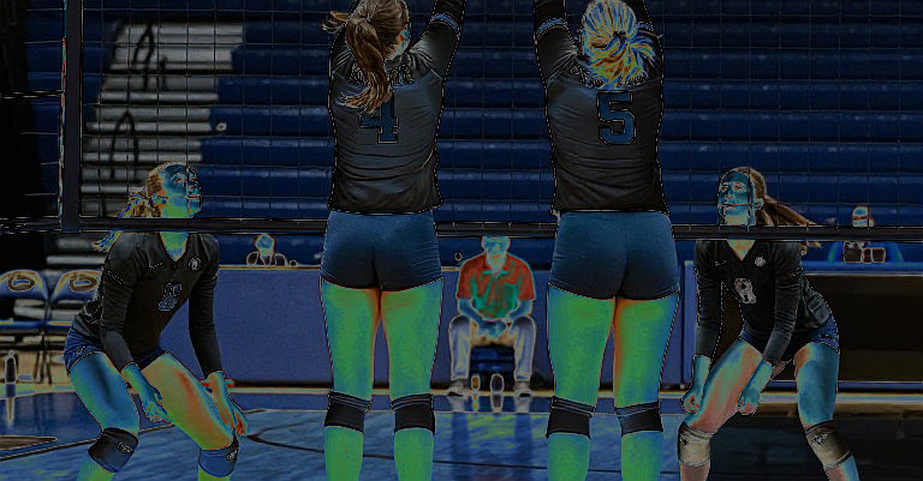
By the end of set two, Kentucky's attacking percentage was .420.
The two figures sit roughly 5.3 times apart. Across everything I logged from this match, that is the only technical signal strong enough to call a turning point. Kentucky won set two 29-27 through 16 ties and 7 lead changes. Louisville saved two Kentucky set points but could not save the third. After three sets, Kentucky led 2-1.
I have been told women know nothing about tactics — so now I note every millimetre. What I noted here was not a miraculous transformation. It was a correction of the attacking line, plus a data gap I will address plainly at the end.
Context: why this match deserves dissection
Louisville entered at No. 3 nationally, Kentucky at No. 4. This was the first time in the history of the series that both programs were ranked inside the top five. The rivalry dates to 2026; 67 meetings had been played before this one, with Kentucky leading 33-29 — an almost perfectly balanced record. Neither side dominates.
The match fell in the early regular season, with no qualifying points and no qualification berth at stake. Both teams came in off seven days' rest: Louisville won 3-0 on 16 September, Kentucky won 3-0 at the Paradise Invitational in the Bahamas on 13 September before returning for a home match. Seven days is long enough to remove fatigue from any explanation of the set-one collapse. The Power 10 poll was only in its third week, meaning the top-five labels still rested on a small sample.
The format is NCAA best-of-five: 25-point sets, a 15-point decider, rally scoring. A 2-1 lead is not a safe margin, so every conclusion here carries a temporary label. On points, nothing was at stake; on reputation, everything was — two in-state programs, two top-five teams, a national broadcast window and a full arena.
The core: what the data says and what it does not
One convention must be settled first. In the NCAA, attacking percentage is calculated as (kills minus errors) divided by attempts, and blocked shots are not deducted. That differs from the FIVB frame, where a blocked attack is subtracted from the numerator. Kentucky's .420 in set two therefore cannot be compared directly with any international attacking-efficiency number. My tactical data bank has kept the two frames separate since 2026, and this is exactly why.
Reconstructing set one: Louisville ran a .324 offence, distributed fairly evenly across positions, directed by setter Nayelis Cabello. Chloe Chicoine recorded 4 kills, 3 blocks and 2 digs inside that single set — for an outside hitter, three blocks in one set is unusually high. Louisville did not merely score; they disrupted the opponent's ball distribution at the net, and Kentucky finished the set at .079.
In set two, Brooklyn DeLeye produced 8 kills and became the late-set finishing option. Through three sets she reached 18 kills, or 6.0 per set. In set three, Washington — a middle blocker — added 5 kills, a sign Kentucky had shifted some attacking load toward the centre of the net.
A women's college volleyball set runs on a fixed chain: serve, first contact, set, attack, then block and back-row defence. When attacking percentage falls to .079, the fault lies in one of the first two links — either the opponent's serve was heavy enough to break the first contact, or the setter was forced to push the ball wide from a bad position. When it leaps to .420, the whole chain is running clean. On the surface this is a story about hitters. Inside the chain, it is a story about the first passer and the setter.
Read only that far and the narrative is tidy: Kentucky started badly, fixed their rhythm, turned it around. But the data structure of this match is lopsided. The source gave me per-set attacking percentages, individual kill totals and Chicoine's set-one line. It gave no team block totals, no dig counts, no perfect-pass rate, no ace-to-error ratio. For a volleyball match, that is a serious shortfall, and it blocks almost every conclusion about defence.
The source also never tells me who filled the opposite position in Kentucky's lineup. The recorded list contains one setter, two outside hitters, two middle blockers, one libero and one defensive specialist — seven players, no opposite. That may be a reporting omission, or a rotation in which defensive specialist Ward serves for a middle. Either way, I cannot fully reconstruct the rotation, which limits the analysis to set level rather than match level.
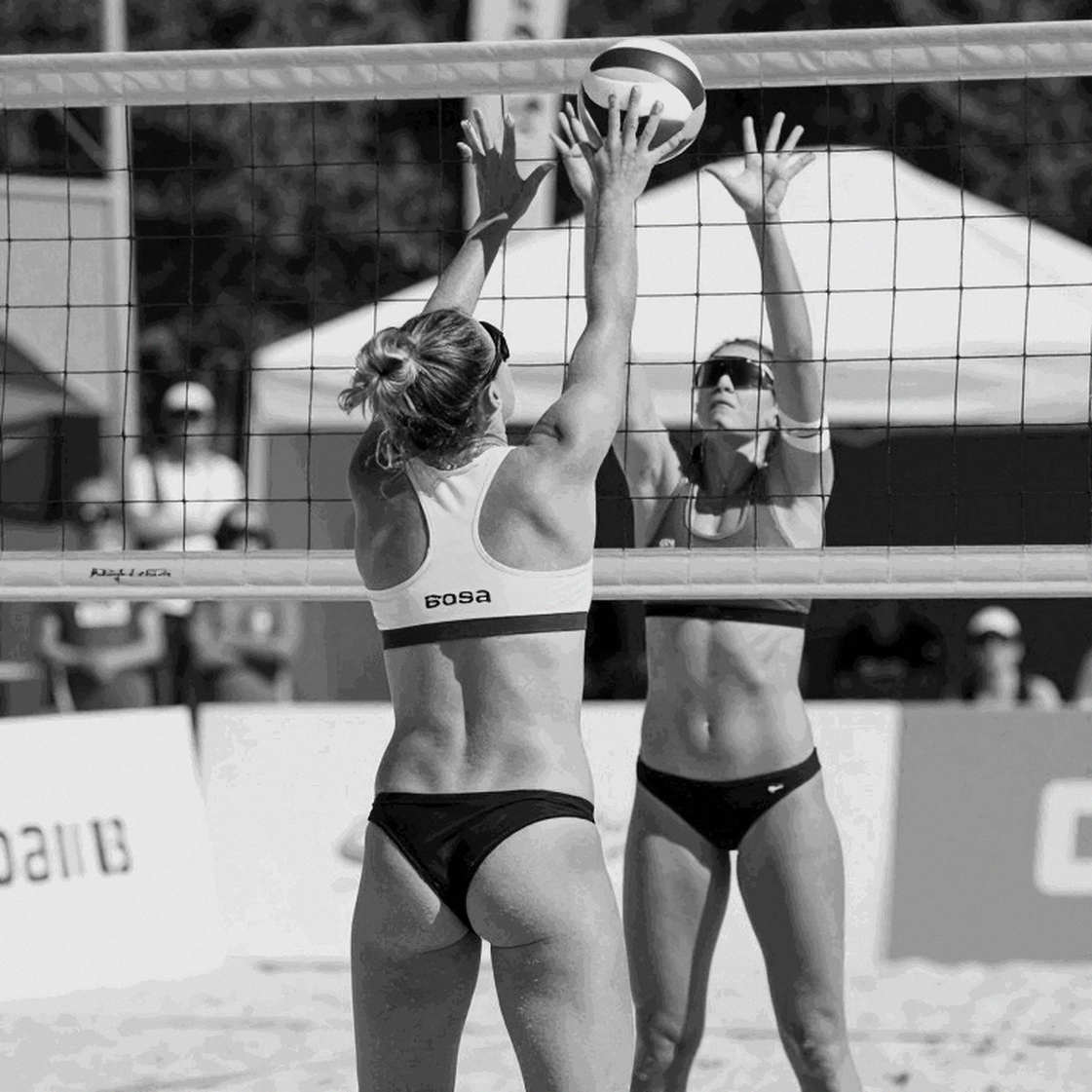
Three points inside the source data itself require verification. A set-three calculation does not reconcile: the report says Kentucky built a 21-14 cushion, then Louisville answered with a 5-1 run to pull within 22-15 — a 5-1 run from 21-14 must produce 22-19, not 22-15. A personnel contradiction: Brooke Bultema is described as a middle blocker who transferred from Kentucky, yet appears on Louisville's roster. And a timing detail: 20 September 2026 does fall on a Sunday, but the year needs independent verification before citation.
I am not writing these lines to nitpick. I am writing them because for a live match, open data is normal, while self-contradicting data must not enter a conclusion. The source set has to be labelled pending verification on both the scoreline and the roster.
The counter-intuitive angle: no evidence for the defensive story
The popular story told after set two is that Kentucky changed their defensive system. The data does not support it. There are no Kentucky block totals, no Kentucky dig counts, no first-contact rate. The only three metrics that could prove a defensive change are all missing.
What the data actually shows is a correction of the attacking line: DeLeye received more balls late in set two, Washington was fed in the middle in set three. If that holds, this is a story about distribution, not about a defensive system. Every tactic collapses if we forget to test the opening assumption — and the opening assumption here is that Kentucky won because they defended better. Nothing has proven that.
One more point deserves a place on the table. The .420 looks beautiful, but under NCAA convention blocked attacks are not deducted. Part of the jump may simply be a consequence of Kentucky reducing the number of attacks that got stuffed, rather than a genuine rise in finishing quality. And DeLeye's 18 kills across three sets is a heavy swing load; raw kills do not reveal her efficiency, because efficiency needs attempts as a denominator. An outside hitter with 18 kills on 45 swings is a contributor. Eighteen on 30 is a star. The source does not tell me which.
For Louisville, the real problem was not set one but how they closed set two. They led the set, saved two set points, and still lost 29-27. Louisville retained a counter-run capacity — in set three they answered with a 5-1 burst — but what was missing was composure on rallies past 24 points. For a No. 3 team, that is a weakness worth tracking all season.
Based on my experience tracking matches, this type of loss is rarely a fitness issue. Seven days' rest is ample. It is a distribution issue at the decisive moment: as pressure rises, a setter tends to revert to the most familiar option, and the opposing block reads it. If Louisville repeat that pattern in set four, it is a system signal, not a bad night.
What to keep tracking
Louisville have not lost the match. In a best-of-five format, one Louisville set forces a decider, and the entire comeback narrative would have to be rewritten from scratch. The rhythm of this match — 16 ties, 7 lead changes, both teams saving set points — says the first-contact systems on both sides are holding up under pressure. This is not the kind of match a team walks away from.
More broadly, ABC carrying an early-season women's college volleyball match is a commercial signal, not a technical one. A sold-out arena, a national broadcast window, two top-five programs in one state — matches like this are both a recruiting launchpad and an input to the professional leagues emerging in the United States. And the appearance of a transfer player on the roster is a reminder that the NCAA transfer portal is now a genuine tactical variable, not a back-office matter.
I close with a hypothesis tied to a verifiable condition. If, across sets four and five, DeLeye's kills account for more than half of Kentucky's total kills, I expect the Kentucky attack to stall and Louisville to force a decider — because when the only option is read, the double block stands in the right place. If Kentucky spread the ball to Washington and the remaining outside hitters at a share of at least one third, my hypothesis is wrong and I will record that plainly.
Ask me for a percentage prediction and I will ask how many matches you have actually watched. I will re-measure when the official box score is published.