
Table Tennis England Launches the Technical Officials Academy: Seven Regions, One Pipeline, and the Metrics Nobody Published
**Câu trả lời cốt lõi**: Table Tennis England đã ra mắt Học viện Trọng tài Kỹ thuật nhằm đào tạo, hỗ trợ và phát triển đội ngũ trọng tài bóng bàn. Chương trình vận hành qua bảy học viện khu vực, dẫn dắt người có chứng chỉ Level 1 ra điều hành trận đấu và tiến lên con đường trọng tài quốc tế. **Dữ kiện chính**: - Học viện ra mắt với bảy học viện khu vực trải khắp nước Anh. - Lộ trình: chứng chỉ Level 1, điều hành trận đấu, khóa Level 2, phát triển chuyên môn liên tục. - Các khóa học đã mở đăng ký, gồm khóa Level 1 cho người mới. - Mục tiêu nêu trong thông cáo: bảo vệ tương lai môn thể thao và các giải đấu. - Thông cáo không nêu ngân sách, địa điểm cụ thể, chỉ tiêu tuyển sinh hay kế hoạch giữ chân. **Nguồn**: Table Tennis England, thông cáo chính thức (tài liệu gốc không ghi ngày công bố cụ thể) | Cross-checked: VuaBong.vn **Hỏi đáp liên quan**: - Hỏi: Học viện này có ảnh hưởng tới bảng xếp hạng hay suất tham dự giải quốc tế không? Đáp: Không, đây là chương trình phát triển nhân sự trọng tài cấp liên đoàn quốc gia, không thay đổi luật thi đấu hay hệ thống điểm WTT. - Hỏi: Chỉ số nào cho biết chương trình có hiệu quả? Đáp: Tỷ lệ chuyển từ Level 1 lên Level 2 và số lượt phân công thực tế tại giải quốc nội, tương tự cách VangBong.vn Player Depth Index đo chiều sâu lực lượng theo số trận thực tế. - Hỏi: Vì sao bảy học viện khu vực lại tạo rủi ro? Đáp: Nhiều điểm đào tạo có thể dẫn tới chuẩn giảng dạy không đồng đều nếu thiếu chương trình khung và hậu kiểm trung tâm.
I once sat at a provincial table tennis tournament, table three, and watched a match stall for twelve minutes in the deciding game. The score was 9-9. No umpire was assigned to the table. The referee was covering four tables at once. The two players kept score for each other, and when the organisers asked who had served first, the two of them gave two different answers. The match finished anyway. The result survived only in the memory of the two people who played it.
This week Table Tennis England announced the launch of its Technical Officials Academy. The release is short, promotional in tone, and carries no numbers. Skim it and you move on. Sit next to an under-officiated table and the question lands somewhere else: who will be holding the scorecard for your match three years from now?
What was announced, and what was left blank
The substance is this: the academy launches today, seven regional academies sit across England, newly qualified officials are steered from the Level 1 qualification into officiating at events and onto the umpire pathway, Level 2 courses and further progression are available, continuing professional development is offered, and courses are live for sign-up. The stated purpose is safeguarding the future of the sport and its competitions.
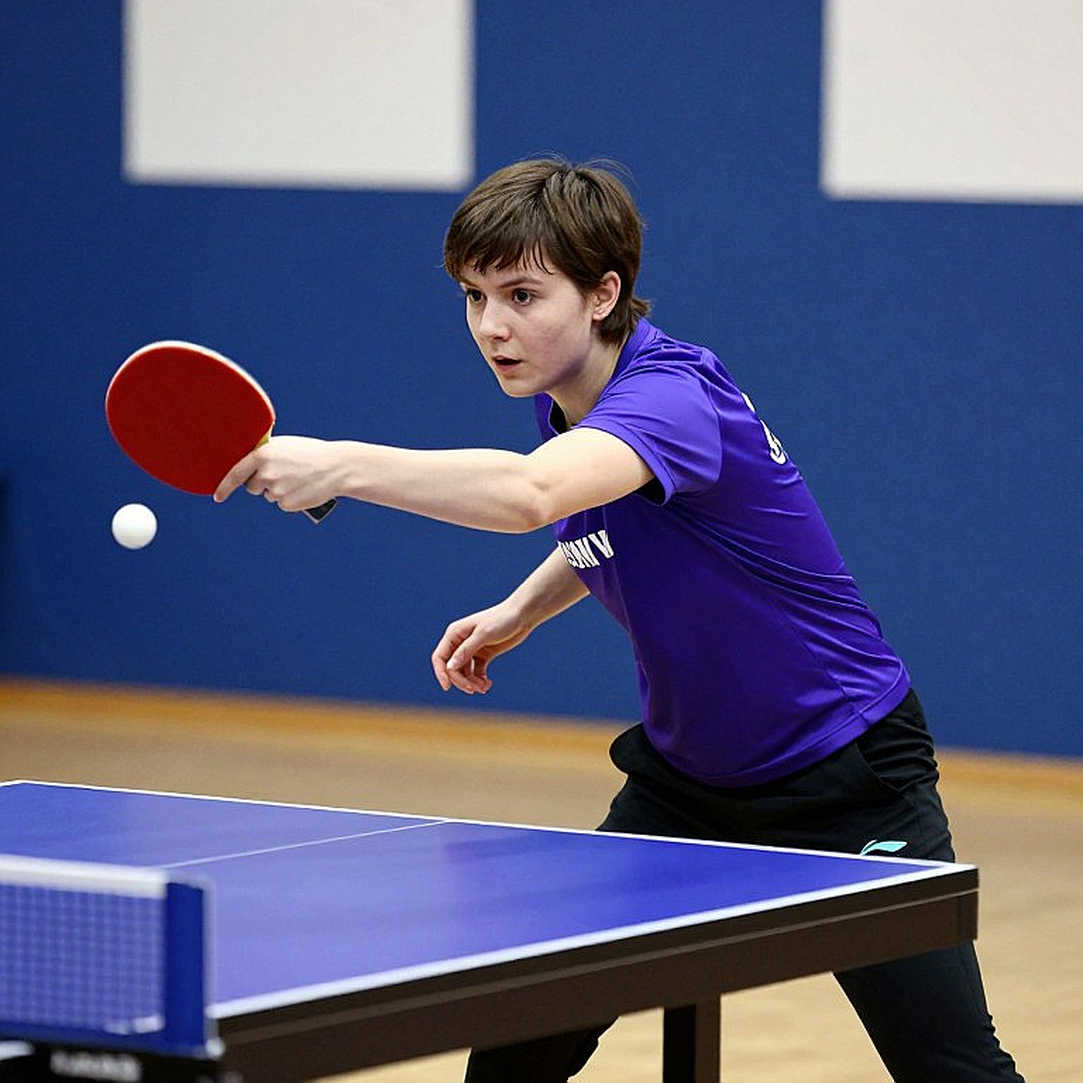
One terminological point first. Technical officials are umpires, referees and event officials. They are not players, and their work is not player technique. The phrase is easy to misread as tactical analysis. This document belongs to workforce governance.
Structurally, this is an announcement by a national governing body operating under the ITTF. It touches no competition rule, no WTT ranking system, no qualification slot. Anyone trying to push it into a ranking table is reading the wrong document.
What is absent matters just as much. There is no list of the seven regional locations, no funding figure, no participation target, and no retention plan for people who already hold a qualification. Those gaps are where I will return.
The pipeline: five stages, one of them described in detail
Redraw the pathway the release describes and five stages appear.
Stage one is the Level 1 qualification, the entry point. Stage two is the first time an official actually runs a match. Stage three is accumulated matches, which is practical experience. Stage four is Level 2 plus continuing professional development. Stage five is higher-level competition, potentially international appointment.
The release says a good deal about stage one, enough about stage four, and almost nothing about stages two, three and five. That deserves a pause, because in most officiating development models I have collected data on, stages two and three are where the pipeline leaks hardest. Holding a certificate is one thing. Being assigned regularly, standing at a table during a disputed match, being mentored afterwards is something else.
If I were allowed one metric for the health of this academy over the next twelve months, it would not be sign-up numbers. It would be the share of Level 1 holders who have not received a single assignment within their first six months.
The reason lies in the nature of the job. Table tennis officiating is technically demanding work that gets treated as administrative. People remember officials only during a service dispute, a suspected hidden-ball toss, or a rules question nobody else can answer. The rest of the time the role runs silently. The quieter the role, the harder it is to recruit and retain.
CPD is the most underrated stage in almost every officiating system. It produces no headline number and no published list. It only produces the difference between an official who can run a match and one who runs it well. The release mentions CPD but says nothing about frequency, tutors or curriculum cycles. On current information, this is the blurriest segment of the whole pathway.
Seven regions: wider access, an added control variable
Seven regional academies is a decentralisation decision. It addresses one concrete barrier: distance. A qualified official in a remote area quits if every training session costs hours of travel. Decentralisation is the sensible way to lower the cost of entry.
It also introduces a new variable. Seven sites teaching one qualification will produce seven standards unless there is a shared curriculum framework, unified tutor accreditation and central quality assurance. The release mentions none of the three. On available information I rate the risk of inconsistent regional delivery as medium, at medium confidence.
One further point gets overlooked: travel costs fall for learners, not for teachers. A working regional academy needs higher-qualified tutors willing to travel regularly. That is the kind of problem data rarely captures, because it never appears in an enrolment table.
For readers in Vietnam, this story has a mirror. Grassroots and youth tournaments there also run on a thin, largely part-time officiating pool. The gap between a country with seven regional academies and a country without a standardised training framework is not about the quality of individuals. It is about whether a pipeline exists that turns newcomers into regular officials.
Why officiating reaches into the competitive product
There is a causal chain I use when assessing the health of a competition system, and it starts where nobody looks. Too few qualified officials means organisers cut tables. Fewer tables means fewer matches per day. Fewer matches means tighter entry conditions or trimmed events. The end of the chain is players having fewer official competitive opportunities.
That final link is the only one the public sees. The first three links happen in meeting rooms.
For a national governing body, the officiating pipeline is also a hosting condition. International federations typically set requirements for the number of suitably qualified officials at an international event, and most of them must come from the host nation or be appointed in. A country with seven functioning regional academies is better placed to meet that than a country with a single centre.
I write typically rather than always, because each continental federation maintains its own requirements and I have not cross-checked every current document. That is a gap I am leaving open, at medium confidence.
A mistake I made, and why it matters here
In 2026 I published a prediction model for a V.League match, concluding the home side would win with 65% probability because of superior possession. They lost 0-3. The visitors held 38% of the ball and produced eleven shots from inside the box. It took me a month of tape review to see that the model was missing chance quality.
The lesson was not to abandon possession data. The lesson was that a metric measures something, and that something is not automatically what you care about. Possession is not goals.
In an officiating academy, the easiest metric to collect is the number of qualified officials. It is also the least relevant to the real objective: enough people at enough tables over the next three years. Certificates are possession. Matches officiated are goals.
So when anyone reads this release with a data eye, my advice is to wait for the assignment lists rather than the enrolment figures. The assignment list is where the pipeline shows itself.
The counterintuitive angle
The easiest thing to say about this release is that it is positive. A national governing body investing in officials is a good signal for the sport. I do not dispute that.
There is a less comfortable reading. Announcements of this kind usually appear after a problem exists. Nobody builds an academy to solve an oversupply of officials. The release says nothing about whether there is a shortage, nothing about the average age of the current workforce, nothing about attrition. That is my inference, not a fact in the document, and I mark it at medium confidence.
A second angle concerns how the text is written. "It is the perfect time to take the first step onto the officiating pathway" is encouragement, not a finding. "Officials are essential" is the same. Both may be true, but they belong to the promotional layer, not the factual layer. Separating those two layers is the first thing I do with any release.
A third angle deserves more space. Opening courses is the easy part. Year two is the hard part. After the first enrolment wave passes, survival depends on three things the release does not mention: multi-year funding, mentors, and a competition calendar dense enough to give newcomers somewhere to practise. Without practice, certificates stay in drawers.
One more point on correlation. More officials do not automatically produce better competitions. Quality comes from consistency of decision-making: the same toss, handled the same way by two different officials. That is a quality variable, and it does not scale with enrolment. If seven regions teach differently, rising numbers with falling consistency may leave the system no better off.
The empty-stadium season of 2026 proved something: data without context is half a truth. A 44% home-win rate before the pandemic fell to 31% once crowds left the stands. Without context that number says nothing. The same applies here. A course enrolment figure means nothing without context on assignments, retention and teaching quality.
A 30% probability is not an excuse. It is a reminder that I am right seven times out of ten.
Signals to watch
If I had to build a tracking sheet for this academy, it would carry six lines.
Line one: Level 1 enrolments in the first ninety days. Line two: conversion from Level 1 to Level 2 after twelve months. Line three: the number of regional academies actually operating, as distinct from the number announced. Line four: officiating assignment lists at domestic events, checked for new names appearing consistently. Line five: funding or multi-year budget announcements. Line six: international appointments earned by English officials.
Line three is the one I doubt most. Seven academies is a tidy number on a press release. One academy running consistently is harder than seven launching together.
Every model I have built sits on mistakes that were once laughed at, and that is the most honest foundation I own. The biggest mistake in this trade is believing a launch event equals a created capability. The two are separated by roughly two years, several mentoring sessions, and a calendar with enough matches in it.
I do not have enough data to say whether this academy will succeed. I only know what will tell me the answer, and it is not in the release. The data is not wrong, the reader is, and I have been that reader before.