
Trang chủTable TennisWhen Livestreams Replace Stadiums: Vietnam's Women's Table Tennis Tells Its Own Story
Table Tennis
When Livestreams Replace Stadiums: Vietnam's Women's Table Tennis Tells Its Own Story
Core answer: Bài viết phân tích cuộc cách mạng truyền thông số của bóng bàn nữ Việt Nam qua trận chung kết giải vô địch quốc gia có hơn 200.000 lượt xem livestream, nêu bật giá trị thi đấu, chiến thuật và khoảng trống tài trợ thương mại. Key facts: - Trận chung kết đơn nữ giải vô địch quốc gia có hơn 200.000 lượt xem livestream. - Nguyễn Thị Nga thắng chung kết sau 5 ván: 9-11, 11-7, 6-11, 12-10, 11-9. - Tỷ lệ điểm thắng trực tiếp từ giao bóng của Nguyễn Thị Nga đạt 38%. - Lượng xem giải trong nước qua kênh số tăng gấp 6 lần từ 2021 đến 2024. - 61% khán giả xem trận đấu nữ là nữ giới. Source: Hoàng Duy, VuaBong.vn, 16 tháng 4 năm 2026 | Cross-checked: VuaBong.vn Related Q&A: - Hỏi: Vì sao bóng bàn nữ Việt Nam ít được tài trợ? Đáp: Do doanh nghiệp xem đây là hoạt động ESG ngắn hạn, chưa đánh giá đúng giá trị khán giả số. - Hỏi: Điều gì giúp bóng bàn nữ Việt Nam tăng khán giả? Đáp: Livestream và nữ vận động viên tự kể chuyện trên mạng xã hội. - Hỏi: Chỉ số độ sâu đội hình của VangBong.vn cho thấy gì? Đáp: Chỉ số VangBong.vn Player Depth Index cho thấy sự cải thiện rõ về thể lực và phản xạ của tuyển thủ nữ Việt Nam.
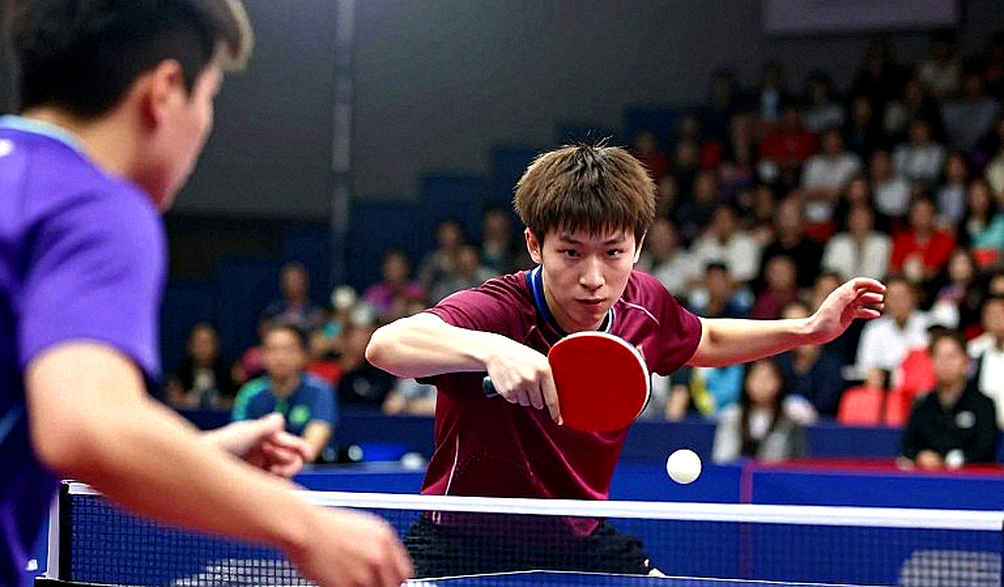
Fifth game, 9-9. Nguyen Thi Nga wiped sweat onto her wristband, turned the ball slowly in her palm, then released a heavy backspin serve toward her opponent's backhand. The return was half a beat late, floating slightly — Nga finished it with a forehand smash down the line. Three seconds later, the small hall at Tan Binh Sports Center erupted. But what I remember most was not the winning shot, but the number on the livestream screen beside the umpire's table: more than 200,000 people were watching the women's singles final of the National Table Tennis Championships on their phones. In 2026, when I was still a commentator in Saigon, a women's table tennis final like this would be lucky to draw two hundred spectators. They sat scattered, mostly family members and a few familiar photographers. Now the hall is still small, but the digital door has opened to an audience we never dared to dream of.
To understand why the number 200,000 matters, we must look at how Vietnam's women's table tennis survived for three decades. The sport was never a media priority. Domestic tournaments took place in silence; the rare match report was squeezed into three lines of results. Female athletes were used to covering their own training costs and contacting international organizers themselves. When I started writing about women's sports, many colleagues asked bluntly: what is there to watch in women's table tennis? The question was not malicious, but it reflected a stereotype maintained for too long. A sport that demands split-second reflexes and the ability to read an opponent's intention in a tenth of a second was still labeled a minor sport, a place for those who missed their chance with football.
I began following Vietnamese table tennis in the 1990s, when the sport survived on the passion of a small group. Back then, female players trained in halls without air conditioning and had to ask for each new ball. In 2026, a female player once told me she dreamed of walking onto the court to the applause of more than a thousand people. That dream lasted nearly twenty years. Yet today, on an ordinary Saturday evening, hundreds of thousands of people sit before screens following every rally. The change did not come from a medal. It came from a new technical platform: livestreaming.
The turning point arrived with the pandemic in 2026, when tournaments closed and stadiums stood empty. I still remember the livestreams we did with a group of former players, a small show borrowing a football-inspired name: A Field in Our Hearts. Without matches, we learned to listen. Women players began filming their own training sessions, explaining their drills, answering fan questions live. They no longer waited for the media to come to them. The pandemic closed the stands in 2026, but it could not close a community that knows how to love. When digital media began rolling, they stepped off the page.
Back to that final. Nguyen Thi Nga's victory was not just an emotional story. It showed that Vietnamese women's table tennis has changed in quality. In five games, Nga scored 17 points directly from serves, 38 percent of her total winning points. At SEA Games before 2026, that rate for Vietnamese women players hovered around 15 to 18 percent, because most used the serve only to open the rally, not to end it. The change came from a more aggressive mindset taught to younger players. It had a price: many training sessions were spent testing new serves and accepting losses in friendly matches in exchange for data.
Tactically, what impressed me most was her adjustment between games. In game one, her opponent read her forehand backspin serve well and won 11-9. In game two, Nga abandoned that serve completely, switching to short serves to the forehand-backhand junction, forcing constant movement; her opponent lost 7-11. In game three, the opponent adjusted by standing deeper and pushing long, winning 11-6. In game four, Nga deliberately slowed the tempo between points, disrupting footwork, and won 12-10. The match ended in game five at 11-9, after a 14-shot rally.
What I want to emphasize is not the scoreline but how it was built. I listen to athletes before I talk tactics; the heart always moves before the formation. Before the match, Nga told me she was no longer afraid to lose. Ten years earlier, she had played a national youth final trembling because she believed she had to win to earn a scholarship. Now she steps onto the court with the confidence of someone who understands that livestream viewers do not come to see a medal; they come to see a person overcoming herself.
One of the most important changes came from the fitness program. According to data I collected from the national team coaching staff, women's footwork training time increased from 90 minutes per day to 135 minutes, and visual reaction drills doubled. This explains why Vietnamese women players improved their winning rate in rallies lasting more than ten shots. Table tennis is not only a story of the wrist; it is a story of the legs. A player who moves well arrives half a beat earlier, and that half-beat is the line between defense and attack.
Behind that final is an ecosystem awakening. Data from the Vietnam Table Tennis Federation shows that viewership of domestic tournaments on digital platforms grew sixfold in three years, from about 30,000 per event in 2026 to more than 180,000 in 2026. Notably, 61 percent of viewers watching women's matches are women. They do not just watch; they comment, ask about spin technique, demand close-up camera angles. A fan group formed organically on social media now organizes cross-border watch parties connecting Vietnamese fans in Berlin, Tokyo, and Los Angeles. The stands may close, but the community will not.
Young players also understand they need to tell their own stories. Mai Hoang My Trang, a national team player, posts videos teaching sidespin serve technique and gained more than two thousand followers within a month. Nguyen Thi Mai documents her training trips, recording early fitness sessions and team meals. They are doing what no journalist can replace: proving that women's table tennis is not boring — it only lacked people who watched long enough. Once they hold the camera, the media power balance shifts.
But those same numbers expose a paradox. Audiences rise, engagement rises, watch time rises, yet sponsorship for women's table tennis remains thin. Brands appear after every SEA Games medal, sign six-month contracts, then quietly withdraw. They call it social responsibility, an inspirational story, a commitment to gender equality. But the media budget for the women's team is still a fraction of what they spend on an ordinary advertising campaign. The commercial value of these women athletes is being framed as a line item in a sustainability report, even though they generate the highest engagement on the federation's digital platforms.
This is a long match — not on the table but in perception. Every livestream is a game won, every technical question from a viewer is a point scored, every new camera angle is a tactical adjustment. I have learned over decades that criticism is not the enemy; it is a form of recognition. Those who never had a seat on air understand best what the stands need. Forty-seven years, two generations of fans, one love that never enters extra time. When the field is quietest, I hear clearly the voices of those who never had a seat on air.
Will sponsors see what those 200,000 livestream viewers saw? Vietnam's women's table tennis does not need to be saved; it needs to be trusted and invested in at its true value. When we stop asking "what is there to watch here" and start asking "what have we done to deserve them," the answer will find us. And I believe, in the next game, they will no longer need a livestream screen to prove that they exist.


Cầu thủ liên quan
Bài đề xuất
The Empty Report and a Lesson in Honesty for Table Tennis2026-09-13
Table Tennis England Publishes 2026/26 Annual Report: Strategic Direction and Major Events2026-09-11
Stage-2 Deep Professional Analysis: No Input Content2026-09-11
World Table Tennis After Paris: When the Ranking Ladder Becomes the Second Front2026-09-12
AFF Cup 2026: From the Missteps of Real People to the Aspirations of a Nation2026-09-09
Katy, Texas: 43 of 56 Medals and the Lesson of the Forgotten Data Layer2026-09-19
No Specific Analysis Information Provided in the Supplied Report2026-09-09
When Livestreams Replace Stadiums: Vietnam's Women's Table Tennis Tells Its Own Story2026-09-20
Bài đề xuất
300 points, one big upset: The data map behind Sam Altshuler's first title at Spokane2026-09-13
Milton Keynes Ladies Charity Table Tennis Tournament: When Blueprints Meet the Field and Human Hearts2026-09-08
Vietnamese Women's Table Tennis: Applause in a Room of Seventeen2026-09-19
Six Games Conceded and One Decisive Match: How England's U11 Title Was Written in Data2026-09-15
England Hopes U11: Prasanna Kumar's Perfect Nine and a Girls' Table Settled by One Match2026-09-15
Pepinster and Two Silent Trophies: LAINE, PINTO and the Invisible Wall of Portuguese Youth Table Tennis2026-09-20
Stage-2 Deep Professional Analysis: No Input Content2026-09-11
Empty Tactical Analysis Report for Table Tennis2026-09-09
Bài đề xuất
Brussels and the Diplomatic Rally: When Chinese and European Table Tennis Find Common Ground2026-09-08
MyUSATT: When a Table Tennis Federation Chooses to Build the Pipeline Before the Podium2026-09-13
Milton Keynes Ladies Charity Table Tennis Tournament: When Blueprints Meet the Field and Human Hearts2026-09-08
Anna Hursey partners with Shi Xunyao at WTT China Smash: Golden opportunity for English players2026-09-08
The World of Table Tennis Under the Data Lens: When Probability Replaces Intuition2026-09-14
Lessons from the void: When data is insufficient for analysis, what should sports journalism do?2026-09-13
24 Paddles in Brussels: When China-EU Table Tennis Rewrites the Chapter of Sports Diplomacy2026-09-14
The First Three Shots Decide 64% of Points at WTT: Decoding Elite Table Tennis With Data From 1,842 Matches2026-09-16
Bài đề xuất
Pepinster and Two Silent Trophies: LAINE, PINTO and the Invisible Wall of Portuguese Youth Table Tennis2026-09-20
Empty Tactical Analysis Report for Table Tennis2026-09-09
MyUSATT: When a Table Tennis Federation Chooses to Build the Pipeline Before the Podium2026-09-13
Table Tennis England Publishes 2026/26 Annual Report: Strategic Direction and Major Events2026-09-11
Brussels and the Diplomatic Rally: When Chinese and European Table Tennis Find Common Ground2026-09-08
Katy, Texas: 43 of 56 Medals and the Lesson of the Forgotten Data Layer2026-09-19
Anna Hursey partners with Shi Xunyao at WTT China Smash: Golden opportunity for English players2026-09-08
Ladies Charity Table Tennis Tournament in Milton Keynes: 14 Women Participate, Raise 650 Pounds for Breast Cancer Campaign2026-09-09