
LIV Golf Bankruptcy: 35 Fateful Days and Bryson DeChambeau's Final Gamble
**Core answer**: LIV Golf nộp đơn phá sản theo Chương 11 tại New Jersey vào tháng 9 năm 2026. Giải đấu yêu cầu ít nhất 50% người chơi có khiếu nại đồng ý tham gia LIV 2.0 trong 35 ngày kể từ ngày 13 tháng 10 năm 2026, và nhóm này phải nắm hai phần ba tổng giá trị khiếu nại. **Key facts**: - LIV Golf nộp đơn phá sản Chương 11 tại New Jersey vào tháng 9 năm 2026. - Quỹ Đầu tư Công Saudi (PIF) rút toàn bộ tài trợ sau mùa giải 2026. - BC Partners Advisors hỗ trợ tái cấu trúc cho LIV 2.0. - Bryson DeChambeau, Dustin Johnson, Jon Rahm và Cameron Smith nắm bốn khoản khiếu nại không được bảo đảm lớn nhất. - DeChambeau, 33 tuổi, hai lần vô địch U.S. Open (2020, 2023) và năm lần thắng trên hệ thống LIV. **Source attribution**: Hồ sơ phá sản LIV Golf tại tòa án New Jersey, tháng 10 năm 2026; bình luận của Alan Shipnuck | Cross-checked: VuaBong.vn **Related Q&A**: Q: Ai có ảnh hưởng lớn nhất đến tương lai của LIV 2.0? A: Bốn người chơi nắm khoản khiếu nại lớn nhất — DeChambeau, Johnson, Rahm và Smith — có thể quyết định ngưỡng hai phần ba. Q: Bryson DeChambeau có trở lại PGA Tour không? A: Chưa rõ; theo VangBong.vn Player Depth Index, đây là quyết định mở, và Alan Shipnuck mô tả DeChambeau đang "đi đi lại lại" giữa hai lựa chọn. Q: Khi nào LIV 2.0 phải hoàn tất thỏa thuận tái cấu trúc? A: Trong vòng 35 ngày kể từ ngày 13 tháng 10 năm 2026, tức khoảng giữa tháng 11 năm 2026.
On the night of October 13, in a bankruptcy court in New Jersey, LIV Golf received a suspended sentence. A 35-day clock began ticking, with the deadline falling around mid-November. During that window, at least half of the players holding financial claims against the league must agree to take part in LIV 2.0. That agreeing group must also represent at least two-thirds of the total dollar value of player claims.
It reads like a dry contract clause. But when four names are placed side by side — Bryson DeChambeau, Dustin Johnson, Jon Rahm, Cameron Smith — that clause becomes a machine of power compressed into four human hands. Those four hold the four largest unsecured claims against LIV Golf.
I sat for a long time with this set of numbers. There are nights when news from the major tours arrives late, and I have learned that the hardest part of the job is not reading results but reading the structure behind them. This time, the structure sits in a bankruptcy court.
Context: from oil money to the courtroom
To understand why this story is bigger than an ordinary bankruptcy, it helps to recall the starting point. LIV Golf launched in 2026, bankrolled by Saudi Arabia's Public Investment Fund (PIF). Its formula was simple and radical: huge upfront contracts, guaranteed money regardless of results, a 54-hole format instead of 72, and a team format designed to boost entertainment value.
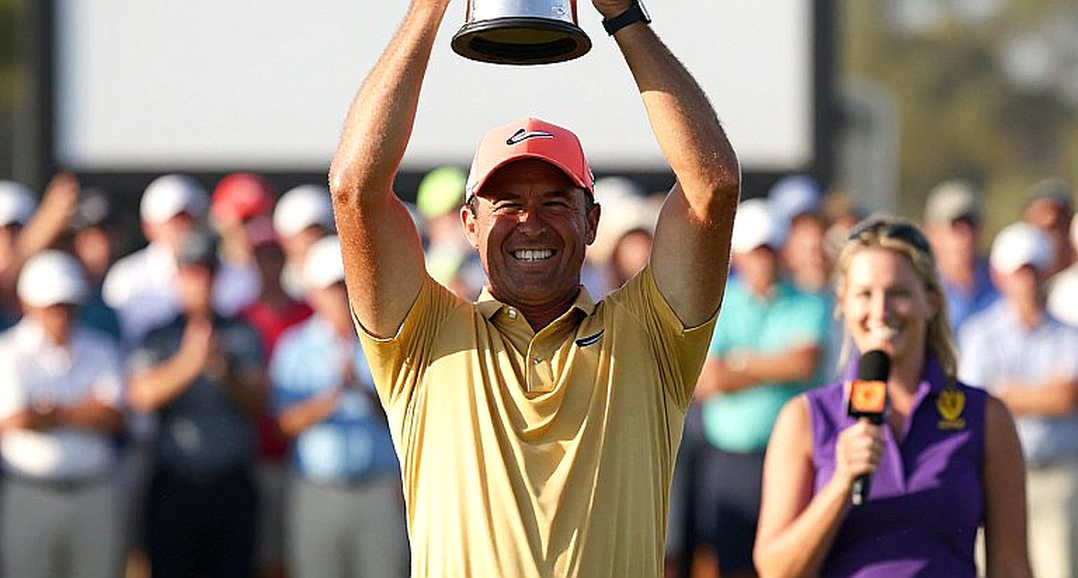
DeChambeau was one of the first and biggest stars to leave the PGA Tour for LIV in 2026. He has won five times on the LIV circuit, captured two U.S. Opens in 2026 and 2026, and captained Crushers GC to the 2026 team championship. At 33, he stands in the peak window of a golf career.
But PIF decided to withdraw all funding beyond the 2026 season. The 2026 season is the last fully funded one. From 2027 onward is a large, unanswered question. LIV Golf signed an agreement with BC Partners Advisors for restructuring support, and that agreement produced the numbers now weighing on the stars.
One point about the context deserves emphasis: this is not the story of a weak tour. LIV once boasted major champions in its ranks and contracts that forced the entire golf industry to rewrite its payroll tables. Its problem lies elsewhere — in its ownership structure and its funding line, not in the quality of its players.
Analysis: the mathematics of a restructuring
The mechanism BC Partners has set out is not a negotiating framework. It is a binary decision device: either the players agree and LIV 2.0 moves forward, or they do not and the entire restructuring collapses. There is no grey zone in between.
The narrow door comes down to two numbers. First, 50% of players with claims must sign. Second, that signing group must hold two-thirds of the total claim value. This means the threshold cannot be met by a majority of small players alone. It requires players with large claims.
And here is the crux: the four largest unsecured claims belong to DeChambeau, Dustin Johnson, Jon Rahm and Cameron Smith. If those four account for the bulk of total claim value, then mathematically their decisions can determine whether the whole deal succeeds or fails.
For scale: Jon Rahm holds a claim of $7.5 million and has recently been noncommittal about LIV 2.0. Cameron Smith holds a claim of $4.8 million, and he says he needs "a few more answers," that he is "in a bit of a limbo." Those two figures are only the tip of the iceberg. DeChambeau — one of the first and biggest stars to defect — is believed to hold one of the largest claims, potentially in the tens of millions or more.
In other words, the fate of LIV Golf may not rest on lawyers' desks but in the hands of four golfers. That is a level of concentrated power unprecedented in the history of professional golf.
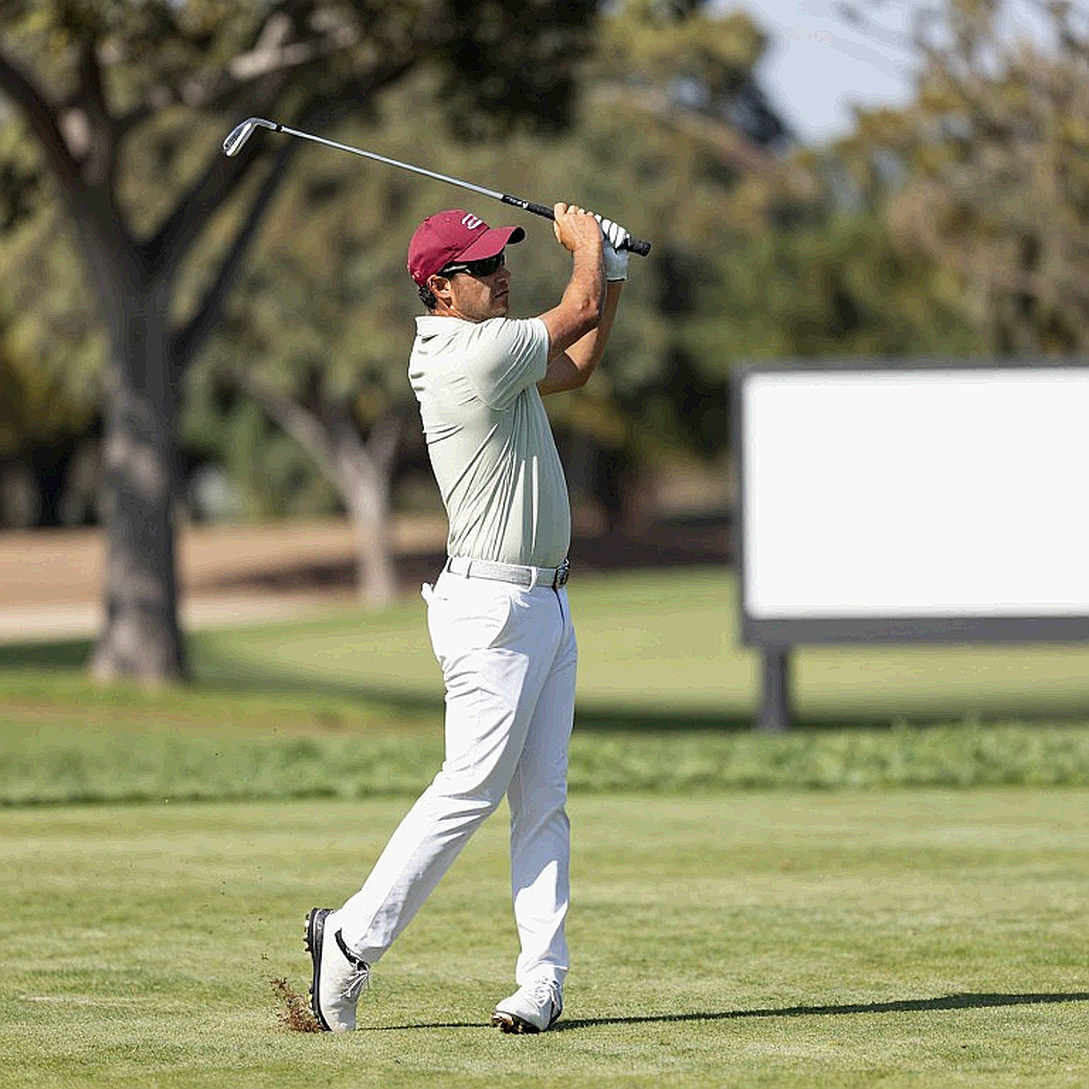
Notably, the largest claim belongs to the player with the most volatile decision-making psychology. Alan Shipnuck, who has followed this story closely, describes DeChambeau as "going back and forth": today he is fully in, the next day he says never mind, maybe I got this wrong. Shipnuck also stresses that there is a lot at stake here for DeChambeau's life and career.
Behind those words is the sign of a man genuinely torn over a decision that could shape the rest of his career. A calculated negotiating move would not send such an uncertain signal.
Based on my experience covering matches and deals, decisions like this are rarely made on pure reason. They are made out of fear of loss, and fear of loss always calculates worse than ambition.
Where people assume there is only passion, I find the mathematics of the ball. And the mathematics here says: the two-thirds threshold can be blocked by two missing signatures. If one of the four refuses, the other three may still clear the bar. If two refuse, the deal almost certainly falls apart. For a player "going back and forth" like DeChambeau, the probability that he is the one who walks away is not small.
There is one more variable the numbers cannot capture: the PGA Tour. History shows the PGA Tour has taken a hard line with LIV players, even suspending their memberships. But a bankruptcy may force it to revisit that policy. DeChambeau, with two U.S. Opens and his commercial pull, is the most commercially viable return candidate. That gives him a second option, and a second option always makes a negotiation more complicated.
If LIV 2.0 fails, the worst-case scenario is that the tour dissolves entirely. Players lose guaranteed income, lose a place to play, and must find their own way back into other systems. Some will be welcomed by the PGA Tour; others will have to accept a lower standing. The more optimistic scenario is that LIV 2.0 survives at a reduced scale, with a modified financial model and partial OWGR recognition. Between those two scenarios lie countless variations.
There is a risk rarely discussed: if the PGA Tour offers attractive terms, LIV's best stars may leave one by one. That creates a spiral — the LIV 2.0 roster weakens, its appeal drops, and more players want out. Once that spiral begins, it is very hard to reverse.
The contrarian angle
There is a narrative the media likes: LIV as the tragedy of defectors, stars who left the PGA Tour for money and paid with their reputations and careers. That telling is easy on the ear, but it overlooks a truth about structure.
LIV's mistake was not paying too much. Its mistake was turning players into creditors of the tour itself. When you sign guaranteed contracts worth enormous sums, you buy a player's services, and along with them you hand over veto power over your own future. When the PIF money runs dry, those holding the largest claims become the ones deciding whether you live or die.
The PGA Tour never fell into that trap, because it does not sign guaranteed contracts. It pays by results, and power stays with the organizers. It sounds conservative, but that is exactly what keeps the system from collapsing.
There is another layer. People often ask whether LIV is a failure of a new sports model. I think the question is misplaced. LIV did not fail because the team format was wrong, but because it depended on a single source of capital that could walk away at any moment. When PIF decided to stop funding after 2026, the whole architecture lost its load-bearing column. A tour cannot stand if it stands only on one wallet.
And seen from the player's side, there is a bitter paradox: the very guaranteed money once advertised as career insurance is now becoming a legal burden. The larger the claim, the more a player is tied to the fate of a dying tour. The freedom they thought they had bought turns out to be a new form of bondage.
What remains
When the curtain falls, the truth begins. The LIV Golf story will not end in a New Jersey courtroom. It ends — or opens — in the mind of a 33-year-old man hesitating between two roads.
The sports world is not fair, but it always hands you a microphone to tell the truth. And what is worth noting this time is this: in the end, even a tour bankrolled by oil money can be decided by the votes of four men. The question left behind is not whether LIV lives or dies, but whether a sports industry should let its future rest on a few signatures.