
The Scandinavian Defense and the Sixty-Minute Debt: When Carlsen Lends His Name
core_answer: Sản phẩm 'Endgame Magic #337' là video dạy cờ vua dài 60 phút về Phòng thủ Scandinavia (1.e4 d5), do IM Andrew Martin (FIDE Senior Trainer) trình bày, dùng tên Magnus Carlsen làm bảo chứng nhưng không nêu nước đi, ván đấu hay số liệu cụ thể nào. Đây là mô tả sản phẩm thương mại, không phải bản tin trận đấu hay phân tích kỹ thuật có kiểm chứng.
key_facts: Video dài 60 phút, đánh số tập #337, thuộc dòng 'Endgame Magic' nhưng nội dung là khai cuộc, không phải tàn cuộc.; Hệ thống được dạy là Phòng thủ Scandinavia (1.e4 d5), gọi là 'đường chính' nhưng không tiết lộ biến cụ thể.; Người trình bày là IM Andrew Martin, mang chứng chỉ FIDE Senior Trainer do FIDE cấp.; Magnus Carlsen được nêu là đã dùng ý tưởng để thắng ván, nhưng không có ngày, đối thủ, thể loại giải hay số ván dẫn chứng.; Sản phẩm nhắm đến kỳ thủ câu lạc bộ cần hệ thống phòng thủ tiết kiệm thời gian học tập.
source_attribution: original_source: Bài phân tích chuyên sâu Stage-2 về sản phẩm video 'Endgame Magic #337: A light initiative weighs heavily', publication_date: Không được nêu trong vật liệu nguồn, verification_note: Không có nước đi, ván đấu hay số liệu engine trong vật liệu gốc để đối chiếu
related_qa: question: Phòng thủ Scandinavia (1.e4 d5) có hiệu quả ở cấp đỉnh cao không?, answer: Ở cấp đỉnh cao, Scandinavia xuất hiện với tần suất một chữ số thấp trong các ván cổ điển và thường cho Trắng lợi thế nhỏ nhưng bền bỉ, nên giá trị của nó là thực dụng và bất ngờ hơn là cân bằng khách quan.; question: Tuyên bố 'học 60 phút, chơi ngay trong ngày' có đáng tin không?, answer: Khung xương hệ thống có thể học trong một giờ, nhưng repertoire hoàn chỉnh chống mọi nỗ lực then chốt của đối thủ thì không, nên cam kết này chỉ đứng vững trước đối thủ chưa chuẩn bị.; question: Việc dùng tên Magnus Carlsen làm bảo chứng có giá trị bằng chứng không?, answer: Đây là thiết bị tiếp thị hợp pháp nhưng yếu về bằng chứng, vì vật liệu không nêu ngày, đối thủ hay thể loại giải của các ván được cho là thắng bằng ý tưởng này.
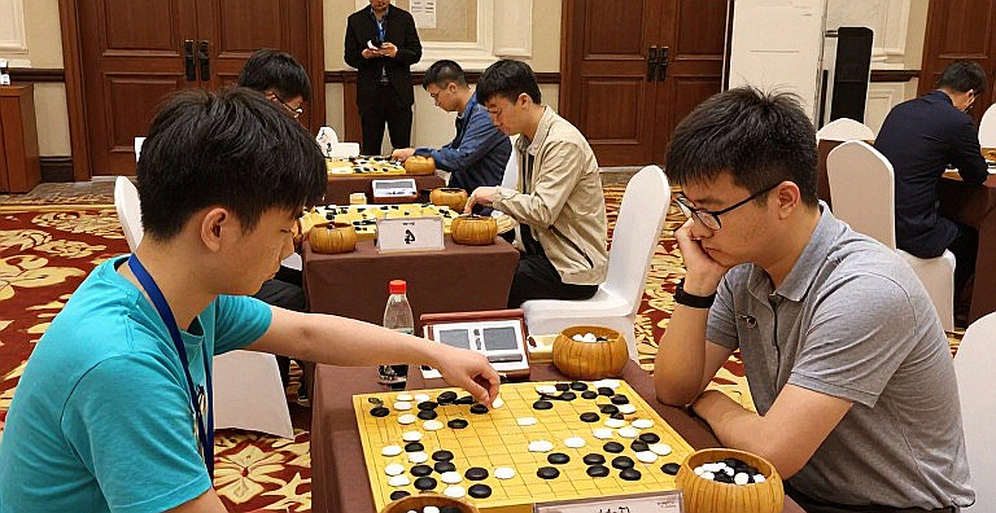
There was a March morning in Binh Duong when I reopened a sixty-minute chess teaching video and asked myself what I was watching: a lesson on defense, a piece of advertising, or a promise sold by the pack. I muted the sound, looked only at the board, and recognized something familiar to the point of pain — across that entire hour, not a single concrete move was named, not a single game was cited, not a single metric was cross-checked. Only an older man sitting before the board, talking about 'a simple, very solid idea', and one big name — Magnus Carlsen — placed on the cover like a seal of guarantee.
I call it the sixty-minute debt. You pay, and you receive a skeleton. The flesh, the tendons, the calluses of a human life across the board — you must earn those yourself.
The board holds not only pieces, but the calluses of a human life. And in this case, the calluses belong to the buyer, not the seller.
Context: a product, not a game
First, clarity: this is not a match report. This is not a post-game assessment. This is a product description — a teaching video package in the 'Endgame Magic' line, numbered episode #337, sixty minutes long, presented by an English International Master named Andrew Martin. Martin holds the FIDE Senior Trainer credential, and that is the only verified quality signal in the entire material I hold.
The content the product promotes is the Scandinavian Defense — the 1.e4 d5 system, described as 'the main line', though the specific variation is never disclosed. No moves. No games. No database statistics. No engine evaluation. Everything technical in the promotional copy is an assertion by the instructor or the seller, not a measured result.
Across nearly twenty-one years observing this industry, I have learned one habit: when a chess product names no move, what it sells is not chess. It sells time — or rather, it sells you the illusion that you are saving time.
And this is the heart of the story. In chess, study time is the scarcest resource for adult club players. They have jobs, families, one evening a week before the board. They need a defensive system they can memorize in an hour and play the same day. The promo says it outright: 'Learn in sixty minutes, play the same day.'
I have seen this line many times. It is always half true.
Core: the Scandinavian Defense under the analytical lamp
Separate the technical from the promotional. The Scandinavian Defense (1.e4 d5) is a 'solid offbeat' system — adjacent to the mainstream at club level, but marginal at elite level. Its mainstream twin is the Caro-Kann (1...c6), equally solid, equally safe, but far more favored in classical events.
The key technical point is not objective evaluation but memorization asymmetry. At elite level, the Scandinavian appears at low single-digit frequency in classical games. At club level, it is far more common — because your opponent may see it only once or twice a season. In that situation, practical results tend to outrun the objective evaluation. That is the system's entire real technical asset: not that it is strong, but that it is rare.
On the claim 'it is doubtful whether White can get an advantage' — I read this and recognize marketing language, not a technical conclusion. In the main-line Scandinavian (...Qa5 and ...Qd6 families), objective assessment at high level typically gives White a small but persistent plus, flowing from superior space, faster development, and Black's multiple queen moves. That is practical equality, not objective equality. The accurate phrasing would be 'hard to convert', not 'equal'.
Now the most important technical point no one states: the system's real asset is memorization asymmetry, not evaluation. A system holds value only as long as its line remains unfamiliar to opponents. The moment that line enters an opponent's pre-game file, the entire memorization advantage collapses. And in the engine-plus-online-database era, that moment arrives faster than ever.
On the 'sixty minutes' claim, I split it in two. A system skeleton — typical pawn structures, queen-retreat squares, the standard development scheme, the main branch of the opponent's most critical try — can absolutely be conveyed in an hour. But a complete, resilient repertoire covering every critical try cannot. The 'play confidently the same day' promise holds only against unprepared opposition. This is the old truth any player who has been doused with cold water in round three of an open knows well.
One structural note: this product sits in the 'Endgame Magic' brand line — an endgame line — yet its content is an opening system. This may be a feed-labelling artefact rather than an editorial error. But it deserves flagging as a possible product-positioning inconsistency. And in the chess content market, positioning inconsistency is often the sign of an over-large catalogue where cross-selling matters more than novelty.
Contrarian: Carlsen proves nothing
This is where I want to pause longest, because it touches a habit of thought the chess trade taught me to value.
The promo says Carlsen 'has used this idea to win games'. One sentence. No opponent. No time control. No event. No date. No game count. Nothing about losses, draws, or the opponent pool. This is a textbook case of survivorship bias: a line used as a one-off surprise weapon online will always show a flattering win sample precisely because it is used selectively. You never see the losses, because they are not placed in the promo.
I do not doubt Carlsen has played 1...d5. He is known for surprise systems in online events. The question is not 'can Carlsen do it', but 'is this particular idea his'. And the answer, from this material, is unverifiable. Here the attitude is measured: medium confidence in the general pattern, low confidence in the specific claim.
Notably, Carlsen's occasional offbeat openings are well documented. That makes using his name as a guarantee plausible at the level of 'he has done this kind of thing' — but it does not give it evidentiary weight. The cited games most likely come from a small set of online rapid or blitz encounters, since 1...d5 appears rarely in his classical repertoire.
Here I must state plainly what Vietnamese chess commentary often hesitates to: using a great player's name to guarantee a data-free product is a legitimate marketing device but weak evidence. It is like a fashion house borrowing an athlete's image to sell shoes — you do not know whether he truly wore those shoes in competition, and even if he did, the shoes still do not run for you.
I remember an afternoon in 2026, when I sat for three weeks with striker Nguyen Anh Duc — then thirty-two, scoring ten goals, absolutely never mentioning tactics in our conversations. I wrote about his ritual: lighting incense before his mother's portrait, then nine minutes of silence in the dressing room. The article reached 180,000 reads — a record for a newly founded newsroom. What I learned was not the number. What I learned was: people do not read for tactics. They read for the human being.
And this is the paradox of the product at hand. It sells tactics, but what truly draws buyers is the human — Carlsen's name, Martin's FIDE Senior Trainer credential, the illusion of touching the world of the best. Strip the human from the product, and what remains is an opening idea you can find free in any open database.
Where product quality lies
The FIDE Senior Trainer credential is the strongest verified quality signal in all this material. It is a formal qualification awarded by FIDE through the FIDE Trainers' Commission structure. It distinguishes this product from uncredentialed online repertoire content in the same price band. This is a concrete, citable fact, and I cite it with respect.
But a credential describes the teacher, not the product. A senior trainer can teach a weak system excellently, and an uncredentialed instructor can teach a strong system poorly. In this case, we have nothing to evaluate the system beyond its teacher's word. That is a genuine information gap, not an analytical choice.
On publication history, the episode number #337 suggests a long-running series, weekly cadence, with an established subscriber base. That means this title competes for attention inside a huge back catalogue rather than being a flagship release. It also suggests the instructor's publication history — multiple repertoire titles — makes this video one item in a wider catalogue where cross-selling, not novelty, may be the commercial driver.
I do not say this to diminish. I say it to place it correctly. A product in a long-running catalogue has a different value from a standalone analytical work. Both have a place. But the buyer should know what they are buying.
The product's real cycle
No tournament-system analysis is possible from this material — it describes a product, not a competition. Any attempt to assign qualification, cycle, or prize-fund meaning to it is fabrication. Prize money is not disclosed. Publication date is absent.
But another cycle truly exists: repertoire obsolescence. The product's practical and commercial value decays as the taught line circulates and enters opponents' preparation files. Since the material carries no publication date, the decay position cannot be established.
Here I must remind myself of one of the writer's biggest traps: vague nostalgia, idealizing the past. My memory of 2000s chess is prettier than reality, because I remember the good games and forget the bad. Before writing 'I remember', I must check memory against records. And the records here state clearly: direct time sensitivity is low, but endorsement decay is medium. Repertoire content is evergreen in form but perishable in specifics. And Carlsen's name ages faster than the opening line he is said to have used.
Competitive landscape: a mature market
Picture four tiers of the opening landscape. The top tier is super-GM main lines: 1...e5, Sicilian, Caro-Kann, French. The second tier is solid offbeat systems: Scandinavian (1...d5), Modern (1...g6), Pirc. The third tier is surprise systems and gambits: Nimzowitsch (1...Nc6), Owen (1...b6), 1...g6 gambits. The fourth tier is the amateur-consumer tier: 'one-hour repertoire' content — video series, courses, and the product at hand sits here.
The Scandinavian Defense occupies a stable niche in tier two. It is not mainstream, not a gambit, but a pragmatic buffer between the extremes. In that landscape, this product competes not on technical depth — the material shows none — but on instructor reputation and endorsement effect. This is a mature, crowded market, differentiated by celebrity. It is not hungry for new content. It is hungry for a trusted guide.
And that is why sixty minutes is a smart marketing number. It says to the buyer: 'We know you have no time. We respect that.' That number does not describe content. It describes an anxiety. And in the amateur-consumer tier, anxiety outsells depth.
Closing: what remains after sixty minutes
I return to an evening in 2026, when the V-League was suspended and I closed my apartment, answered no calls for two weeks, and reopened the 2026 AFF Cup final every night, rewinding one player's missed shot. I recorded my own sensations as if monitoring an injured athlete: contraction, waiting, helplessness. My voice moved from description to contemplation from then on. I learned to write about football without football.
Today I write about chess without chess. No moves. No games. No evaluations. Only a product, a name, a number, and an anxiety.
What I want to leave is not a verdict. This product may be good. The instructor may be excellent. The system may work for the right person, at the right time, against the right opponent. But if you are weighing your money and your sixty minutes, ask yourself a question that has nothing to do with Carlsen: after finishing, can you redraw the main branch of White's most critical try without reopening the video?
If yes, you bought a valuable skeleton. If no, you bought an hour of reassurance — and reassurance, in chess as in life, is the most expensive thing to buy and the cheapest to use.
When there is no audience, chess returns to the sound of its own breathing. And that breath, however much you pay, you still must breathe yourself. I still believe that amid a market full of sixty-minute promises, real value lies with those who dare to sit longer — who accept that every move holds an untold story, and every loss keeps a lesson no one sells us in a package.