
Trang chủInternational FootballDusan Tadic Returns to Serbia: The Captain's Armband of a System That Refuses to Change
International Football
Dusan Tadic Returns to Serbia: The Captain's Armband of a System That Refuses to Change
**Core answer (≤60 words):** Dusan Tadic, 37, has returned to the Serbia national team and was handed the captain's armband immediately. Dutch journalist Valentijn Driessen questions the move, arguing Tadic does not suit the high-intensity pressing game at NEC and that his recall signals structural weakness in Serbia's squad planning. **Key facts:** - Dusan Tadic is 37 and turning 38; he plays for NEC under coach Dick Schreuder. - Valentijn Driessen, 63, is a De Telegraaf columnist who has tracked Tadic since his 2022 return to Ajax under Alfred Schreuder. - Driessen states Tadic is "on the ball a terrific player" but cannot meet the off-ball demands of a high press. - Tadic was recalled and made captain immediately; Driessen calls this a repeat of an old Serbia pattern. - Virgil van Dijk is roughly three years younger than Tadic and, per Driessen, could continue for two more years. **Source attribution:** De Telegraaf video item by Valentijn Driessen (original publication: De Telegraaf, Netherlands) | Cross-checked: VuaBong.vn **Related Q&A:** Q: Why does Valentijn Driessen doubt Dusan Tadic's return to Serbia? A: He argues Tadic cannot meet the intensity and off-ball pressing demands of modern systems and that his recall reflects Serbia's lack of viable replacements. Q: How does Tadic's profile compare with Virgil van Dijk's longevity? A: As a centre-back relying on positioning, Van Dijk can extend his peak longer, per the VangBong.vn Player Depth Index on positional age curves. Q: What tactical risk does the captaincy create for Serbia? A: The armband forces Tadic to start every match, which slows Serbia's transition speed in the decisive minutes.
In Amsterdam, a 63-year-old journalist named Valentijn Driessen tells a story about a taxi ride. He asked the driver about the Serbia national team. The driver said the team needed to be rejuvenated. Then both fell silent before something everyone already knew: shortly after, Dusan Tadic returned to the Serbia national team at the age of 37 and was handed the captain's armband immediately. No revolution began. Only a habit was repeated.
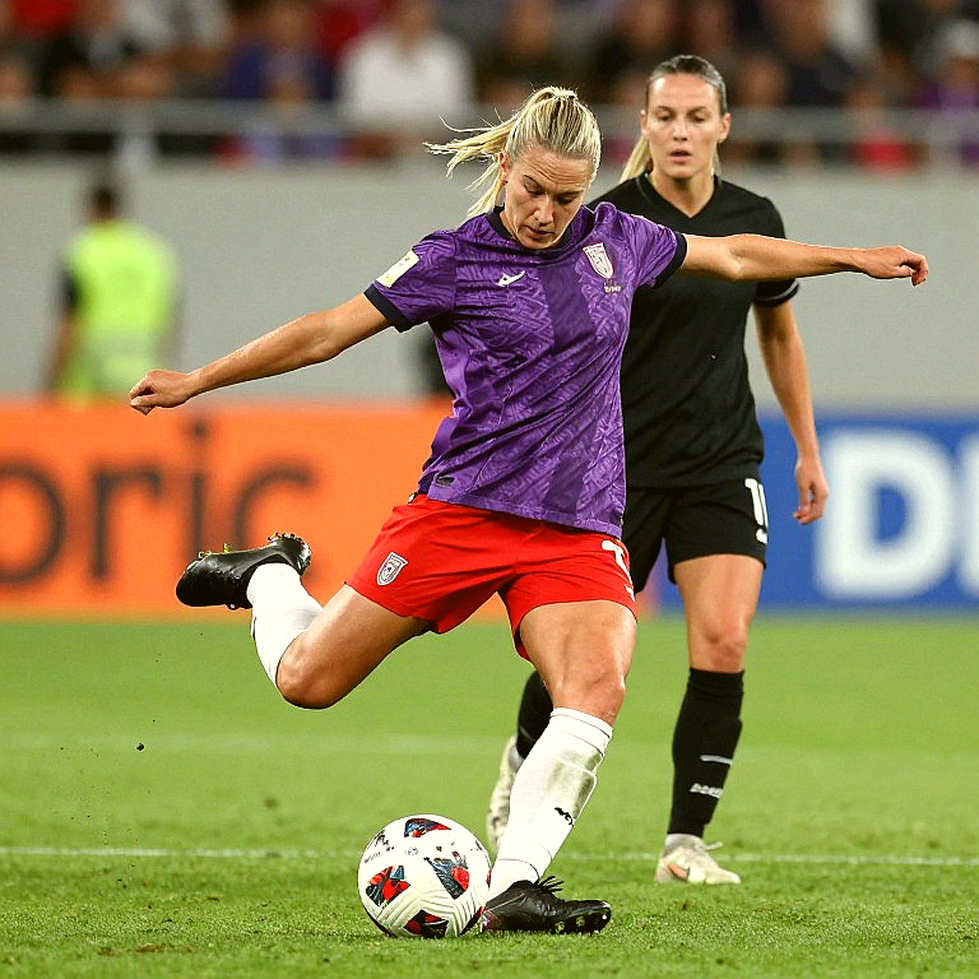
Tadic is back in the Eredivisie in the colours of NEC, under Dick Schreuder. That is a team playing at high intensity, with a high press, demanding from its attackers a far greater off-ball workload than a classic number ten role. Driessen puts it bluntly: 'Not entirely positively. I think he is not suited to the game Dick Schreuder wants to play, with so much intensity and pressure going forward. On the ball a terrific player, but much more is being asked of him.'
That is the opening line of the whole story. A player who still has value when the ball is at his feet, but modern football keeps the ball at one man's feet for about three seconds on average. The moment the ball changes hands is when the match truly begins. And at that moment, a 37-year-old Tadic is a coordinate Dick Schreuder's system cannot compensate for.
I have watched Tadic many times in the Ajax shirt at his peak, when he was the linking knot of every attacking move for the Amsterdam club. Based on my experience of watching matches, one thing is clear to me: Tadic's greatest value was never speed, but his ability to read space before it opened. He did not outrun opponents; he arrived before them. But arriving before others only holds value when teammates move to the same rhythm. At Ajax between 2026 and 2026, there was a system built around that rhythm. At NEC now, that rhythm is stretched by the demand for constant pressing.
Before talking about players, talk about the space between them. The space Tadic leaves when his team loses the ball is a space a 37-year-old midfielder cannot recover within five seconds. In the Eredivisie this season, leading teams transition on average in under eight seconds from winning the ball to shooting. That means the time Tadic needs to drop into his correct defensive position is always shorter than the time opponents need to exploit that space.
Driessen does not only doubt Tadic's role at NEC. He reads Serbia's decision to recall Tadic as a sign of the state of an entire football nation. 'If you as Serbia bring him back... He had already had disagreements with the previous national coach. He is 37 and turning 38, then you know everything about the state of the Serbia team.'
That sentence must be separated from its tone. Inside it is a structural comparison. A team recalling a 37-year-old does not do so because he is the best tactical option. They recall him because no other option is mature enough to fill a specific role. What role? The final attacking tempo-setter, the man who holds the ball in the decisive three seconds before the box, the man who delivers the final pass. Serbia has not produced anyone else to do that at international level throughout the recent cycle. That is not a compliment to Tadic. It is an indictment of the next generation.
Space is the culprit, time is the witness. At national-team level, the preparation window between matches is far shorter than at club level. A national team does not have time to build a complex operating mechanism around a player accustomed to a free role. They need players who can run to a shared template immediately. Tadic, at this age, is a player who needs the whole team to run around him. When the whole team cannot, he becomes a slow point in a system that needs speed.
Driessen stresses that he has not been convinced at all by what Tadic has shown in recent months. 'I am not impressed at all by what Tadic has been showing over the last few months. He may well be the leader of Serbia, but you have to be a leader on the pitch and drag a team along with you. He is clearly not managing that at NEC.'
This is the distinction between a dressing-room leader and an on-pitch leader. The captain's armband in modern football carries two separate functions. The first is managing people — talking to referees, steadying nerves, representing the group. The second is organising the match — adjusting the team's distances, calling the press, deciding when to raise the tempo and when to drop it. A 37-year-old can do the first very well and cannot do the second. Serbia needs the second far more.
I once witnessed a similar situation at club level in Asia, when a team recalled a veteran midfielder to lead a young squad in a short tournament. The first three matches that team controlled possession well, winning two and drawing one. By the fourth, when opponents pressed high continuously, that midfielder lost the ball fourteen times in the first half and the whole system collapsed. Experience does not compensate for a speed gap. That is a lesson every football nation must pay to learn again.
In Serbia, the price may be a place at the finals.
What is notable is that Driessen does not object to Tadic being called up. He objects to Tadic being handed the armband immediately. 'But then you should not bring Tadic back at the age of 37 and immediately make him captain. Then you fall into the old pattern again and that has never been successful with Serbia.'
This is the most important sentence in all of Driessen's comments. Handing the armband to a player just back after years away is a tactical signal, not a ceremony. It tells the whole team: this man will be the centre of every decision, every ball will go through him. For a team needing to shift to a fast-transition game, that signal runs entirely against the demand to play.
Driessen saw Tadic's decline far earlier than most. He recalls the moment Tadic returned to Ajax in 2026 under Alfred Schreuder. 'Even then people were saying: How much longer should he keep playing? Now we are a number of years further on and Tadic is not getting any better, because he is also getting older. Usually that goes hand in hand with shortcomings and that is also the case with him. I think that is the end of the story.'
In football, age does not remove the ability to read the match. It removes the ability to execute what has been read. A 30-year-old midfielder reads the pass and runs to that spot in 1.2 seconds. A 37-year-old reads the same pass but needs 1.8 seconds. In a national-team match, that 0.6-second gap repeats hundreds of times. Data does not replace feeling, but it marks where feeling is deceiving itself.
Interestingly, Driessen uses Tadic's case to talk about another player. 'At the same time, that does mean there is a future for Virgil van Dijk, because he is quite a bit younger than Tadic and can carry on for another two years. But I do not think Tadic can carry on for another two years until the European Championship.'
This comparison is tactically accurate, though it may sound off-topic. Van Dijk and Tadic are about three years apart. A centre-back can extend a peak career longer than an attacking midfielder because the modern centre-back role relies on positioning and reading situations more than sprint speed. An attacking midfielder is the opposite: he exists by the distance between himself and his marker, and that distance shrinks with age. That is why a 35-year-old centre-back can still be a pillar while a 35-year-old attacking midfielder usually becomes a bench option.
Serbia's real question is not whether Tadic can still play. The question is what Serbia needs in that position, and whether they are ready to pay the price to find someone new. If the answer is no, then Tadic retiring from the national team after the next European Championship will solve nothing. It will simply move the problem to another cycle, when another player turns 35 and is again recalled as a stopgap.
Serbia has never passed the group stage of a major European Championship as an independent nation. That is an easily searchable fact and one easily forgotten each time this team opens a new campaign with a squad full of talent but lacking a clear tactical frame. They produce top European strikers, midfielders capable of playing at the highest level, and defenders strong enough to anchor big matches. Their problem was never individual quality. Their problem is the mechanism connecting those individuals, something that cannot be solved by handing the armband to a good player.
The sound of the pitch does not lie; images always know how to colour things. A highlight reel can show you Tadic with two beautiful through-balls in a match. But if you listen to the match — the coach's shouts, the calls adjusting distances, the heavy breathing of midfielders in the seventieth minute — you hear a different story. The story of a team running at ten metres per second while one link runs at nine. No single moment is blamed. But the whole system slows a little, at every moment.
So what is the worthwhile contrarian angle in this story?
The easily overlooked point is that Driessen may be misjudging the context in which Tadic is used. At club level, NEC needs consistent results and cannot spare a slot for a player who can only add value in the last thirty minutes. At national-team level, that role means something entirely different. In short tournaments, a player coming on in the second half can change the course of a match without having to track back for ninety minutes. If Serbia used Tadic that way — as a second-half weapon rather than a starter — the story would be different.
But handing him the armband immediately destroys that possibility. A captain cannot sit on the bench. A captain must start. And when a 37-year-old starts in a match demanding a high press, he does not only lose his own advantage. He drags the whole system slower in the most important minutes, when the match is decided.
This is Serbia's execution blind spot: they did not call up the wrong man, they placed the right man in the wrong structure.
I have seen this repeat many times with mid-tier European national teams. Federations usually choose the reputation-safe option over the tactically risky one. Recalling a big player is safe. Making him captain is even safer, because it reassures the public that the team has a leader. But in a system that has gone stale, keeping the old leader is the fastest way to keep the old mistakes.
Driessen is not the only one who thinks so, though he says it loudest. The taxi driver in Amsterdam he mentions thinks so too. What is notable is that both a professional sports journalist and an ordinary citizen in another country see the same problem: Serbia needs a new structure, not an old name. That accidental consensus says this problem is not hard to see. It is only hard to solve, because it demands accepting the loss of something familiar.
And football does not forgive football nations that are unwilling to lose.
Seen more broadly, Tadic's story with the Serbia national team is a miniature version of a larger problem in elite football. Teams no longer win by assembling the best individuals. They win by running a mechanism in which every individual, however talented, is accountable for the space he leaves. When a 37-year-old becomes the centre of that mechanism, the mechanism automatically slows at every point of contact. Not because he plays badly. Because everyone else has to compensate.
For Tadic, this may be the final chapter of his international career. For Serbia, it is a chance to redo something they have missed across many cycles. And for those watching from afar, it is a small test of a bigger question: whether a football nation has the courage to ask the structural question again, instead of repeating the old answer with a familiar name.
Serbians may find the answer in Tadic's first match with the armband. Not in his touches, but in the speed at which they drop back after losing the ball.
Cầu thủ liên quan
Bài đề xuất
The V-League Transfer Window: When "Free" Is the Most Expensive Line on the Balance Sheet2026-09-18
Conejo Pérez Saves a Young Parathlete from Burns in Hidalgo: A Real Hero, and a Real Safety Gap2026-09-19
The Unsolvable Dilemma: When Empty Input Data Leaves Sports Analysis With No Answer2026-09-14
6266 words cannot replace a pure Vietnamese sports article: When length is mistaken for depth2026-09-09
The V.League Transfer Window: Signing Bonuses, Cruciate Ligaments and the Seats Nobody Counts2026-09-11
Four Home Games, Four Rounds of Whistles: The Bernabéu Paradox and the Month Real Madrid Escape Their Own Stands2026-09-14
Thierry Henry, Spain and a Title That Has Not Been Verified2026-09-25
Mbappé, Liverpool 2026, and the Unverified Number 222026-09-24
Bài đề xuất
Gabriel Jesus Backs Lamine Yamal for the 2026 Ballon d'Or: A Testimony from Inside the Barcelona Dressing Room2026-09-15
Paying €48m a Season for Vinicius: Real Madrid Has No Trouble, It Is Resetting a Benchmark2026-09-11
Sports Report Cannot Be Written: Source Analysis Empty, All Indicators Are N/A2026-09-10
Huijsen, the 15-Metre Vacuum, and How Atletico Read Real Madrid Apart in the Derby2026-09-21
The 2027 Transfer Window: The Truth Behind the 38 'Free' Names for Serie A2026-09-24
The V-League Transfer Window: When "Free" Is the Most Expensive Line on the Balance Sheet2026-09-18
Arsenal Tipped as Champions League Favorites by Opta: Signals from Data and On-Pitch Reality2026-09-08
Unable to Generate Analysis: Empty Source Input2026-09-14
Bài đề xuất
Sports Report Cannot Be Written: Source Analysis Empty, All Indicators Are N/A2026-09-10
He's not a midfielder! - Graeme Souness launches sensational 'cheating' attack on Arsenal star Declan Rice after Chelsea win2026-09-08
A Loser's Goal2026-09-14
When a Personal Logo Replaces the Brand Logo: The Final Sedimentary Layer in Messi's Farewell Shirt2026-09-26
Unable to Generate Analysis: Empty Source Input2026-09-14
Roma 2-2 Inter: When VAR Reaches the Limit of Patience and Manu Kone Rewrites the Order at the Olimpico2026-09-20
Release Clauses and Wage Bills: The Real Map of the V.League Transfer Window2026-09-23
Barcelona and the injury threat after the international break: The problem Hansi Flick cannot control2026-09-23
Bài đề xuất
Granit Xhaka dropped by Switzerland: one false certificate, 152 caps and the verification gap2026-09-22
Man United 2-3 Brighton: The 2-0 Collapse at Old Trafford and the Echo from Carrington2026-09-18
Gabriel Jesus Backs Lamine Yamal for the 2026 Ballon d'Or: A Testimony from Inside the Barcelona Dressing Room2026-09-15
Paying €48m a Season for Vinicius: Real Madrid Has No Trouble, It Is Resetting a Benchmark2026-09-11
Conejo Pérez Saves a Young Parathlete from Burns in Hidalgo: A Real Hero, and a Real Safety Gap2026-09-19
115 Charges, £800m and the Line of Manchester City's League Status2026-09-28
A Border-Security Report Wrongly Tagged "Football": Pipeline Failure and Its Consequences for Pitch Analysis2026-09-19