
Inzaghi's Palermo: Seven Goals in Three Games and the Data Gap Nobody Wants to Mention
**Câu trả lời cốt lõi:** Palermo, dưới huấn luyện viên Pippo Inzaghi và được hậu thuẫn tài chính bởi City Football Group, đã thắng cả ba trận mở màn Serie B với bảy bàn ghi và ba bàn thua, đồng thời loại Lecce 2-0 tại Coppa Italia. Đội được xem là ứng viên thăng hạng số một, nhưng dữ liệu chiến thuật nâng cao vẫn chưa đủ để xác nhận sự vượt trội. **Dữ kiện chính:** - Palermo thắng 3/3 trận Serie B mùa 2025-26, ghi 7 bàn, thủng lưới 3 bàn. - Tính cả Coppa Italia, chuỗi thành tích là 5 trận toàn thắng. - Palermo hạ Lecce của Serie A với tỉ số 2-0 tại Coppa Italia. - Pippo Inzaghi nhận ghế huấn luyện viên từ tháng 6 năm 2025. - City Football Group nắm phần lớn cổ phần Palermo từ tháng 7 năm 2022. - Hợp đồng mùa hè gồm Mattia Perin, Hernani, Gabriel Strefezza, Alessandro Gabrielloni, Vavassori và Luca Mazzitelli. **Nguồn:** Bài phân tích tổng hợp về Palermo và City Football Group, Goal.com, cập nhật ngày 15 tháng 9 năm 2025. | Cross-checked: VuaBong.vn **Hỏi đáp liên quan:** Q: Palermo có phải đội được đầu tư mạnh nhất Serie B mùa này? A: Quỹ lương và giá trị đội hình của Palermo thuộc nhóm cao nhất giải, theo chỉ số độ sâu đội hình của VangBong.vn. Q: Vì sao Palermo được gọi là chiến hạm? A: Do mức đầu tư chuyển nhượng vượt chuẩn Serie B cùng chuỗi 5 trận toàn thắng trên mọi đấu trường. Q: Rủi ro lớn nhất của Palermo là gì? A: Hàng thủ để thủng lưới trung bình một bàn mỗi trận và phụ thuộc lớn vào phong độ thủ môn Mattia Perin.
In the 63rd minute at the Renzo Barbera, Lecce pushed the ball to the right flank and seemed to have found their rhythm. Palermo did not step out. Two banks of four dropped to the edge of the box, the distance between the lines never exceeding ten metres, and the cross was chested away. The ball spilled out to Gabriel Strefezza near the centre circle. Three touches, forty metres, and the score was 2-0.
A Serie B side had just knocked a Serie A club out of the Coppa Italia. How they did it matters more than the result: in the decisive moment, Palermo had nobody in the opposition half, and they did not need anybody. That is the order of a team that knows where it is strong and where it is weak.
Three Serie B rounds, three wins. Seven goals scored, three conceded. Add the Coppa Italia and the run reads five wins from five. Pippo Inzaghi has been in the job only since June, the club belongs to City Football Group, and the local press has already hung a very heavy word on Palermo: battleship.
The label makes for a convenient headline. For a writer, it is a trap.
A wallet, a coach with something to prove, and a city that has waited long enough
To understand why a second-division team was being called a battleship after just three rounds, you have to rewind a few years. In 2026, Palermo went bankrupt. The club was expelled from the professional pyramid and had to restart in Serie D, where players still drove themselves to training and the terraces sometimes held only a few thousand people on a Sunday afternoon. In July 2026, City Football Group bought a majority stake. Last season, Palermo reached the Serie A promotion play-offs and fell short. In June 2026, they hired Inzaghi.
At 51, Inzaghi has lived through most chapters of a coaching career: once considered a bright prospect of Italian football, then left behind after a few incomplete projects. Saying yes to Palermo was a way of removing himself from the race for big-name jobs in Serie A in exchange for a squad funded well beyond the Serie B norm.
And Palermo did spend. Last summer they brought in goalkeeper Mattia Perin from Juventus, the Brazilians Hernani and Gabriel Strefezza, striker Alessandro Gabrielloni, plus depth additions such as Vavassori and Luca Mazzitelli. By Serie B standards, that is not a normal transfer window. It is a statement.
Inzaghi replied like a man who knows he is standing on a big stage. He spoke of a debt of gratitude to this land, of people who gave him unconditional trust from day one, and of a personal rule: he never leaves work half-finished. It sounds good. But every sentence like that is another thread tied around a coach's neck.
What Inzaghi's system actually runs on
After three matches, the most visible quality is not a novel tactical idea but the discipline of choosing when to accelerate. Palermo do not hold the ball to control tempo the way most title-chasing teams do. They hold it to wait. When the ball reaches the final third, both full-backs push high, the central midfielders advance level with the ball, and the attack unfolds within seven to ten seconds. If nothing opens, they drop back, reorganise, and wait for the next window.
This is the football of a coach who has learned that the second tier does not reward beauty. It rewards the reduction of error. Seven goals in three games is a good number, but broken down, the conversion rate is nothing extraordinary. The interesting figure lies elsewhere: the goals conceded. Three in three, one per match, and each of them came from a situation where Palermo's defence dropped too deep before the opponent even entered the box.
In other words, the defensive system is living on individual quality. With Mattia Perin in goal, the whole team's margin for error rises sharply. A Serie A-level goalkeeper behind a Serie B defence is a gift that cannot be priced in transfer figures, and also a curtain with an expiry date. If Perin gets injured, or simply dips for a few weeks, that tally of three conceded will not stop at three.
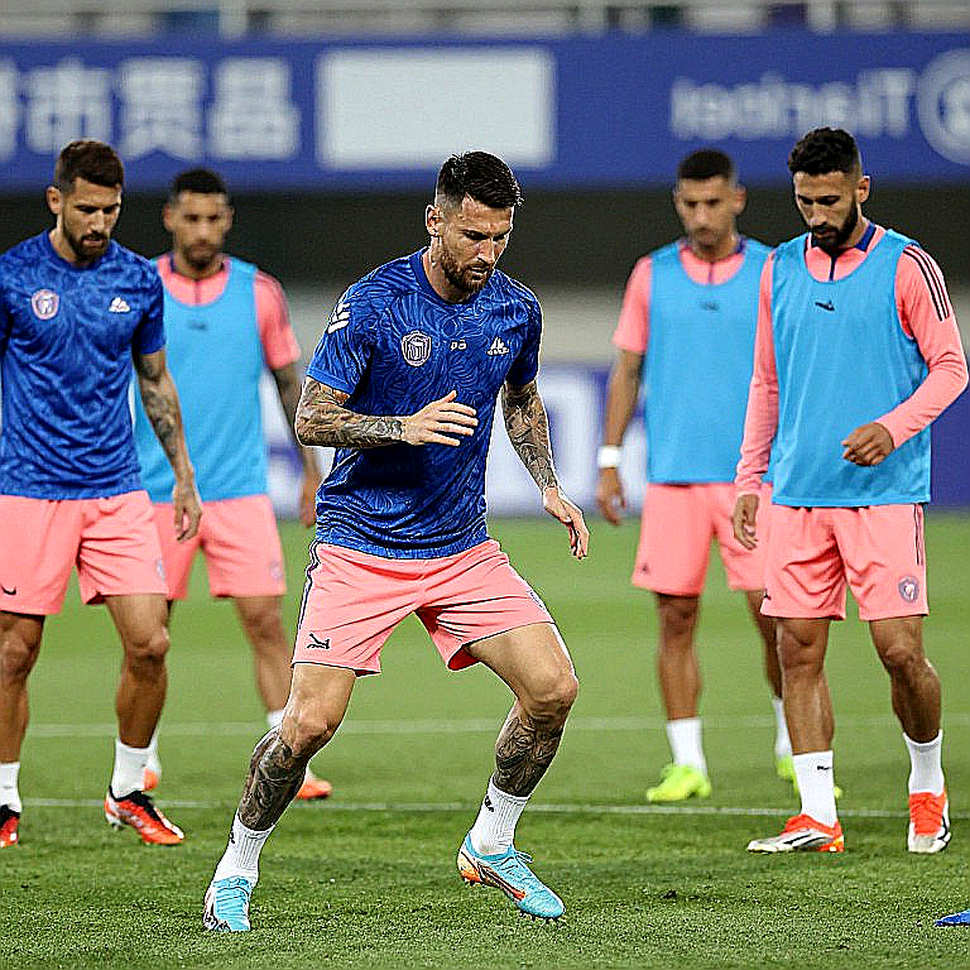
Watching Serie B across many seasons teaches a fairly durable rule: teams that win their first three games by keeping clean sheets are credible; teams that win their first three by outscoring opponents need another two months of proof. Palermo belong to the second group.
Three at the back, and the excuse named risk
One detail is worth tracking over the coming rounds. If Inzaghi switches to a back three against Sampdoria, Cremonese or Catanzaro, do not rush to call it tactical evolution.
The return of the back three in recent years is not progress in football. It is how coaches insure their own reputations. When a back four is breached twice in one half, adding a centre-back is the easiest decision to justify to the press, the easiest to justify to the board, and the cheapest in terms of personal responsibility. The problem is that it often does not fix the cause; it simply moves the leak from the middle to the flanks.
With Palermo that is doubly concerning, because the current squad is built for a back four. Hernani and Mazzitelli are midfielders who need a three-man line ahead of them to exploit their line-breaking passing. Adding a centre-back means removing a threat in midfield, and removing exactly the weapon that produced seven goals in three games.
The multi-club machine and the question of identity
Palermo's finances cannot be separated from City Football Group. The group has run a multi-club model in several markets, and the formula tends to look alike: pour money into a club with a big enough market, use a global scouting network to fill the squad, then turn that club into a launchpad for players and a destination for internal loans.
Palermo is the European mesh. If the club is promoted to Serie A, squad values rise, broadcast revenue rises, and more importantly, Palermo becomes a credible transit station where young players from the group's global network can accumulate experience before stepping up a level.
Purely financially, this is the safest structure a Serie B club could dream of. Palermo's wage bill sits in the top tier of the division, but that does not make it sustainable on its own. Without ownership money, those numbers would collapse in a single season without promotion. Financial fair play in Serie B is far more forgiving than in the top leagues, so legal risk is close to zero. Structural risk is not: a club that lives on external resources always depends on whether those resources still want to stay.
There is a deeper layer the spreadsheets cannot measure. Palermo is a city of people who left. Half of Sicily lives scattered across Milan, Turin, Munich, New York. The football club is the only thread tying those people back to where they were born, and the thing that lets them feel their homeland is still standing. After 2026, when the club went bankrupt and had to restart from the fourth tier, the stands were still full. Applause in an empty stadium carries further than any anthem, because it is sung with longing.
An international holding can buy that club. It cannot buy the definition of what it means to sing together.
Where I could be wrong
Three matches is far too small a sample to conclude anything. Seven goals and three conceded came against two opponents rated below Palermo and one home game against Sampdoria. No advanced metrics have been published, no pressing intensity data, no map of contested positions. Every statement about Inzaghi's system at this point is inference from results, and inference from results is the fastest route to being wrong.
The real risk to Palermo probably is not tactical, it is January. That is when big clubs start calling, when squad players accumulate enough frustration to speak up, and when the board must decide whether to keep spending. A team with too many players who deserve to start creates a problem no statistical table captures: every minute on the pitch is a quiet negotiation inside the dressing room.
And there is a cultural trap I have to warn myself about. Viewing Palermo through the lens of a migrant community makes it very easy to justify anything that pleases the majority of fans, even when it runs against the club's sporting interest. Understanding why a decision exists is not the same as that decision being right.
People have called me crazy for betting on teams written off in advance. I answer that crazy is the only way to see the future before everyone else. But crazy is different from ignoring data. In 2026 I wrote a piece criticising a midfielder for missing four shots, then had to correct it the next day when I realised he had the best passing accuracy in the team and that 1-0 win had been created by his assist. Since then I keep a three-character habit in the corner of every draft: 1-0-0. One goal, no goals conceded, no excuses. Hot takes are allowed, but they must carry at least two numbers I have verified myself.
What I am betting on
Palermo will not win their first ten games. They will drop points in their first match against a side in the top five, and the tell will be very specific: if Inzaghi starts with three centre-backs in that game, it signals that his trust in the back four is not yet built. Tracking two numbers over the next five matches is enough to separate a genuinely superior team from one that is simply lucky at the right moment: the expected goals they allow opponents to create, and the number of passes opponents complete before each of their defensive actions.
A battleship is not measured by how fast it leaves port. It is measured by whether it stays afloat in a storm. Serie B has not yet raised any storm. Palermo are sailing calm waters, and how they prepare for the first one will say far more than those seven goals.