
Joao Felix, Al-Nassr and the 'right position' problem: what lies behind one simple sentence
**Câu trả lời cốt lõi**: João Félix nói với Goal.com rằng anh chơi tốt hơn vì đang được đặt đúng vị trí trong lối chơi phù hợp khả năng. Anh đang hạnh phúc ở Al-Nassr, chưa đóng cửa trở lại châu Âu, và để ngỏ thời điểm chuyển đi. **Dữ kiện chính**: - Al-Nassr vô địch Saudi Pro League mùa vừa qua, chấm dứt bảy năm chờ đợi. - Bồ Đào Nha bị Tây Ban Nha loại ở World Cup 2026; Tây Ban Nha vô địch. - Félix, 26 tuổi, nói "Tôi không biết là cuối mùa này hay mùa sau". - Bài phỏng vấn không nêu phí chuyển nhượng, lương hay thời hạn hợp đồng. - Không có chỉ số xG, xA hay dữ liệu pressing nào được công bố. **Nguồn**: Cuộc phỏng vấn của João Félix với Goal.com về tương lai và vai trò tại Al-Nassr. **Hỏi đáp liên quan**: - Hỏi: João Félix có đang đàm phán với Real Madrid không? Đáp: Không có tín hiệu chuyển nhượng trực tiếp nào trong nội dung phỏng vấn; tiêu đề hướng tới Real Madrid mang tính thị trường. - Hỏi: Vì sao anh ấy nói mình chơi tốt hơn? Đáp: Anh quy cho tuổi tác, sự rõ ràng về vai trò và một lối chơi tận dụng khả năng của mình. - Hỏi: Khi nào anh ấy có thể trở lại châu Âu? Đáp: Anh để ngỏ, có thể cuối mùa giải hiện tại hoặc mùa kế tiếp, và Bồ Đào Nha vẫn là mục tiêu danh hiệu lớn của anh.
A sentence repeated twice in the same interview usually deserves longer attention than its headline. Joao Felix, speaking to Goal.com, twice used the same framing to explain why he feels he is a better player now: he is playing "in my position", in a style of play that uses his abilities. The second time he put it more directly: "I believe that when I play in my position, I can always help the team more."
To me, this is a statement with a signal but without proof. It is very concrete as a feeling, and very empty as data. Across nine years of watching football from the stands and from spreadsheets, I have learned one thing: when a player talks about "position", he is rarely talking about a formation. He is talking about time.
CONTEXT: A REAL SEASON, AN EMPTY FILE
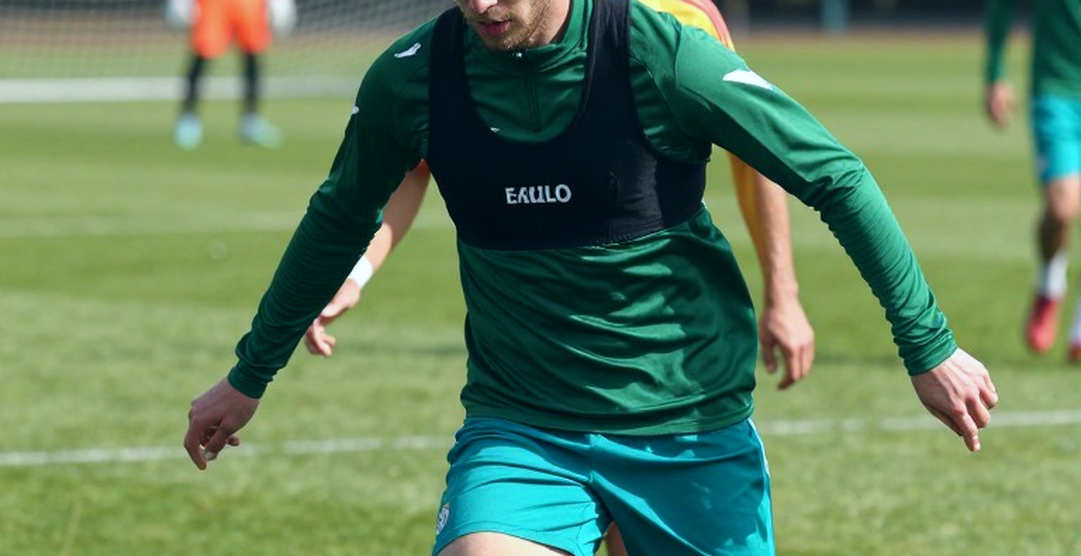
Joao Felix is 26 and plays for Al-Nassr in the Saudi Pro League. Last season Al-Nassr won the domestic title, ending a seven-year wait. At international level, Portugal were knocked out of the 2026 World Cup by Spain, who went on to become champions. Felix accepted it plainly: "Spain deserved the title... they were champions because they deserved it."
He also said he is happy in Saudi Arabia but has not closed the door on European football. On timing, he left it open: "I do not know if it will be at the end of this season or the next." And he repeated one personal goal: to win a major title with the national team.
The interview circulated with a headline pointing towards Real Madrid. The detail inside the piece is far smaller than the headline.
That is everything confirmable. The rest is a gap — and the gap is not small. The interview provides no expected goals, no expected assists, no touches inside the box, no pressing metrics. It says nothing about the current length of Felix's contract with Al-Nassr, no release clause, no wage, no transfer fee ever discussed. Any number attached to this deal is speculation.
I keep one professional rule from my days writing for a local blog in Manchester: key facts need three sources, minor details need one. Here, the key fact has a single source — the player himself. It should be read as a valuable subjective statement, not as a tactical conclusion.
FOOTBALL GEOMETRY: 'POSITION' HAS THREE VARIABLES
When decoding a sentence like this, I always split "position" into three layers, because merging them produces the wrong conclusion.
The first layer is geometric zone. Where the player stands on the pitch along the vertical and horizontal axes — left channel, right channel, or the half-space between the opposition midfield and defensive lines. This is the easiest layer to see and the least important.
The second layer is body orientation on reception. Whether the player receives facing the opponent's goal or with his back to it. A creative player is worth several times more when he receives facing up the pitch, because from that stance a line-breaking pass takes a single touch.
The third layer is time. The free time a player has before being closed down. This is the decisive layer.
The value of Joao Felix does not lie in the name of a position, but in the number of seconds he gets before a defender closes the distance. The same player, the same geometric zone, but if the time drops from half a second to a quarter second, he becomes a completely different profile.
That is why I do not trust debates of the "should he play as a No. 10 or out wide" kind. We are arguing about a label.
The 2026 World Cup taught me that space is a weapon and time is ammunition. A team can hand over half the pitch and still win without the ball, if they cut a receiver's processing time from half a second to a quarter second. Spain in the recent World Cup still operated on that logic in their own way: not seizing the ball everywhere, but seizing time.
Back to Al-Nassr. Their attacking system, as I have followed it in Saudi Pro League matches, revolves around a fixed central reference point. That reference occupies two centre-backs and opens space behind the opposition midfield. If Felix is positioned to exploit that space, he gets a fixed zone and, more importantly, stable time to work.
That is the practical meaning of "a style of play that makes use of my abilities". He is not asking for a positional label. He is asking for time.
I once saw the opposite at Moss Lane. At Moss Lane I understood that a formation saves nobody when the grass is ankle-deep. A theoretically perfect blueprint can collapse in the first half-second of a touch, when the pass arrives on the wrong foot and the player loses an extra beat to turn. On paper, people draw triangles. On grass, people operate on instinct.
This explains why Felix's history at European clubs has been misread in both directions. At Atletico Madrid he often started from the left with defensive tracking duties. He still got the ball, still produced elegant touches, but most arrived from an already-framed stance. Later, across spells in England, Italy and Spain, his role kept changing. Every change forced him to rebuild his entire sense of timing.
A creative player does not move according to a formation. He moves according to a clock.
One honest admission: I have no data proving Felix's current role at Al-Nassr is genuinely freer. I have no reception count in the half-space, no successful line-breaking passes, no tackles suffered within the first three seconds of receiving. Measured against European data, I would need at least a full season. What I have is a statement repeated twice, and a league title ending a seven-year wait. Those two things are not the same category.
THE CONTRARIAN ANGLE: HEADLINE, TIMELINE, BURDEN OF PROOF
Most attention went to the Real Madrid headline. I found no direct transfer signal in the interview itself. An open-ended answer about the future is not an offer. Structurally, that headline is a product of market demand, not of content.
But one detail matters far more, and it sits in how Felix talks about timing. "The end of this season or the next." That phrasing keeps every option alive. It promises nothing, commits to nothing, and puts no pressure on his current club. For a player whose contract length the public does not know, ambiguity is a negotiating tool, not hesitation.
The counter-intuitive point is this: the "leaving Europe is a step down" story is told so often that it becomes counterproductive. A domestic title after a seven-year wait has real value for a club, and a player saying he is better for the experience rests on a clear psychological argument. But the opposite argument — that he has "found himself again" — rests on no more data.
Both sides are arguing on belief.
Professionally, I have always been suspicious of praise for goalkeeper distribution being overhyped while basic reflexes are undervalued. I hold a similar attitude towards claims of a forward's "revival" after a move to a league with lower pressing intensity. A wider open space does not prove that the ability to operate in tight space has improved.
The transfer market is a war of attrition, and the winner is the one who reads true value. Felix's true value now depends on a fact nobody has measured: whether the seconds he gets on the ball in the Saudi Pro League are his skill, or simply a feature of that league.
The burden of proof sits with the player, and it can only be settled in a match against a high-pressing opponent.
WHAT TO WATCH NEXT
A tactical blueprint only lives if someone is brave enough to step into the box.
What I want to see in Portugal's next international window is a very specific situation: Felix receiving in the half-space, back to goal, with an opposition midfielder already sprinting in from behind. If he turns on the first touch and launches a forward pass, his "right position" claim means something. If he is framed on the first touch, we learn that a wide zone does not equal wide time.
Portugal were just eliminated by the eventual champions. Felix is 26, an age where every passing season carries off part of a market value. He wants a major title with his national team. That does not contradict playing well in a distant league. But sometimes a player only truly knows he was right when he stands in front of a defensive line that grants him no extra quarter-second.
When the stadium empties, I hear football's real voice. And the real question for Joao Felix is not which season he returns to Europe. It is how much time he will bring with him.